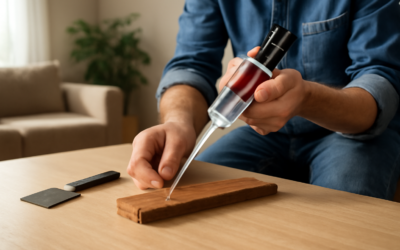
Loctite Marine Epoxy is a two-part, waterproof adhesive made by Henkel, and it has earned a loyal following among boat owners, plumbers, and household fixers for one simple reason: it bonds hard and holds up underwater. When a repair has to survive constant moisture, submersion, or the relentless flex of a boat hull, ordinary glue quits. This marine-grade formula is built for exactly those conditions, curing to a rigid, sandable, waterproof mass that grips metal, wood, fiberglass, ceramic, and many plastics. This guide covers how the product works, how to mix and apply it correctly, what kind of strength and durability to expect, and where it shines versus where you should reach for something else.
Part of our Epoxy, Concrete & Garage Floors guide — explore the full guide →
- What Loctite Marine Epoxy Actually Is
- Key Benefits and Strengths
- How to Mix and Apply It Correctly
- Cure Time and What to Expect
- Best Uses Around the Home and Boat
- Where a Different Product Works Better
- Safety and Cleanup
- Tips for a Bond That Lasts
- Real-World Results You Can Expect
- Final Verdict on Loctite Marine Epoxy
What Loctite Marine Epoxy Actually Is
Like all epoxies, it comes in two parts: a resin and a hardener. Kept separate, they stay stable indefinitely. Mix them and a chemical reaction kicks off, cross-linking the material into a tough, solid plastic. The marine version is specifically formulated to resist water, so it can be applied to damp surfaces and even cures in the presence of moisture, then remains waterproof once set. Henkel rates the cured bond in the neighborhood of 2,000 psi in tensile shear strength on the right substrates, which is more than enough for structural household and marine repairs.
The product is typically sold in a dual syringe that dispenses equal parts of resin and hardener side by side, so you never have to guess at the ratio. That convenience is a big part of why homeowners like it: no scales, no measuring cups, just push the plunger and mix.
Key Benefits and Strengths
There are a handful of reasons this epoxy keeps a spot in so many tool drawers and dock boxes:
- Genuinely waterproof. It bonds on wet surfaces and stays sealed under water, which most adhesives cannot claim.
- High strength. Around 2,000 psi on suitable materials, strong enough for load-bearing repairs.
- Multi-surface. Sticks to fiberglass, metal, wood, concrete, ceramic, glass, and many rigid plastics.
- Machinable when cured. You can sand, drill, tap, file, and paint the hardened epoxy.
- Gap-filling. Unlike thin cyanoacrylate glues, it fills cracks and voids and holds its shape.
How to Mix and Apply It Correctly
Getting a strong bond is 80 percent preparation and 20 percent the epoxy itself. Follow these steps for reliable results:
- Prep the surface. Clean off grease, wax, and loose material. Rough up smooth surfaces with sandpaper so the epoxy has texture to grip. Wipe away dust.
- Dispense equal parts. From the dual syringe, squeeze out matching amounts of resin and hardener onto a disposable surface like a piece of cardboard or a plastic lid.
- Mix thoroughly. Blend the two for about a minute with a stir stick until the color and consistency are completely uniform. Incomplete mixing is the number-one cause of a weak or gummy cure.
- Apply within the working time. You generally have about 5 minutes of workable time before it starts to thicken. Spread it on both mating surfaces for the best bond.
- Clamp or hold. Press the parts together and hold or clamp them steady while the epoxy sets. Wipe away squeeze-out before it hardens.
Cure Time and What to Expect
Loctite Marine Epoxy sets to a handleable strength fairly quickly, then continues hardening over the following day. In practical terms:
- Working time: roughly 5 minutes after mixing.
- Initial set: the joint firms up within an hour or so.
- Functional strength: handle the piece after a few hours.
- Full cure: allow 24 hours before subjecting the repair to load, water immersion, or heavy stress.
Warmer temperatures speed the cure; cold slows it dramatically. If you are working in a chilly garage, expect a longer wait and consider warming the parts. Do not rush a marine repair back into the water before it has fully cured, or you risk a weak bond exactly where it matters most.
Best Uses Around the Home and Boat
This is a versatile product, and knowing where it excels helps you get your money’s worth:
- Boat and hull repairs: sealing small cracks in fiberglass, bonding fittings, patching leaks above and below the waterline.
- Plumbing: emergency patches on pipes, tanks, and fittings where moisture is present.
- Outdoor fixtures: repairing planters, gutters, downspouts, and anything exposed to rain.
- Bathroom and kitchen: re-bonding loose tile, fixing ceramic, sealing around fixtures.
- Metal repairs: filling and rebuilding worn or corroded areas that can then be sanded smooth.
Where a Different Product Works Better
No adhesive does everything. Reach for an alternative when:
- You need flexibility. Cured epoxy is rigid. For joints that flex or vibrate constantly, a polyurethane or marine sealant tolerates movement better.
- You are bonding certain plastics. Polyethylene and polypropylene resist most epoxies; check compatibility first.
- You need a fast, tiny bond. For a quick fix on a small non-structural item, cyanoacrylate super glue is simpler.
- Continuous high heat is involved. Standard epoxies soften at elevated temperatures; a high-temp specialty product suits engine or exhaust areas.
Safety and Cleanup
Work in a ventilated area and wear disposable gloves. Uncured epoxy is an irritant, so keep it off your skin and out of your eyes. Clean tools and drips with acetone or rubbing alcohol before the material hardens; once cured, mechanical sanding is the only way to remove it. Store the syringe with the caps on in a cool, dry place, and it will stay usable for future repairs. Keep it away from children and pets while it cures.
Tips for a Bond That Lasts
A few habits separate a repair that holds for years from one that pops loose:
- Always abrade glossy surfaces first, epoxy needs tooth to grip.
- Mix a hair longer than you think you need to, streaky epoxy never reaches full strength.
- Match the amount you mix to the job, since you only get a few minutes of working time.
- Clamp lightly but firmly, and do not disturb the joint while it sets.
- Give it the full 24 hours before real-world stress, patience is free and failure is not.
Real-World Results You Can Expect
Homeowners and boaters who use this epoxy correctly report a bond that genuinely lasts. On a fiberglass hull crack, a properly prepped repair holds through repeated launches and haul-outs without weeping. On a leaking metal downspout or a cracked plastic tank, the cured epoxy seals the breach and stays put through seasons of temperature swings and rain. The finished repair is rigid and can be sanded flush, drilled, and painted so it disappears into the surrounding surface. That ability to blend a fix into the original part is a big part of why it is trusted for visible repairs, not just hidden ones.
Where results disappoint, the cause is almost always preparation or mixing rather than the product. A joint that pops loose was usually glued to a glossy, unsanded, or greasy surface, or the two parts were not blended to a uniform color. Because the epoxy is only as strong as its grip on the substrate, spending the extra two minutes to abrade and clean the surfaces pays off in a repair that outlives the rest of the item. Treat the prep as the real work and the epoxy as the easy part, and the results speak for themselves.
Final Verdict on Loctite Marine Epoxy
Loctite Marine Epoxy is one of those products that quietly rescues projects that would otherwise be a disaster: a cracked hull miles from a repair shop, a weeping pipe fitting, a loose bathroom tile that keeps letting water behind the wall. Its combination of true waterproofing, roughly 2,000 psi strength, and the ability to bond on damp surfaces makes it a legitimately useful thing to keep on hand. Respect the mixing ratio, prep your surfaces, and give it time to cure fully, and you will get a hard, sandable, watertight repair that holds up to the wettest conditions you can throw at it. For household and marine fixes where water is the enemy, it is hard to do better.