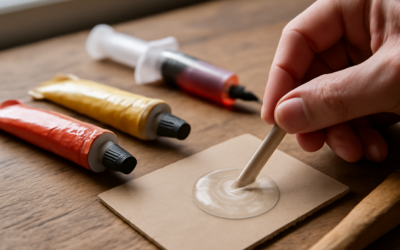
Standard hardware-store epoxy is fine until water gets involved, and then it fails right when you need it most. Marine grade epoxy is formulated specifically to bond, seal, and waterproof in constant moisture, submersion, and harsh conditions that would break down ordinary adhesives. Originally developed for boat building and repair, it’s now a go-to for homeowners tackling anything that gets wet and stays wet, from coating a basement floor to building a river table or sealing a leaky shower pan. It costs more than basic epoxy, but its waterproof bond and durability are in a different league.
Part of our Epoxy, Concrete & Garage Floors guide — explore the full guide →
What Marine Grade Epoxy Actually Is
Marine epoxy is a two-part system, a resin and a hardener, that you mix in a precise ratio to trigger a chemical cure. Unlike a glue that dries by evaporation, epoxy cures through a reaction that creates an extremely strong, rigid, and waterproof solid. The “marine grade” designation means the formula is engineered to resist water absorption, hold up under submersion, and tolerate temperature swings and UV exposure better than general-purpose epoxy.
The result is a material that bonds to wood, fiberglass, metal, concrete, and more while staying completely watertight. It’s used both as an adhesive and as a protective coating, and many formulas can be thickened with fillers for gap-filling and fairing.
Marine Grade vs Standard Epoxy
The differences are real and worth understanding before you choose.
- Water resistance: marine epoxy resists prolonged submersion and high humidity, where standard epoxy can soften, cloud, or fail.
- Durability: stronger bond and impact resistance, built for structural marine repairs.
- UV and weather tolerance: better resistance to sun and the elements, though most still need a topcoat for full UV protection.
- Temperature stability: holds its bond through heat and cold cycles outdoors.
- Cost: noticeably more expensive, justified only when conditions are genuinely wet or harsh.
If your project stays dry indoors, standard epoxy is fine and cheaper. The moment water, submersion, or weather enters the picture, marine grade earns its premium.
Common Home Uses
Beyond boats, marine epoxy solves a surprising number of household problems where water and durability collide.
- Wet-area repairs: sealing leaks, bonding bathroom and pool fixtures, fixing fiberglass tubs and showers.
- Wood projects: river tables, cutting boards (with food-safe formulas), and sealing end grain on outdoor furniture.
- Floor coatings: waterproof basement, garage, and workshop floors that resist moisture and chemicals.
- Outdoor and dock hardware: bonding and sealing anything exposed to rain, sprinklers, or splash.
- Crack and gap filling: thickened with filler, it repairs damaged wood, concrete, and fiberglass.
How to Apply Marine Grade Epoxy
Success with epoxy is 80 percent preparation. Rush the prep and even the best product fails to bond.
- Prep the surface: clean thoroughly, remove all grease, dust, and old finish, and sand to create a rough profile for the epoxy to grip.
- Mix precisely: combine resin and hardener at the exact ratio on the label. Off-ratio mixing means it won’t cure properly. Mix slowly to limit air bubbles.
- Mind the pot life: once mixed, you have a limited working window, often 20 to 45 minutes, before it starts to harden. Mix only what you can use.
- Apply in thin coats: spread or brush evenly. Multiple thin coats outperform one thick pour for coatings.
- Pop bubbles: pass a heat gun or torch lightly over the surface to release trapped air on poured applications.
- Cure: allow full cure time, often 24 to 72 hours, before use or topcoating. Cure faster in warmth, slower in cold.
Safety Precautions
Epoxy chemistry demands respect. Always work in a well-ventilated area, since the fumes and especially the dust from sanding cured epoxy can irritate lungs and skin. Wear nitrile gloves, safety glasses, and a respirator rated for organic vapors, particularly during mixing and sanding.
Some people develop sensitization to epoxy with repeated skin contact, so avoid getting it on your skin entirely, gloves are non-negotiable. Keep the workspace at the temperature range the manufacturer specifies, usually 60 to 90 degrees Fahrenheit, because cold slows or stops the cure and heat shortens your working time dramatically. Read the technical data sheet for your specific product before you open the cans.
Temperature, Cure Time, and Common Mistakes
Temperature controls everything with epoxy. In cold conditions, the resin thickens, bubbles get trapped, and the cure stalls, while in heat the pot life shrinks and you may be racing the clock. The sweet spot for most marine epoxies is room temperature, and an unheated garage in winter is a recipe for a sticky, uncured mess.
The most common mistakes are easy to avoid. Off-ratio or under-mixed epoxy stays tacky forever, so measure carefully and scrape the sides of your mixing cup. Applying to a dirty or glossy surface ruins adhesion, so sand and clean first. And rushing the cure by using or topcoating too soon weakens the result. Patience and precision separate a flawless finish from a do-over.
Choosing the Right Product
Match the epoxy to the job. For structural bonding and repairs, brands like West System and TotalBoat offer proven two-part systems with a range of hardeners for different cure speeds. For clear coatings and table pours, look for a UV-resistant casting or coating epoxy, and add a marine spar varnish topcoat for outdoor pieces since most epoxies yellow in direct sun without protection.
Buy the right quantity, since mixed epoxy can’t be saved, and pick a hardener speed suited to your temperature and project size, slower for big pours and warm days, faster for small repairs and cold conditions. With the correct product, thorough prep, and respect for the chemistry, marine grade epoxy gives you a waterproof, rock-hard bond that outlasts nearly anything else you can buy.
Storage and Shelf Life
Epoxy isn’t cheap, so storing it correctly protects your investment. Keep resin and hardener tightly sealed in a cool, dry place out of direct sunlight, ideally between 60 and 80 degrees Fahrenheit. Most two-part marine epoxies last one to two years unopened, though hardeners can darken or thicken with age. A slightly amber hardener usually still works, but if either component has crystallized or turned cloudy, gently warming the container often restores it.
Label your cans with the purchase date so you use the oldest first, and never store epoxy where it can freeze, since cold can permanently alter the chemistry. Keep the resin and hardener pumps clean and never swap them between containers, because cross-contaminating the two parts ruins both. Treat the product with this basic care and a single kit stays usable across multiple projects, which matters when a quality marine epoxy kit can run $40 to $100 or more.