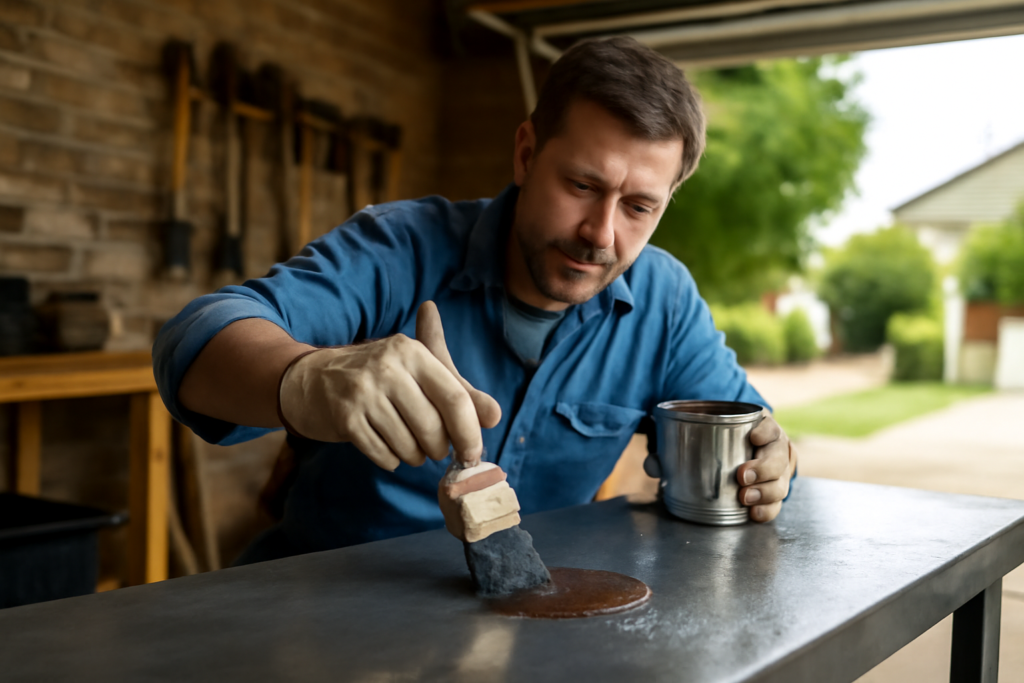
Standard epoxy is impressive stuff, but put it near an engine manifold, a wood stove, or a grill, and it softens, yellows, or fails outright. That is where high heat epoxy earns its place in the toolbox. Formulated to hold its bond and structure at temperatures that would destroy ordinary adhesives, it lets you repair, seal, and assemble around heat sources that defeat everything else. Knowing how it differs and how to apply it correctly is the difference between a lasting repair and a smoking mess.
What Makes High Heat Epoxy Different
All epoxies cure through a chemical reaction between a resin and a hardener. The difference with heat-resistant formulas is in the resin chemistry and the fillers blended in. Manufacturers add ceramic, metallic, or mineral fillers that conduct and tolerate heat, while the base resin is engineered to resist breaking down at elevated temperatures.
Ordinary hardware-store epoxy typically begins to soften somewhere around 150°F to 200°F. A true high heat epoxy holds firm anywhere from 300°F to over 600°F continuous, with some specialty formulas rated for short-term exposure above 2,000°F. Always read the label rating, because there is a meaningful gap between a 300°F product and a 500°F one.
Temperature Ratings Explained
The single most common mistake is buying a product rated below the actual heat it will face. Ratings come in two flavors, and you need to understand both.
- Continuous service temperature: The heat the cured epoxy can withstand indefinitely without degrading. This is the number that matters for ongoing use.
- Intermittent or peak temperature: A higher figure the epoxy can survive briefly, such as a quick exposure to a flame or exhaust spike.
Match your project to the continuous rating, not the peak. An exhaust manifold can hold 500°F to 900°F during operation, so a 300°F product will fail. A fireplace surround or a baking-related fix may only see 250°F to 400°F, where a mid-grade formula works fine.
Best Projects for High Heat Epoxy
This adhesive shines in a specific set of repairs where heat and structural strength both matter.
Automotive and Engine Repairs
Cracked exhaust components, manifold leaks, and header repairs are classic uses. The metallic-filled versions can be sanded, drilled, and tapped once cured, which makes them useful for filling stripped bolt holes near hot components.
Around Stoves, Grills, and Fireplaces
Reattaching a loose handle on a wood stove, sealing a gap in a grill firebox, or bonding fireplace components are all jobs ordinary glue cannot handle. Choose a rating that comfortably exceeds the appliance’s operating temperature.
Industrial and Plumbing Fixes
Sealing hot water pipes, patching boiler components, and bonding heat-exposed metal parts all fall within range. For potable water lines, confirm the product is rated safe for that use.
How to Apply It Correctly
Surface prep determines whether the bond lasts or peels. Follow these steps closely.
- Clean thoroughly: Remove all grease, oil, rust, and old adhesive. Wipe with acetone or a degreaser and let it flash off completely.
- Roughen the surface: Scuff smooth metal with 80 to 120 grit sandpaper so the epoxy has tooth to grip.
- Mix to ratio: Combine resin and hardener at the exact ratio on the label, usually 1:1 or 2:1. Mix for at least 60 seconds until the color is uniform.
- Apply within the working time: Most products give you 5 to 30 minutes before the mix starts to set. Work in that window.
- Clamp or hold: Keep parts steady until the initial set, then leave undisturbed to cure.
Cure Time and the Post-Cure Step
Initial set often happens within 1 to 4 hours, but full chemical cure can take 24 to 72 hours at room temperature. Here is the step people skip: many high heat epoxies require a “post-cure,” meaning the part must be heated gradually after the initial cure to reach full temperature resistance. Skip it, and the epoxy never develops its rated strength. Check the instructions for a recommended bake schedule, often something like a slow ramp to operating temperature held for an hour.
Safety and Storage
Treat these products with respect. Mixing epoxy is an exothermic reaction, and large batches can get genuinely hot in the cup.
- Work in a ventilated space and wear nitrile gloves and eye protection.
- Mix only what you can use within the working time to avoid waste and overheating.
- Store resin and hardener tightly capped, away from heat and out of reach of children.
- Keep acetone and a few clean rags handy for immediate cleanup before the epoxy sets.
Common Mistakes That Cause Failures
Most high heat epoxy failures trace back to a handful of avoidable errors. Knowing them in advance saves you a repeat repair on a hot, hard-to-reach component.
- Under-rating the heat: Buying a 300°F product for a 600°F exhaust is the number one cause of failure. Always check the continuous rating against real operating temperatures.
- Skipping the post-cure: Many formulas never reach full heat resistance until heated gradually after the initial cure. Skip the bake schedule and the bond stays weak.
- Poor surface prep: Grease, rust, and old adhesive prevent a solid bond no matter how good the epoxy is.
- Wrong ratio: Off-ratio mixing leaves soft spots that fail under heat. Measure carefully every time.
- Applying heat too soon: Running the engine or fire before the epoxy fully cures can blow the repair apart.
Avoid those five and most repairs hold for the life of the part. Rush them and you will be back with a heat gun and a scraper before long.
Choosing the Right Product
When you stand at the shelf, ask three questions: What continuous temperature will this see? Do I need a metallic filler for machining, or a ceramic one for insulation? And does the working time give me enough room to position the parts? Buy the rating that exceeds your real-world heat with margin to spare. A high heat epoxy chosen and applied with care will outlast the failure point of nearly every alternative, turning a heat-exposed repair from a recurring frustration into a one-and-done fix.