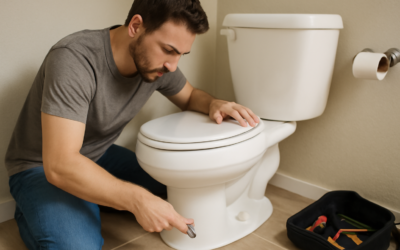
A toilet that wobbles when you sit down is more than an annoyance; it is an early warning that can lead to leaks and hidden floor damage. A loose toilet base usually starts with nothing more than a slight rock, but left alone it can break the wax seal, let water seep under the floor, and rot the subfloor beneath. The fix is often simple and inexpensive, and tackling it early can save you from a far more costly repair later. This guide walks through diagnosing and correcting a rocking toilet the right way.
Part of our Bathroom Remodeling & Flooring guide — explore the full guide →
- Why a Toilet Becomes Loose
- Why You Should Not Ignore It
- Step 1: Tighten the Closet Bolts Carefully
- Step 2: Shim a Toilet on an Uneven Floor
- Step 3: Re-Wax If There Is a Leak
- When the Flange or Subfloor Is the Problem
- How to Tell If the Wax Ring Is Already Leaking
- Choosing the Right Wax Ring
- When to Call a Plumber
Why a Toilet Becomes Loose
Several things cause a toilet to loosen over time. The most common is that the closet bolts, which anchor the toilet to the floor flange, have worked their way loose with normal use. An uneven floor can leave the base unsupported on one side, so it rocks. A failing or corroded flange, or one set too low or too high relative to the finished floor, can also prevent a solid seat. And in older homes, water damage may have already softened the subfloor, letting the whole assembly shift.
Why You Should Not Ignore It
The danger of a loose toilet is the wax ring beneath it. That ring seals the connection between the toilet and the drain. Every time the toilet rocks, it flexes and eventually breaks that seal, allowing water and waste to escape under the base. The leak is slow and hidden, so by the time you notice staining on a ceiling below or a soft spot in the floor, the subfloor may already be rotting. Fixing the wobble promptly protects both the seal and the structure under it.
Step 1: Tighten the Closet Bolts Carefully
Start with the simplest fix. At the base of the toilet you will find two bolts, usually hidden under plastic or porcelain caps. Pop the caps off and check the nuts.
- Hold the bolt steady if needed and turn each nut clockwise with a wrench.
- Tighten the two sides a little at a time, alternating, so the toilet seats evenly.
- Snug them just until the toilet stops moving.
This is the most important caution in the whole job: do not overtighten. Porcelain is brittle, and cranking the nuts too hard can crack the base, turning a free fix into a new toilet. Tighten only until the rocking stops, then stop.
Step 2: Shim a Toilet on an Uneven Floor
If the toilet still rocks after the bolts are snug, the floor underneath is likely uneven and the base needs support. Toilet shims, thin plastic wedges made for this purpose, fill the gap.
- Identify where the gap is by gently rocking the toilet and watching the base.
- Slide shims into the gap until the toilet sits solid with no movement.
- Trim the excess shim flush with a utility knife so it does not show.
- Seal around the base with a bead of tub-and-tile caulk, leaving a small gap at the back so any future leak is visible.
Shimming stabilizes the toilet without forcing the bolts dangerously tight.
Step 3: Re-Wax If There Is a Leak
If you see water seeping out around the base, smell sewer gas, or the toilet has been rocking for a long time, the wax ring has probably failed and needs replacing. This is a bigger job but still within DIY reach:
- Shut off the water supply, flush, and sponge the tank and bowl dry.
- Disconnect the supply line, remove the closet-bolt nuts, and lift the toilet straight up.
- Scrape off the old wax ring from both the toilet horn and the flange.
- Inspect the flange for cracks or corrosion and confirm it sits flush with or slightly above the finished floor.
- Set a new wax ring, lower the toilet straight down onto it, press firmly to compress the seal, and reattach the bolts.
A fresh wax ring restores the watertight seal and gives the toilet a solid foundation again.
When the Flange or Subfloor Is the Problem
Sometimes tightening, shimming, and re-waxing are not enough. A broken closet flange needs a repair ring or replacement so the bolts have something solid to grip. Worse, if you discover the subfloor around the flange is soft, spongy, or visibly rotted, that damage must be addressed before the toilet can be reset securely. A wobbly toilet on rotted wood will never stay tight, and continued leaking accelerates the decay.
How to Tell If the Wax Ring Is Already Leaking
Before you decide how far to take the repair, confirm whether the seal has failed. A few telltale signs point to a leaking wax ring beneath a loose toilet:
- Water pooling around the base of the toilet, especially after a flush
- A persistent sewer-gas odor in the bathroom
- Discoloration, staining, or a soft, spongy feel in the floor around the toilet
- Water stains on the ceiling of the room directly below an upstairs bathroom
- The toilet feeling loose and rocking, which both causes and signals seal failure
If you see any of these, plan to pull the toilet and replace the wax ring rather than just tightening bolts, because tightening alone will not restore a seal that has already broken.
Choosing the Right Wax Ring
Not all wax rings are the same, and picking the correct one helps the repair last. Standard wax rings work for most installations where the flange sits at or just below the finished floor. If your flange is recessed below the floor level, a wax ring with a built-in plastic horn or funnel helps bridge the gap and direct waste into the drain. For situations where you want a reusable, mess-free option, waxless rubber or foam gaskets are an alternative that can be repositioned if you need to lift the toilet again. Whichever you choose, set the toilet straight down without rocking it into place, since twisting can deform the seal and cause the very leak you are trying to prevent.
When to Call a Plumber
Handle the bolt-tightening and shimming yourself with confidence. But call a professional if you find a cracked flange below floor level, significant subfloor rot, recurring leaks after re-waxing, or any sign of water damage spreading to the ceiling below. These point to structural or drain issues that are worth fixing correctly the first time. A loose toilet base is almost always fixable, and acting quickly, gently, and in the right order keeps a minor wobble from becoming an expensive floor repair.