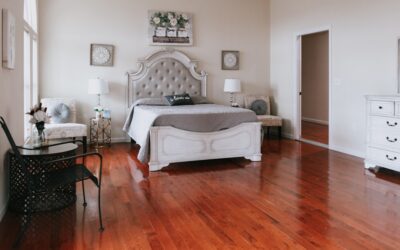
Before you fall in love with a waterproof wood-look floor, you need to know what it will actually cost to finish the room. A reliable luxury vinyl plank flooring cost calculator breaks the project into its real parts — planks, underlayment, trim, prep, and labor — so the final number does not blindside you. In this guide we build that luxury vinyl plank flooring cost calculator from the ground up, give you real per-square-foot ranges, and show the math on typical rooms so you can budget with confidence.
- The Quick Answer: Average Cost Per Square Foot
- How to Measure Your Space
- Material Costs Broken Down
- Labor Costs and What Drives Them
- Building Your Cost Calculator
- Sample Projects Priced Out
- Where You Can Save Money
- Hidden Costs to Budget For
- How Plank Quality Affects Your Total
- DIY vs Professional: Running Both Numbers
- Frequently Asked Questions
The Quick Answer: Average Cost Per Square Foot
For most homeowners, installed luxury vinyl plank (LVP) runs between $4 and $12 per square foot, all in. Materials alone are typically $2 to $7 per square foot, and professional installation adds another $2 to $5. Premium rigid-core SPC products with attached pads, thicker wear layers, and realistic embossing push toward the top of that range, while builder-grade glue-down planks sit at the bottom.
To estimate your project fast, multiply your room’s square footage by a blended installed rate. A 300-square-foot living room at $7 per square foot lands around $2,100. That single formula is the heart of any cost calculator, but the accurate number depends on the line items below.
How to Measure Your Space
Every calculation starts with an honest square footage. Measure the length and width of each room in feet, multiply them, and add the rooms together. For irregular spaces, break the floor into rectangles, calculate each, and sum them. Then add a waste factor:
- 10 percent waste for simple square or rectangular rooms with straight runs.
- 15 percent waste for rooms with angles, closets, or diagonal layouts.
- 20 percent waste for herringbone patterns or spaces with many cuts.
So a 300-square-foot room needs about 330 to 345 square feet of plank ordered. Buying an extra box also gives you spares for future repairs, which matters because product runs get discontinued.
Material Costs Broken Down
The plank itself is only one line on the receipt. A complete material budget includes several supporting products:
- LVP planks: $2.00 to $7.00 per sq ft depending on wear-layer thickness (6 mil budget to 22 mil heavy-traffic) and core type.
- Underlayment: $0.30 to $0.80 per sq ft if your planks lack an attached pad.
- Transition strips and thresholds: $10 to $30 each at doorways and room changes.
- Baseboard or quarter-round trim: $1 to $3 per linear foot if you are replacing it.
- Adhesive: $30 to $50 per bucket for glue-down installs.
- Moisture barrier: $0.15 to $0.40 per sq ft over concrete slabs.
Labor Costs and What Drives Them
Professional installation typically costs $2 to $5 per square foot. Floating click-lock floors sit at the low end because they go down fast. Glue-down and herringbone installs cost more due to added time and skill. Several factors nudge labor up or down:
- Subfloor prep: Leveling a wavy floor with self-leveling compound can add $1 to $2 per sq ft.
- Old flooring removal: Tear-out and disposal run $1 to $3 per sq ft, more for glued-down tile or carpet with tack strips.
- Room complexity: Lots of doorways, cabinets, and odd angles slow the crew.
- Stairs: Wrapping LVP on stairs is labor-intensive at $40 to $75 per step.
Building Your Cost Calculator
Here is the simple formula to run your own numbers:
- Room square footage = length x width (add rooms together).
- Material total = square footage x waste factor x plank price per sq ft, plus underlayment, trim, and transitions.
- Labor total = square footage x installation rate, plus prep, removal, and stairs.
- Grand total = material total + labor total, then add 8 to 10 percent contingency.
Plug in your own prices and you have a personalized luxury vinyl plank flooring cost calculator that reflects real quotes rather than a single averaged guess.
Sample Projects Priced Out
Numbers make this concrete. Here are three realistic examples using mid-grade materials and professional labor:
- Small bedroom, 150 sq ft: Materials around $750, labor around $450, total roughly $1,200 ($8/sq ft).
- Open living and dining, 400 sq ft: Materials around $2,000, labor around $1,400, total roughly $3,400 ($8.50/sq ft).
- Whole main floor, 1,000 sq ft: Materials around $4,500, labor around $3,000, plus $800 for prep and removal, total roughly $8,300 ($8.30/sq ft).
DIY installation on the 400-square-foot example could drop the total to about $2,200 by cutting the labor line, though it costs you a weekend and the risk of costly mistakes.
Where You Can Save Money
Smart choices trim the budget without gutting quality. Choose a click-lock floating floor over glue-down to simplify DIY. Pick a 12 to 20 mil wear layer for busy homes rather than overpaying for the thickest premium tier in a low-traffic guest room. Buy during holiday flooring sales, and reuse existing baseboard by installing quarter-round instead. If your subfloor is already flat and clean, you avoid the biggest hidden cost of all — leveling.
Hidden Costs to Budget For
The estimate that surprises people almost always comes from the subfloor. Concrete slabs may need grinding, patching, or a moisture test that reveals the need for a vapor barrier. Old homes often have uneven wood subfloors that must be shimmed or skim-coated. Also budget for door undercutting, appliance disconnection and reconnection in kitchens and laundries, and haul-away fees for old flooring. Setting aside a 10 percent contingency keeps these from derailing your project.
How Plank Quality Affects Your Total
Not all LVP is priced the same, and understanding the tiers keeps your calculator honest. Budget builder-grade planks (roughly $2 to $3 per sq ft) have thin 6 to 12 mil wear layers and simpler printed patterns; they suit rentals and low-traffic rooms. Mid-grade rigid-core SPC and WPC planks ($3 to $5 per sq ft) add thicker wear layers, attached underlayment pads, and more convincing embossed textures. Premium products ($5 to $7 per sq ft and up) offer 20 to 22 mil wear layers, enhanced dent resistance, wider and longer planks, and realistic bevels that mimic real hardwood. Spending one dollar more per square foot on a busier home almost always pays off in a floor that still looks new after a decade.
DIY vs Professional: Running Both Numbers
The single biggest lever in your cost calculator is who does the labor. On a 400-square-foot room, professional installation adds roughly $800 to $2,000. Doing it yourself removes that line entirely, but budget for tools: a utility knife or vinyl cutter, a tapping block, a pull bar, spacers, and possibly a jamb saw for door casings, altogether $80 to $200 if you do not already own them. Also weigh the risk. A first-timer who miscuts planks or fails to level the subfloor can waste material and end up with gaps or lippage. If your subfloor is flat and the room is a simple rectangle, DIY is very achievable and can cut the total nearly in half. Complex layouts, stairs, and large-format herringbone are best left to a pro.
Frequently Asked Questions
How much does it cost to install 1,000 square feet of LVP? Expect $5,000 to $10,000 installed for most mid-grade products, with prep and removal pushing toward the higher end.
Is luxury vinyl plank cheaper than hardwood? Yes, generally. LVP installed runs $4 to $12 per sq ft, while solid hardwood commonly runs $8 to $25 per sq ft installed, and it is not waterproof.
Can I install LVP myself to save money? Floating click-lock LVP is one of the most DIY-friendly floors available and can cut your cost nearly in half by eliminating labor. Budget for a cutting tool, spacers, and a tapping block.
How much waste should I order? Add 10 percent for straight rooms, 15 percent for angled layouts, and up to 20 percent for herringbone or diagonal patterns.
Does thicker wear layer cost a lot more? Moving from a 12 mil to a 20 mil wear layer typically adds $0.50 to $1.50 per square foot but roughly doubles the floor’s scratch resistance, which is worth it in high-traffic homes with pets.
Prefer to explore on your own?
See how new flooring looks in your actual room in seconds — free, no signup.
Try the free Floor Studio →