The average remodeled master bath in 2026 costs $32,000 and returns roughly 60% of that investment at resale, according to Remodeling Magazine’s Cost vs Value report. That is a decent but not spectacular ROI, which means master bathrooms are spaces where personal use matters as much as resale math. The best planning decisions balance daily livability with choices that will not look dated in ten years.
This guide covers layout fundamentals, fixture picks, typical pricing for three budget tiers, and the details that separate a bathroom that feels luxurious from one that just looks expensive on a showroom floor.
Layout Fundamentals
A functional master bath starts at 60 square feet for a basic three-piece layout (toilet, sink, shower) and 100+ square feet for a full four-piece (adding a separate tub). Real luxury begins around 150 square feet, where double vanities, a soaking tub, and a walk-in shower all fit without feeling cramped.
The key measurements: 30 inches of clear space in front of the toilet, 36 inches in front of the vanity, 30 inches at the shower entry, and 60 inches minimum for a freestanding tub. Violate any of those and the room feels tight no matter how much tile you install.
Three-Tier Budget Breakdown
- Standard refresh ($12,000-$20,000) — new vanity, toilet, tub surround, tile floor, lighting
- Mid-range remodel ($25,000-$45,000) — custom tile shower, double vanity, freestanding tub, new plumbing fixtures
- High-end rebuild ($55,000-$120,000) — gut renovation, layout changes, heated floors, curbless shower, custom cabinetry
Labor accounts for 40 to 55% of the total budget. Plumbing changes and tile installation drive most of the labor cost — keep the toilet, shower, and tub in their existing drain locations and you save $3,000 to $8,000 instantly.
Showers Versus Tubs
A frameless glass walk-in shower with a bench, rain head, and handheld wand is the single most requested feature in master bath remodels right now. A separate soaking tub reads luxurious but gets used less than once a week in the average household.
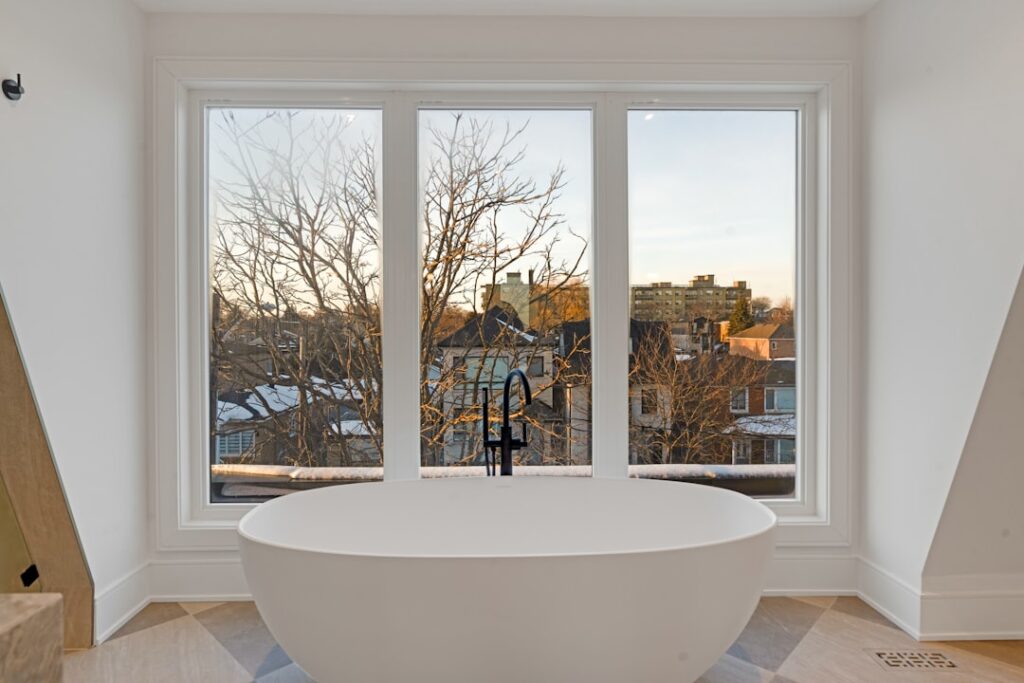
Resale research suggests keeping at least one tub in the home for families with small children — but that can be in a secondary bath. A master bath with only a large shower sells fine in most markets if there is another bathtub elsewhere. If you want a tub, freestanding acrylic models from Kohler, Mansfield, or Signature Hardware run $800 to $2,500 and are lighter than cast iron during installation.
Vanity and Storage
Double vanities require at least 60 inches of width, preferably 72 inches. Single sinks should get a 36-inch minimum for adequate counter space. Custom vanities run $2,500 to $8,000 installed; semi-custom options from Bertch or Wellborn Cabinet hit the $1,500 to $4,000 range; stock vanities from Home Depot start at $400.
Plan drawer storage, not just doors. A bank of three deep drawers holds more than a cabinet of equivalent volume and keeps contents visible. Soft-close hardware is standard at every price tier now — if a vendor tries to upcharge for soft-close, shop elsewhere.
Flooring That Actually Lasts
Porcelain tile dominates master baths for good reason — waterproof, stain-resistant, and available in wood-look and stone-look patterns that handle humidity better than their natural counterparts. Expect $4 to $12 per square foot for tile and $8 to $15 per square foot for installation including thinset and grout.
Large-format tile (12×24 or bigger) has fewer grout lines and reads as modern. Heated floor systems like Nuheat or SunTouch add $10 to $15 per square foot and run on a thermostat with minimal electrical cost — roughly $0.30 per day for a 50-square-foot bath.
Plumbing Fixture Selection
Stick with major brands for anything behind the wall — Kohler, Moen, Delta, Grohe, Hansgrohe. Warranty support and replacement part availability 15 years from now justify the premium over no-name imports. Budget $400 to $800 for a shower valve and trim kit, $200 to $500 per faucet, and $250 to $700 for a quality toilet.
Rough-in plumbing specs matter — know your toilet rough-in (10-, 12-, or 14-inch) before ordering, and confirm shower valve connection type (1/2-inch IPS is standard). A plumber callback because the wrong valve was ordered adds $400 to the project.
Lighting Layers
A single overhead can light is not enough. Plan for three layers: ambient (a flush-mount or recessed lights), task (sconces or vertical lights flanking the mirror), and accent (toe-kick LED strips, in-shower recessed lights). Dimmer switches on each zone let you run the bath at hotel-like softness in the evening and full-bright for morning routines.
LED color temperature should sit at 2700K to 3000K for a residential feel. 4000K and above reads as clinical — save those for task lighting only.
Ventilation Is Not Optional
Under-ventilated bathrooms grow mold within months. Code requires at least 50 CFM for baths up to 100 square feet and 100+ CFM for larger rooms with a separate shower. Panasonic WhisperCeiling and Broan Roomside models run quieter than 1.0 sones and move air efficiently at $180 to $350 installed.
Vent to the outside — never into the attic. A humidity-sensing switch is a $40 upgrade that runs the fan automatically after a shower, which is when mold actually forms.
Resale-Friendly Design Choices
Timeless materials hold value. White or light gray subway tile, quartz or marble-look countertops, neutral floor tiles, and chrome or brushed nickel fixtures survive trend cycles. Black fixtures are peaking in popularity right now and may date the room within seven to ten years.
Skip bold color choices on permanent fixtures. Paint and accessories are easy to change; tile and countertops are not. A neutral backdrop with colorful towels and art lets personality show without locking in a trend you might regret.