Mastic tile adhesive is one of the most misunderstood products in tile installation. Homeowners and even some contractors use it where they should not, leading to tile failures, mold problems, and expensive repairs. After three decades of professional tile work, we have seen every mastic mistake in the book. This guide explains exactly what mastic is, where it works, where it absolutely does not work, and how it compares to thinset mortar for every common tile application.
What Is Mastic Tile Adhesive?
Mastic tile adhesive is a premixed, organic adhesive that comes ready to use straight from the container. Unlike thinset mortar, which requires mixing with water, mastic is a thick, paste-like material that you spread directly on the wall or substrate with a notched trowel. The tile is then pressed into the mastic, which grips the tile immediately and cures as the moisture in the adhesive evaporates.
Originally, mastic was made from tree resins (the word “mastic” comes from the mastic tree). Modern mastic tile adhesive is a synthetic latex-based product that has replaced the old organic formulas. It is sold under brand names like Mapei Type 1, Custom Building Products AcrylPro, and Henry Premixed Mastic.
Key characteristics of mastic tile adhesive:
- Premixed and ready to use — No measuring or mixing required
- Strong initial grab — Tiles stick immediately, reducing slippage on vertical surfaces
- Easy cleanup — Cleans up with water before it cures
- Interior use only — Not suitable for exterior or freeze-thaw conditions
- Not waterproof — Will re-emulsify (dissolve) when exposed to sustained moisture
- Limited tile size — Best for tiles 8×8 inches or smaller, some products rated up to 12×12
That last point about water is the most important thing to understand about mastic tile adhesive. It cures by evaporation. If water reaches cured mastic, the adhesive softens, weakens, and can eventually fail. This single property dictates where you can and cannot use mastic.
Mastic vs Thinset: Key Differences
The mastic vs thinset question comes up on every tile project. Here is a straightforward comparison based on performance, not marketing:
Composition: Mastic is a premixed organic adhesive (latex-based). Thinset is a cement-based mortar that you mix with water or a latex additive. This fundamental difference affects every performance characteristic.
Water resistance: Thinset wins decisively. Once cured, thinset mortar is water-resistant and will not break down from moisture exposure. Mastic will soften and fail when exposed to sustained moisture. For any wet area, thinset is the only acceptable choice.
Bond strength: Both products provide adequate bond strength for residential tile installations when used correctly. Thinset generally has a higher shear bond strength (the force needed to pull the tile off the wall), especially modified thinset with latex additives.
Tile size: Mastic is limited to smaller tiles, typically 8×8 inches or smaller (some Type 1 mastics are rated for 12×12). Thinset can be used with tiles of any size, including large-format tiles up to 24×48 inches or larger.
Ease of use: Mastic wins for convenience. It is premixed, requires no tools beyond a trowel, and has excellent grab on vertical surfaces. Thinset requires mixing to the correct consistency, has a limited working time (pot life), and can sag on walls if applied too thick.
Cost: Mastic costs $15 to $30 per gallon, covering approximately 50 to 70 square feet. Thinset costs $15 to $25 per 50-pound bag, covering approximately 75 to 100 square feet. Thinset is less expensive per square foot of coverage.
Substrate compatibility: Mastic adheres well to drywall, plywood, and cement board. Thinset bonds to cement board, concrete, and other cementitious surfaces. For drywall applications (like a kitchen backsplash), mastic is actually preferred because it does not add excess moisture to the drywall like thinset can.
When to Use Mastic Tile Adhesive
Mastic tile adhesive is the right choice for a limited set of applications. Use mastic for:
Kitchen backsplashes: This is the ideal application for mastic. The tiles are small (typically subway tile, 3×6 or 4×4 inches), the surface is vertical (mastic’s grab prevents slipping), and the area stays dry (backsplashes get occasional splashes but not sustained water exposure). Mastic on drywall for a backsplash is perfectly acceptable and easier than thinset.
Dry wall tile in living areas: Decorative tile on a fireplace surround, accent wall, or wainscoting in a dry room is another excellent use for mastic tile adhesive. These applications involve small to medium tiles on vertical surfaces with no moisture concern.
Small repairs: If you need to reattach a single loose tile on a wall in a dry area, mastic is quick and convenient. Spread a thin layer on the back of the tile, press it into place, and you are done.
Peel-and-stick tile underlayment: Some peel-and-stick tile products recommend applying mastic to the wall first for better adhesion. Follow the manufacturer’s instructions for these specialty products.
The common thread: mastic tile adhesive works well for small tiles on vertical dry surfaces. Stay within these parameters and you will get a reliable bond that lasts for decades.
When NOT to Use Mastic
Understanding where mastic fails is more important than knowing where it works. Never use mastic tile adhesive in these situations:
Showers (walls or floors): This is the most common mastic mistake we see. Mastic in a shower will eventually re-emulsify from the constant moisture, causing tiles to pop off the wall. We have torn out dozens of shower tile jobs where a previous installer used mastic instead of thinset. Every single one had tiles falling off and mold growing behind them.
Tub surrounds: Same issue as showers. The lower portion of a tub surround is exposed to splashing water during every use. Mastic will fail in this environment.
Bathroom floors: Bathroom floors get wet regularly from bathing, showering, and cleaning. Thinset is required for bathroom floor tile to ensure long-term adhesion.
Steam rooms and saunas: Constant humidity and condensation will destroy mastic adhesive within months.
Exterior applications: Mastic cannot withstand freeze-thaw cycles, UV exposure, or outdoor moisture levels. Use exterior-rated thinset for any outdoor tile work.
Floor tile in general: While some mastic products are technically rated for floor use, we never recommend mastic for floors. The mechanical stress of foot traffic, combined with potential moisture from spills and cleaning, makes thinset the far better choice for any floor tile installation.
Large-format tile: Tiles larger than 12×12 inches should always be set in thinset. Large tiles require full contact with the adhesive (called back-buttering), and mastic does not flow into the tile back well enough to achieve this.
Over waterproofing membranes: Most waterproofing membranes (RedGard, Kerdi) require thinset as the bonding agent. Mastic does not bond properly to these surfaces.
How to Apply Mastic Tile Adhesive
When you are using mastic tile adhesive in an appropriate application, correct technique ensures a strong, lasting bond:
Step 1: Prepare the surface. The substrate must be clean, dry, and free of dust, grease, or loose material. If tiling over painted drywall, lightly sand the surface to improve adhesion. Mastic does not bond well to glossy or sealed surfaces.
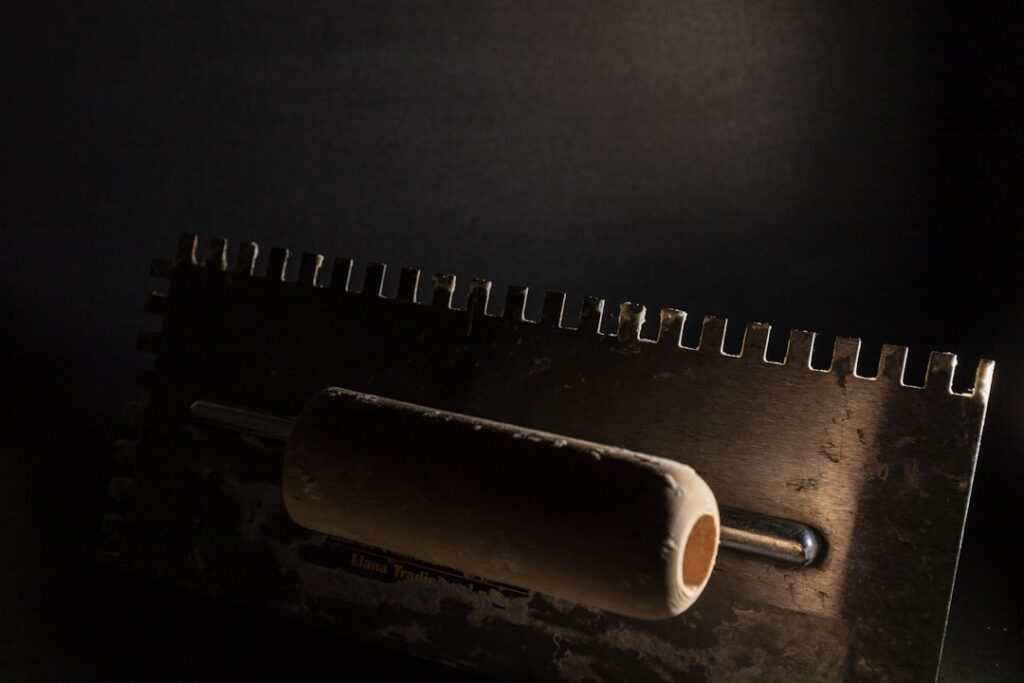
Step 2: Choose the right trowel. For most wall tile up to 6×6 inches, use a 3/16-inch V-notch trowel. For tiles up to 12×12 inches, use a 1/4-inch square-notch trowel. The notch size controls how much mastic is applied and ensures consistent coverage.
Step 3: Apply mastic to the wall. Spread mastic onto a manageable section of wall (about 3 to 4 square feet at a time) using the flat edge of the trowel. Then comb through the mastic with the notched edge, holding the trowel at a 45-degree angle. The ridges created by the notches allow the mastic to compress and spread when the tile is pressed in.
Step 4: Set the tiles. Press each tile into the mastic with a slight twisting motion to ensure full contact. Use tile spacers to maintain consistent grout joint widths. Check periodically by pulling a tile off the wall and examining the back. You should see 80 percent or more coverage for wall tiles.
Step 5: Clean up immediately. Wipe excess mastic off the tile face and from between tile joints with a damp sponge before it dries. Dried mastic is much harder to remove and can interfere with grouting.
Mastic Dry Time and Cure Time
Mastic tile adhesive dries and cures through evaporation, which means timing depends heavily on environmental conditions:
Initial set time: Mastic grabs tiles immediately upon contact, which is one of its advantages for wall tile. Tiles should not be adjusted more than 10 to 15 minutes after placement, as the mastic begins to skin over.
Dry time before grouting: Wait a minimum of 24 hours before grouting over mastic-set tiles. In humid conditions or for thick applications, extend this to 48 hours. The mastic needs to cure enough to hold the tiles firmly when you apply grout pressure.
Full cure time: Mastic tile adhesive takes 24 to 72 hours to fully cure under normal conditions (70 degrees Fahrenheit, 50 percent relative humidity). Higher humidity and lower temperatures extend cure time significantly. Full cure means the adhesive has reached its maximum bond strength.
Factors that affect dry time:
- Temperature — Warmer temperatures accelerate curing, cooler temperatures slow it
- Humidity — Lower humidity speeds evaporation and curing
- Ventilation — Good airflow helps moisture escape from behind the tiles
- Tile porosity — Porous tiles absorb moisture from the mastic, speeding cure time. Non-porous tiles (porcelain, glass) slow curing because the moisture can only escape through the grout joints
- Application thickness — Thicker applications take longer to cure. Do not glob mastic on thick to compensate for uneven walls
Common Mastic Mistakes to Avoid
In our decades of tile work, these are the mastic tile adhesive errors we encounter most frequently:
Using mastic in showers. We cannot stress this enough. We repair at least two or three mastic-in-shower failures every year. The tiles look fine for a year or two, then they start popping off one by one as the mastic dissolves. By the time the tiles fall off, there is usually significant mold behind them. Always use thinset in wet areas.
Applying mastic too thick. Mastic cures by evaporation. If it is applied too thick, the surface skins over while the interior remains wet and uncured. This leads to a weak bond that may not show up until months later. Use the proper notched trowel and do not exceed the recommended thickness.
Not combing properly. Spread mastic with consistent, straight trowel lines. Random swirl patterns trap air pockets and create voids behind the tile. These voids weaken the bond and can cause tiles to crack under pressure.
Working too large an area. Mastic begins to skin over within 15 to 20 minutes in normal conditions. If you spread too large an area, the mastic at the starting edge may be partially set before you get tiles on it. Work in sections of 3 to 4 square feet for consistent results.
Using mastic on non-porous substrates. Mastic needs evaporation to cure. On non-porous surfaces like plastic, metal, or sealed concrete, the moisture has nowhere to go, and the mastic will never cure properly. Use thinset on these substrates instead.
Best Mastic Tile Adhesive Products
Not all mastic products are equal. Here are the top mastic tile adhesive products based on our professional experience:
Mapei Type 1 Mastic (AKA Mapei Eco Prim Grip): Excellent grab, consistent quality, and strong bond. This is our preferred mastic for backsplash work. It spreads smoothly and has good open time for adjusting tiles. Price: approximately $25 to $30 per gallon.
Custom Building Products AcrylPro: Widely available at Home Depot, reasonably priced, and reliable for standard wall tile work. It has a slightly thinner consistency than Mapei but performs well within its intended applications. Price: approximately $18 to $25 per gallon.
Henry 314 Premixed Mastic: A solid mid-range option available at most home improvement stores. Good initial grab and easy cleanup. Price: approximately $20 to $28 per gallon.
Laticrete Mastic: Professional-grade product with excellent bond strength and workability. Less widely available at retail but a favorite among professional tile setters. Price: approximately $25 to $35 per gallon.
Regardless of brand, look for “Type 1” on the label. ANSI A136.1 Type 1 mastic meets the highest standard for premixed ceramic tile adhesive and provides the strongest, most reliable bond.
Frequently Asked Questions
Can I use mastic tile adhesive in a shower?
No. Mastic should never be used in showers, tub surrounds, or any area with regular water exposure. Mastic re-emulsifies (softens and dissolves) when exposed to sustained moisture, which will cause tiles to detach from the wall. Use thinset mortar for all shower and wet area tile installations.
How long does mastic take to dry before grouting?
Wait at least 24 hours before grouting tiles set with mastic. In humid conditions, thick applications, or when using non-porous tiles like porcelain or glass, extend the wait time to 48 hours. The mastic should be firm and not soft or tacky when you press on a tile edge.
Is mastic or thinset better for a backsplash?
Mastic is generally the better choice for kitchen backsplashes. It grabs wall tiles immediately (preventing slippage), requires no mixing, and bonds well to drywall. Thinset also works for backsplashes but adds unnecessary complexity for a dry-area wall application. The one exception is glass tile backsplashes, which often require a white thinset for proper adhesion and color appearance.
Can I use mastic on cement board?
Yes, mastic bonds well to cement board in dry locations. However, if you are installing cement board, it usually means you are working in a wet area (bathroom, shower), and in wet areas, you should be using thinset, not mastic. If you are using cement board for a kitchen backsplash or dry area, mastic works fine on it.
What is the shelf life of mastic tile adhesive?
Unopened mastic tile adhesive has a shelf life of approximately one to two years when stored in a cool, dry location. Once opened, mastic can dry out around the edges of the container. Keep the lid tightly sealed between uses. If the mastic has dried chunks, separated, or has an unusual odor, discard it and buy a fresh container.
Prefer to explore on your own?
See how new flooring looks in your actual room in seconds — free, no signup.
Try the free Floor Studio →