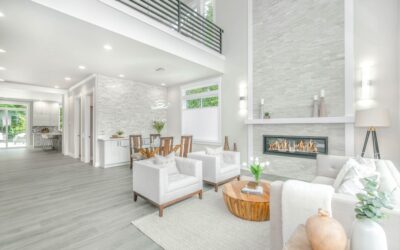
A combined media wall and fireplace is now the single most requested living room feature in new builds and major remodels, replacing the standalone hearth-and-mantel configuration that dominated homes for 80 years. Done well, the best media wall with fireplace ideas turn an awkward stretch of drywall into a true architectural anchor, hide cords and components completely, and pull family seating into a comfortable conversation zone. The design choices that matter most are TV height, fireplace style, materials, and lighting. Get those four right and the wall becomes the room’s identity.
- Plan the TV Height First
- Linear Electric Fireplace Layouts
- Stacked, Recessed, or Cantilevered: Three Form Factors
- Material Combinations That Anchor the Wall
- Built-in Storage Solutions
- Cord Management That Disappears Completely
- Lighting That Elevates the Focal Point
- Sound Strategy
- Budget Reality Check
Plan the TV Height First
Every successful media wall starts with TV placement. Mount the screen too high above the fireplace and viewers crane their necks; mount it too low and the fireplace overheats the electronics. The reliable rule: the center of the screen should sit at eye level when seated, which is typically 42 to 50 inches above the floor.
For a fireplace with a TV directly above, leave at least 12 to 18 inches between the top of the firebox and the bottom of the TV, and ensure the fireplace manufacturer’s clearance specs allow for electronics. Modern linear electric fireplaces like the Touchstone Sideline series throw less heat upward, making TV placement easier than wood-burning units allow.
Linear Electric Fireplace Layouts
Linear electric fireplaces have transformed media walls. They produce minimal heat upward, require no chimney or venting, and come in widths from 36 to 100 inches. Top units in 2025:
- Touchstone Sideline Elite 50: about 700 dollars, 50-inch width, real flame effect, 5,000 BTU heat
- Modern Flames Orion Slim 60: around 1,800 dollars, ultra-thin profile, multi-color flames
- Dimplex IgniteXL 74: about 2,200 dollars, 74-inch width, premium flame realism, wall or recessed install
- Napoleon Allure Vertical 60: around 1,400 dollars, can install horizontally or vertically
Most install in a standard 2×4 stud bay with no special framing. Plan a dedicated 120V circuit (15 amp) for the heater function, separate from the TV outlet, so you can run both simultaneously without tripping breakers.
Stacked, Recessed, or Cantilevered: Three Form Factors
The form of the wall changes the entire mood of the room:
- Flush flat wall: fireplace and TV are inset into the wall, finishing flush with the surface. Modern, minimalist, requires deeper wall framing
- Recessed niche: the fireplace and TV sit in a 6 to 12 inch deep alcove with side returns. Adds dimensional shadow and frames the focal point
- Cantilevered or raised hearth: fireplace box is elevated 12 to 24 inches off the floor with a stone or concrete cap below. Classic and traditional
The flush flat option requires the most planning because all cabling, audio, and ventilation routes through the wall cavity. Add a low-voltage rough-in box and HDMI passthrough kits during framing to avoid visible cords later.
Material Combinations That Anchor the Wall
Five material formulas that consistently look custom:
- Floor-to-ceiling vertical fluted wood paneling around the TV and fireplace, painted dark or stained walnut
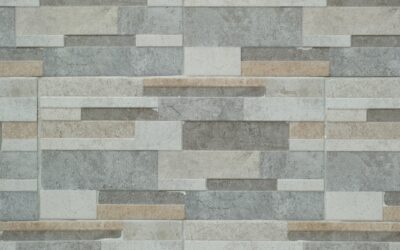
- Limestone slab or marble surround across the full wall, with the TV mounted directly on it
- Concrete or microcement finish in warm gray, paired with floating walnut shelving on either side
- Painted drywall with a deep color (Benjamin Moore Hale Navy, Sherwin-Williams Tricorn Black) and a slim brass surround
- Reclaimed brick or thin-set brick veneer with a contrasting steel fireplace surround
Material continuity from floor to ceiling makes the wall feel intentional rather than added-on. If you stop your material treatment at the ceiling line, you lose the architectural weight that makes high-end designs work.
Built-in Storage Solutions
The space on either side of the fireplace is prime built-in territory. Symmetrical cabinets that match the wall finish give a balanced classic look; asymmetric storage (cabinets on one side, open shelving on the other) feels more modern.
Plan for 18 to 24 inch deep base cabinets to hide components, with adjustable shelves above for books and decor. Include an IR repeater (about 25 dollars) so cabinet doors can stay closed while remotes still control hidden equipment. Run dedicated cooling fans (under 30 dollars) if you store an AV receiver behind closed doors; trapped heat shortens electronics life dramatically.
Cord Management That Disappears Completely
Visible cords ruin the look. Plan cable runs during the framing stage:
- Run a 1.5 inch PVC conduit from behind the TV down through the wall to the cabinet zone
- Install a recessed power outlet kit (around 35 dollars) at the TV location
- Route HDMI, optical, and Cat6 through the conduit to a wall plate near the AV components
- Use Ethernet over HDMI extenders if cable runs exceed 25 feet
- Hide the soundbar in a niche cut into the lower fireplace cap or above the TV
For retrofits where conduit is impossible, in-wall flat cable kits (Sewell Ghost Wire, around 50 dollars) hide cords behind the drywall surface and paint over invisibly.
Lighting That Elevates the Focal Point
The media wall deserves dedicated lighting. Layered options:
- LED tape lights inside the fireplace niche, indirect, on a separate dimmer
- Wall washers at the ceiling line (4-inch recessed, 600 to 800 lumens each) angled toward the wall
- Picture lights or small swing-arm sconces over flanking shelving
- Bias lighting strip behind the TV (around 25 dollars) reduces eye strain during evening viewing
Every light on the media wall should be on a dimmer. Cinema-style viewing requires roughly 5 to 10 percent ambient light to prevent eye fatigue without washing out the screen.
Sound Strategy
A 70-inch TV with built-in speakers is acoustically anemic. Plan sound during the design phase:
- Soundbar hidden in a niche or behind acoustically transparent fabric below the TV
- In-wall LCR speakers (Polk RC85i, around 200 dollars per pair) at ear level when seated
- Acoustically transparent screen fabric (Acoustone, around 12 dollars per yard) over hidden speaker locations
- Subwoofer placed in a corner cabinet with a vented door for bass response
For homes that watch a lot of movies, a 5.1 in-wall system runs 1,200 to 2,500 dollars and disappears into the design entirely. Without a thoughtful audio plan, a beautiful media wall sounds like a bedroom TV from 2010.
Budget Reality Check
A simple DIY linear electric fireplace plus drywall and paint runs about 1,200 to 2,500 dollars in materials. A mid-range project with custom built-ins, slab stone surround, and integrated lighting runs 6,000 to 12,000 dollars including labor. A full-custom design with floor-to-ceiling stone, hidden cord management, in-wall audio, and millwork can hit 18,000 to 35,000 dollars.
The most cost-effective media wall with fireplace ideas use a linear electric unit, drywall surround painted in a deep color, and modest built-in shelving on either side. The result still photographs and lives like a high-end space at a fraction of the budget of full slab construction.