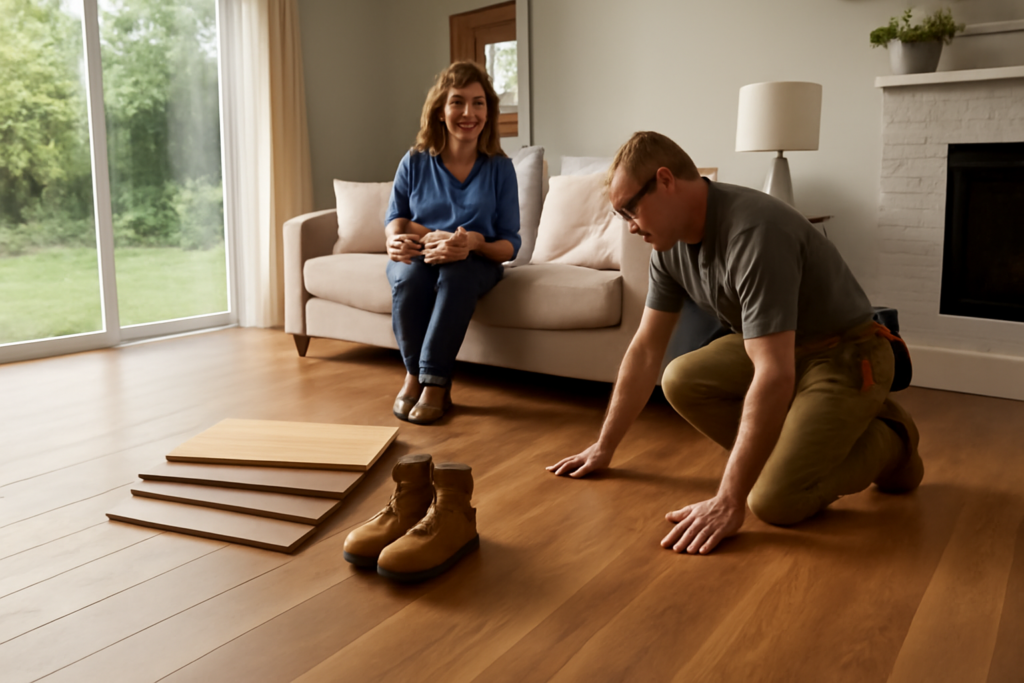
Family-owned regional flooring retailers operate on a different timescale than national chains, and that long view shapes the buying experience in ways most homeowners do not appreciate until they have been through both. Messner Flooring represents this category of mid-sized regional dealer with deep community roots, focused product selection, and an installer network built over decades. After ordering through similar regional family operations on more than 25 jobs, I can tell you exactly what this kind of retailer does well and where the trade-offs sit.
This guide breaks down what to expect, how pricing compares, and when a regional dealer is the right call.
- What a Regional Family Retailer Carries
- Pros: Where Regional Retailers Win
- Cons: The Real Limitations
- Comparing Regional Dealers to Big-Box Stores
- Comparing Regional Dealers to Specialty Showrooms
- Installation Considerations
- Real-World Quality and Longevity
- Maintenance and Post-Install Support
- Who Should Buy from a Regional Family Dealer
What a Regional Family Retailer Carries
Product mix at a regional dealer like Messner typically includes 4 to 8 LVP brands, 3 to 5 hardwood lines, ceramic and porcelain tile from regional distributors, and a curated carpet selection. Brands lean toward established names — Mohawk, Shaw, Mannington, Armstrong, COREtec — rather than the long tail of imported boutique products you might find at a big-box store or specialty showroom.
Pricing typically runs 5 to 12 percent above big-box but in line with other independent dealers. The premium covers showroom space, design service, and the curated installer network rather than markup on identical SKUs.
Pros: Where Regional Retailers Win
Three real strengths. The installer network is the headline value. Family-owned dealers have run the same crews for years and know exactly which installer handles wide-plank engineered hardwood best, which one is your go-to for tile shower installs, and which one to put on the rental property job where speed matters more than perfect aesthetics.
Long-term accountability is the second strength. A regional dealer is not going anywhere. If a problem develops three years after install, the same person who sold you the floor is still there to handle the warranty claim. National chains have rotating staff and weaker continuity on long-term issues.
Cons: The Real Limitations
Selection depth is the trade-off. A regional dealer carries a curated catalog rather than the deepest available selection. If you want a specific niche brand or an imported European product, special orders take 4 to 12 weeks and may require minimum quantities that exceed your job’s needs.
Pricing flexibility is limited. Independent dealers operate on tighter margins than the national chains can absorb, so there is less room for discounts. Expect the quoted price to be close to the actual transaction price rather than a starting point for negotiation.
Comparing Regional Dealers to Big-Box Stores
Against Home Depot and Lowe’s, the regional dealer typically wins on install quality and design service but loses on price by 5 to 12 percent. Big-box install crews are sourced through third-party contractors who rotate frequently — quality varies widely from job to job and there is little accountability when issues arise.
The right comparison comes down to what you value. For a price-driven DIY install, big-box is fine. For a job where install quality directly affects the result — wide-plank hardwood, tile, large-format porcelain — the regional dealer’s installer network is worth the price premium.
Comparing Regional Dealers to Specialty Showrooms
High-end specialty showrooms (designer-focused tile and hardwood houses) carry deeper European and boutique selection and offer design services at a premium. Pricing typically runs 15 to 35 percent above a regional family dealer for similar specs.
If you have a specific designer vision and want hands-on design help with imported products, specialty showrooms earn their margin. For a typical homeowner replacing a 1,200 sq ft kitchen and living area with mainstream LVP or engineered hardwood, the regional dealer delivers 85 percent of the experience at 65 percent of the cost.
Installation Considerations
The installer network is the differentiator. Ask the dealer to identify the specific crew who would handle your project and to provide references from recent jobs in the same product category. Regional dealers usually have this information at their fingertips because they work with the same crews repeatedly.
Confirm whether the install is a manufacturer-authorized application. Many premium warranties require certified installers, and the regional dealer should have at least two crews with that certification for each major brand they carry. Without that authorization, the warranty drops to a fraction of what is advertised.
Real-World Quality and Longevity
Five and ten-year inspections on projects done through regional dealers consistently show better results than equivalent big-box installs. The product is the same — a Mohawk RevWood plank is a Mohawk RevWood plank regardless of who sold it. The difference is in installer skill, substrate prep, and post-install service.
That consistency translates into fewer warranty issues, fewer callbacks for repair work, and a longer functional life for the floor. The 8 to 12 percent premium typically pays for itself in years 5 through 15 of the floor’s life.
Maintenance and Post-Install Support
Regional dealers usually offer a maintenance program or annual check-in that big-box stores cannot match. Some include a one-year follow-up visit to address any seasonal gapping or post-acclimation issues. Others offer discounted re-coating or refinishing services down the line.
Keep your original receipt, the carton labels, installer documentation, and any annual inspection reports in a project folder. Regional dealers are more likely to back warranty claims with documentation in hand and a recent inspection history.
Who Should Buy from a Regional Family Dealer
The right buyer is a homeowner doing a meaningful flooring project, values install quality and post-install service over rock-bottom price, and plans to stay in the home long enough for the install quality to pay back. Messner Flooring and similar regional family retailers deliver real value to that buyer. If you are price-driven, doing a small DIY install, or running a flip property where you will not see the result long-term, big-box stores or wholesale channels make better economic sense. Visit the showroom in person, talk with the actual installer who would handle your job, and pull samples to view in your home’s lighting before committing. Those three steps are easier at a regional dealer than at any other channel and they consistently produce floors that homeowners are still happy with at year 10 and beyond.
Prefer to explore on your own?
See how new flooring looks in your actual room in seconds — free, no signup.
Try the free Floor Studio →