Walk into any garage with a glossy, chip-flecked floor and the first question you’ll ask is where the homeowner sourced the kit. The answer matters more than most shoppers realize because epoxy quality varies wildly between big-box brands and pro-grade suppliers. If you’re stuck on where to buy epoxy flooring, your real decision is between consumer kits that cover roughly 250 square feet for under $200 and commercial-grade systems that run $2.50 to $7 per square foot installed. Get this wrong and you’ll be scraping peeling coating off your concrete in two years.
Part of our Epoxy, Concrete & Garage Floors guide — explore the full guide →
- Big-Box Retailers: Home Depot and Lowe’s
- Paint Stores: Sherwin Williams and Benjamin Moore
- Specialty Suppliers: ArmorPoxy, Epoxy-Coat, and Garage Floor Coating Inc
- Pro Installers vs DIY Kits
- Surface Prep: The Real Cost
- Decorative Options and Flake Systems
- Shipping, Lead Times, and Cold Weather
- Final Recommendation
Big-Box Retailers: Home Depot and Lowe’s
Home Depot stocks Rust-Oleum EpoxyShield Garage Floor Coating at around $109 for a 2-car kit, which covers 200 to 250 square feet at roughly 4 mil dry film thickness. Lowe’s carries Quikrete Epoxy Garage Floor Coating and Valspar Premium kits in the same price band. These are water-based or low-solids systems with 40 to 50 percent solids by volume, which means thinner builds and shorter lifespans of 3 to 5 years under heavy traffic.
The upside is convenience. You can grab a kit on Saturday morning, apply it that afternoon, and park on it by Tuesday. Both retailers also stock concrete etchers, degreasers, and chip flakes in the same aisle, so you won’t make three trips. Just understand you’re buying a coating, not a true industrial epoxy.

Paint Stores: Sherwin Williams and Benjamin Moore
Sherwin Williams stores carry ArmorSeal 1000 HS and Tread-Plex, professional 100-percent-solids epoxies that run $90 to $140 per gallon and cover roughly 80 to 100 square feet per gallon at 16 mil. These products require a more aggressive surface prep, longer pot life management, and respirator-grade ventilation, but the resulting floor is two to three times thicker than a big-box kit.
Benjamin Moore’s Insl-X line is similar in spec. Ask the store manager for the contractor pricing tier even if you’re a homeowner. Many locations will register you as a small account and knock 20 to 30 percent off list, which dramatically changes the math against a Home Depot kit.
Specialty Suppliers: ArmorPoxy, Epoxy-Coat, and Garage Floor Coating Inc
For genuine commercial systems, online specialty suppliers are your best bet. ArmorPoxy sells full kits including primer, base coat, decorative flakes, and clear topcoat for $1.50 to $3.50 per square foot delivered. Epoxy-Coat ships pigmented 100-percent-solids systems with metallic options. Garage Floor Coating Inc and Wolverine Coatings target installers but sell direct to consumers willing to buy 5-gallon pails.
These suppliers will email you a technical data sheet for every product, which big-box manufacturers rarely volunteer. Ask for the abrasion resistance (Taber CS-17), hot tire pickup resistance, and minimum surface profile required (usually CSP-3 to CSP-4). If a vendor can’t produce that data sheet, walk away.
Pro Installers vs DIY Kits
A licensed installer using a polyaspartic or pure 100-solids epoxy with a polyurea topcoat will quote $5 to $9 per square foot in most markets, including diamond grinding the concrete to a CSP-3 profile. That’s the gold-standard system, and it carries warranties of 10 to 15 years against delamination. For a 500-square-foot garage that’s $2,500 to $4,500 turnkey.
DIY kits make sense when your concrete is in good shape, you’re not parking hot tires on it daily, and you can dedicate a full weekend to prep. If your slab has efflorescence, hairline cracks wider than 1/16 inch, or moisture readings above 3 pounds per 1,000 square feet on a calcium chloride test, hire the pro. Coating over a wet slab fails every time.
Surface Prep: The Real Cost
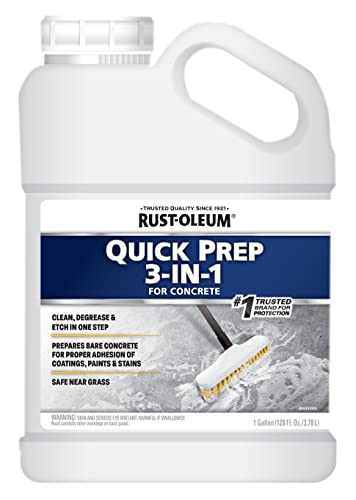
Where to buy epoxy flooring matters less than how you prep the slab. Acid etching with muriatic acid (sold in 1-gallon jugs at Home Depot for $12) is the minimum for DIY. Diamond grinding with a rental from United Rentals or Sunbelt at $90 to $140 per day delivers the CSP profile that commercial systems require.
Plan on 4 to 8 hours of prep for a 2-car garage if you’ve never done it. Vacuum with a shop vac fitted with a HEPA filter to capture concrete dust. Skip this step and you’ll see fisheyes and delamination within months regardless of the brand.
Decorative Options and Flake Systems
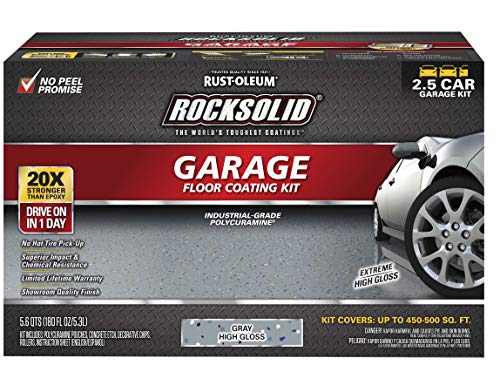
Color chip systems (vinyl flakes broadcast into wet base coat) are now the dominant DIY style. Daich SpreadStone and Rust-Oleum RockSolid both include 1/4-inch chips in 5-pound bags. For a custom blend, order from Torginol or Decorative Concrete Supply by the pound — about $4 to $8 per pound, with 1.5 to 3 pounds covering 100 square feet at full broadcast.
Metallic epoxies (Leggari, Stone Coat Countertops) deliver dramatic pearlescent finishes but require artistic application. Budget an extra $1 to $2 per square foot in materials and double the prep time. They’re stunning in showrooms and brutal in two-car garages with imperfect lighting.
Shipping, Lead Times, and Cold Weather
Epoxy resin can’t ship via air freight, so anything you order online travels by ground. Specialty suppliers typically deliver in 5 to 10 business days. Avoid ordering between November and March in northern climates: epoxy stored below 50 degrees Fahrenheit thickens and may not cure properly. Most manufacturers void the warranty if the substrate is below 55 degrees during application.
Local concrete supply houses (Curecrete, Specialty Construction Brands, regional Sherwin Williams contractor centers) are the smart move in winter. You can walk in, grab climate-controlled product, and apply same-day. Save the online order for spring.
Final Recommendation
For a typical 2-car garage with sound concrete, buy a 100-percent-solids kit from ArmorPoxy or Epoxy-Coat at $400 to $700 delivered and rent a diamond grinder. For a basement floor or low-traffic area, a Rust-Oleum kit from Home Depot is fine if you etch properly. For a workshop with chemical exposure or vehicle service, hire a pro with a polyaspartic system. Knowing where to buy epoxy flooring is half the battle — matching the product to the slab is the other half.