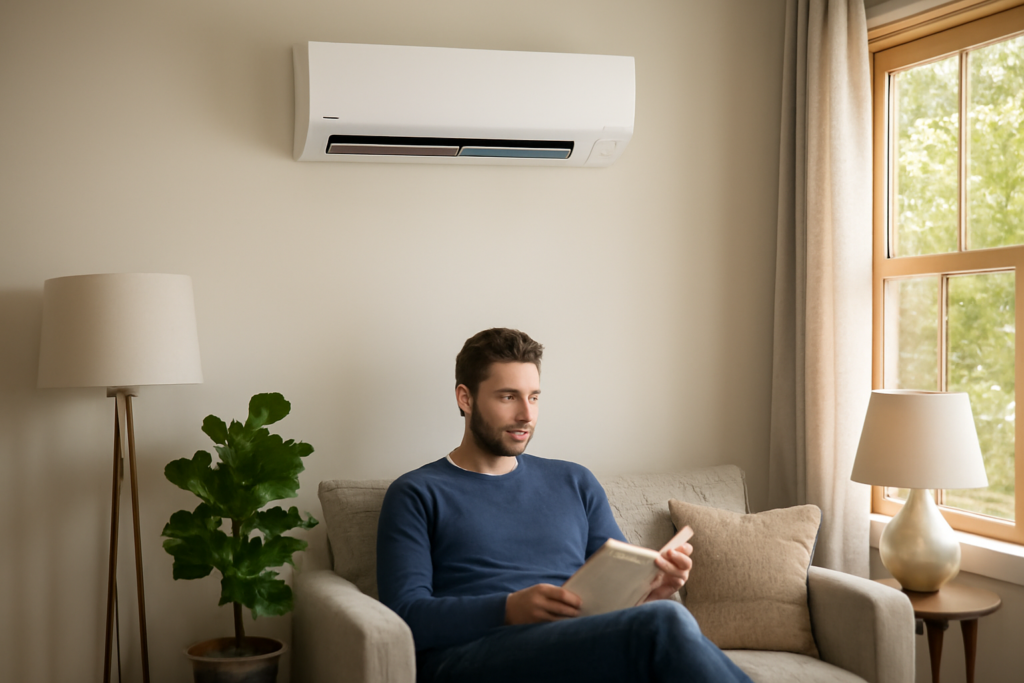
Daikin is the largest HVAC manufacturer in the world, and its ductless systems have earned a reputation for efficiency, quiet operation, and cold-climate reliability that rivals anyone in the market. A mini split Daikin system can heat and cool a single room or an entire house with inverter technology that trims energy bills while running whisper-quiet. If you’re weighing Daikin against Mitsubishi, LG, or budget brands, this guide breaks down the model lineup, efficiency ratings, cold-weather performance, and what you’ll actually pay.
Why Daikin Stands Out
Daikin’s advantage starts with scale and vertical integration, the company manufactures its own compressors and refrigerant, which shows up in reliable, well-matched systems. Its inverter-driven compressors ramp up and down continuously instead of cycling on and off like older units, which means steadier temperatures, less energy waste, and far quieter operation. Indoor units can run as low as 19 decibels, quieter than a whisper.
The brand also backs its equipment strongly. Many Daikin ductless systems carry a 12-year parts limited warranty when installed by a licensed contractor and registered, which is among the best in the industry. That warranty confidence, paired with a nationwide dealer network, makes Daikin a safe long-term choice for homeowners who plan to stay put.
The Daikin Model Lineup
Daikin organizes its ductless offerings into several families, each targeting a different need. Knowing the tiers helps you match a unit to your climate and budget:
- Daikin Aurora: cold-climate line, delivers heat down to -13°F, ideal for northern states
- Daikin LV / 19 Series: high-efficiency single-zone with wall-mounted heads, strong all-rounder
- Daikin MXS / multi-zone: one outdoor unit feeds up to several indoor heads for whole-home coverage
- Daikin FIT / ducted: hybrid systems that can tie into existing ductwork or serve as a compact central system
For most homeowners adding comfort to one or two rooms, a single-zone wall-mounted unit from the LV or 19 Series line is the go-to. Those needing sub-zero heating in Minnesota or Maine should look at the Aurora series, which maintains rated heating capacity in brutal cold where standard heat pumps falter.
Efficiency and SEER Ratings
Daikin systems post strong efficiency numbers. SEER2 (the cooling efficiency metric) ranges from around 17 on baseline units to over 24 on premium single-zone models, while HSPF2 (heating efficiency) is likewise high. Higher SEER2 means lower summer electricity bills; the tradeoff is a higher upfront price. For most climates, a unit in the 18 to 20 SEER2 range balances cost and savings well.
The inverter compressor is the reason these numbers are achievable. Because it modulates output rather than blasting at full power and shutting off, a Daikin unit uses only the energy needed to hold your setpoint. Over a cooling and heating season, that translates into meaningfully lower bills compared to a single-stage system, and it’s a big part of why heat pumps qualify for federal efficiency tax credits.
Cold-Climate Heating Performance
The old knock on heat pumps was that they quit in deep cold, but Daikin’s cold-climate Aurora line has largely erased that concern. These units deliver full heating capacity at 5°F and continue producing heat down to -13°F, using enhanced compressors and refrigerant control. For homeowners in the northern tier, that means a single Daikin system can serve as the primary heat source, displacing expensive oil, propane, or electric baseboard.
Even standard Daikin units heat effectively in moderate climates, but if your winters routinely drop below 20°F, specify a cold-climate model. Pairing the heat pump with a backup heat source for the very coldest nights is still common practice, but with an Aurora system that backup rarely needs to run, which is where the operating-cost savings come from.
What a Daikin Mini Split Costs
Daikin sits in the premium-but-attainable tier, below Mitsubishi’s top pricing but above value brands. A single-zone Daikin system runs roughly $3,500 to $6,000 installed depending on capacity and efficiency. Multi-zone systems serving three or four rooms land between $8,000 and $14,000 installed. The equipment alone, condenser plus one head, retails around $1,500 to $3,000.
Professional installation is strongly recommended and, for the 12-year warranty, effectively required, since Daikin’s best warranty terms apply only to installs by licensed contractors. Factor in that the federal heat-pump tax credit returns 30% of qualifying system cost up to $2,000, and many utilities add rebates, which can bring a $9,000 install down substantially.
Is a Daikin Right for You?
Daikin makes the most sense for homeowners who value long-term reliability, quiet operation, and strong warranty backing, and who are heating or cooling spaces that lack ductwork. In cold climates, the Aurora line’s ability to heat through deep winter makes it a genuine central-heating replacement. For a simple single-room addition in a mild climate, a value brand may save money upfront, but Daikin’s efficiency and warranty often win over the life of the system.
Before buying, get quotes from at least two licensed Daikin dealers, ask them to run a Manual J load calculation to size the unit correctly, and confirm the model qualifies for the tax credit. Match the model tier to your climate, single-zone standard for moderate regions, Aurora cold-climate for the north, and a mini split Daikin system will deliver quiet, efficient comfort backed by one of the strongest warranties in the HVAC business for well over a decade.
Indoor Unit Styles
Daikin doesn’t limit you to the classic wall-mounted head. The lineup includes several indoor unit styles so you can match the fixture to the room. Wall-mounted units are the most common and affordable, mounting high on an exterior wall. Ceiling cassettes recess into a drop ceiling and blow conditioned air in four directions, ideal for larger rooms where a wall unit would look bulky. Floor-mounted consoles sit low like a radiator and suit rooms with lots of glass or limited wall space.
Concealed ducted air handlers tuck into a ceiling or closet and distribute air through short duct runs to multiple vents, giving you the clean look of central air without visible indoor units. Mixing styles across a multi-zone system is common, a wall unit in the bedroom, a cassette in the open living area, and a floor console in the sunroom, all fed by one outdoor condenser. This flexibility is a big reason Daikin works in so many home layouts.
Maintenance and Filter Care
Keeping a Daikin running efficiently is mostly about clean filters. The washable filters in each indoor head should be rinsed every four to six weeks during heavy use, because a clogged filter chokes airflow, cuts efficiency, and makes the unit work harder. Pop the front panel, slide out the filters, rinse under warm water, let them dry fully, and reinstall, a five-minute task that protects performance and indoor air quality.
Beyond filters, plan an annual professional check that inspects refrigerant charge, cleans the outdoor condenser coil, clears the condensate drain, and verifies the electrical connections. Keeping the outdoor unit free of leaves, snow, and debris helps it breathe. With basic filter care and a yearly tune-up, a mini split Daikin system holds its rated efficiency for years and delivers the quiet, reliable, low-cost comfort that made the brand a global leader, backed by one of the strongest warranties available when installed by a licensed dealer.
Daikin vs the Competition
When homeowners cross-shop, Daikin usually lands against Mitsubishi, Fujitsu, and LG at the premium end and against value brands like Pioneer and Senville below. Mitsubishi is Daikin’s closest rival, both offer excellent cold-climate lines and strong reputations, and the choice often comes down to local dealer quality and price. Daikin’s global manufacturing scale and its 12-year registered warranty are frequently the deciding factors in its favor.
Against value brands, Daikin costs more upfront but typically wins on efficiency, quiet operation, warranty, and long-term reliability. A budget unit may save $1,500 on a single-zone install, but if it’s louder, less efficient, and backed by a thinner warranty, the savings can erode over the system’s life. For a garage or a rarely used room, a value brand makes sense; for the main living spaces of a home you’ll keep for years, Daikin’s premium is often worth paying.
Installation and Dealer Selection
The quality of your install matters as much as the brand on the box. A Daikin system charged incorrectly, mounted poorly, or sized wrong will underperform no matter how good the equipment is. Because the best warranty terms require a licensed contractor and registration, choosing a reputable Daikin dealer is part of buying the system. Look for installers with manufacturer certification and solid local reviews.
Ask any dealer to run a Manual J load calculation, explain which model tier fits your climate, and confirm the unit qualifies for the federal heat-pump tax credit and any utility rebate. Get the quote itemized so you can see equipment, labor, and electrical separately. Do that homework, pair a correctly sized mini split Daikin system with a certified installer, and you’ll get quiet, efficient, reliable heating and cooling backed by one of the strongest warranties in the industry for well over a decade.