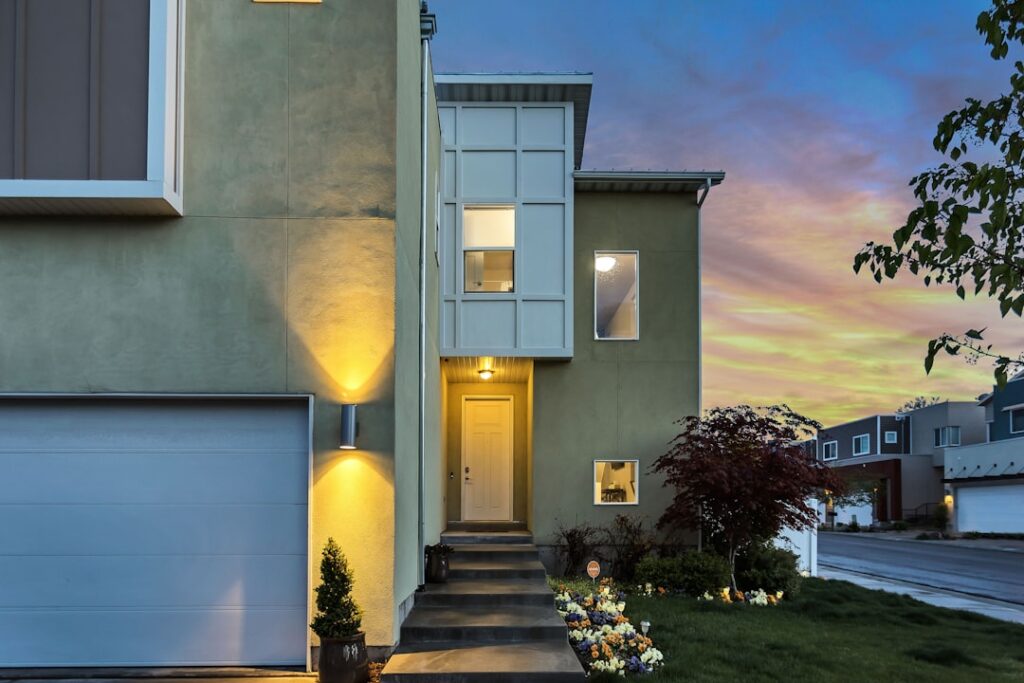
Curb appeal sells houses and lifts spirits, and nothing transforms a home’s exterior faster or more affordably than the right color scheme. Modern exterior paint colors have moved decisively away from the beige-on-beige suburbs of decades past toward confident palettes built on deep charcoals, crisp whites, warm earthy neutrals, and bold black accents. Getting the combination right — body, trim, and accent working in harmony with your roof, stone, and landscape — is what separates a home that looks intentional from one that looks dated. This guide covers the leading contemporary palettes and how to choose and combine them.
What Defines a Modern Exterior Palette
Modern exterior color is defined by contrast, restraint, and depth. Where traditional schemes layered several coordinated mid-tones, contemporary design tends toward a strong, cohesive base color paired with sharp trim contrast and one bold accent. The result reads clean and architectural rather than busy.
Two trends dominate current exteriors. The first is the high-contrast approach — a dark or white body with the opposite color on trim and a black door. The second is the warm-neutral movement, where soft greiges, warm whites, and earthy tones create a natural, grounded look that pairs beautifully with wood and stone. Both share an emphasis on simplicity and confident color choices over fussy detail.
Black and Dark Exteriors
Dark exteriors have surged from bold statement to established favorite. Deep charcoal, near-black, and moody blue-grays give a home a dramatic, sophisticated presence that makes architecture pop. A black or charcoal body with white or light trim creates striking contrast, while an all-dark scheme with black trim reads sleek and minimalist.
Dark colors do absorb more heat, so in hot southern climates factor in the effect on sun-facing walls and consider high-quality paint formulated to resist fading. But the payoff is undeniable: a dark exterior looks expensive, hides minor imperfections, and provides a perfect backdrop for green landscaping and warm wood accents.
White and Light Exteriors
On the opposite end, crisp white exteriors have reclaimed their place at the top of modern design. A clean white body with black trim and a black door is the signature modern farmhouse look — fresh, timeless, and endlessly photogenic. Whites range from bright and cool to soft and creamy, and the undertone matters enormously.
Warm whites with subtle cream undertones feel inviting and pair with warm-toned roofs and wood. Cool whites read sharp and contemporary against gray or black roofing. The key with any white is that it never looks quite as white on a full sunlit wall as it does on the chip, so lean slightly warmer or softer than a stark bright white to avoid a sterile, glaring result.
Warm Neutrals and Earthy Tones
For homeowners who want modern without stark contrast, warm neutrals deliver a softer, nature-inspired look. Greige — the blend of gray and beige — leads this category, offering a flexible base that shifts warm or cool depending on light. Mushroom, taupe, warm sand, and muted sage round out the palette.
These earthy tones excel at blending a home into a natural setting and pairing with stone, brick, and wood accents. A greige body with creamy white trim and a deep bronze or black door creates a warm, welcoming, thoroughly modern combination that never feels trendy or dated. This is the safest path to a contemporary look with lasting appeal.
Bold Accent Colors and the Front Door
The front door is your low-risk chance to add personality. Against a neutral or monochrome body, a saturated door color becomes a focal point that expresses character without overwhelming the house. Current favorites include:
- Black — the safest and most sophisticated accent, works with nearly any body color
- Deep navy — rich and classic against white or gray
- Forest or olive green — earthy and on-trend, especially with warm neutrals
- Warm terracotta or mustard — a confident pop for a modern-eclectic look
- Natural wood stain — a stained wood or wood-look door adds warmth to a dark or white body
Because a door repaints in an afternoon, it is the perfect place to experiment with bolder color than you would commit to on the whole house.
Building a Cohesive Three-Part Scheme
Every successful exterior follows the same structure: a body color, a trim color, and an accent. Choose the body first, since it covers the most surface and sets the overall mood. Select trim that provides clear contrast — light trim on a dark body, dark trim on a light body — to frame windows and define the architecture. Reserve the accent for the door and perhaps shutters.
Crucially, your fixed elements dictate the palette. Your roof, stone or brick, driveway, and any unpainted materials carry their own undertones, and your paint must harmonize with them. Hold color samples against the roof and stone in daylight — a warm-toned brick clashes with a cool blue-gray body but sings against a warm greige. Work with what you cannot change, and the whole scheme locks into place.
Monochrome and Tonal Schemes
One of the strongest current trends is the monochrome exterior, where the whole house wears a single color family in slightly varying tones. Imagine a charcoal body with near-black trim and a black door, or a warm white body with cream trim and a soft greige door. This tonal approach reads sleek, cohesive, and unmistakably modern, letting the architecture and materials carry the interest rather than color contrast.
Monochrome schemes work especially well on homes with strong architectural lines or mixed materials like wood and stone, because the restrained palette lets those elements stand out. The trick is varying the sheen and depth just enough to define trim from body without introducing a competing color. Done well, an all-black or all-white house looks intentional and high-end; done carelessly, it can look flat, so lean on subtle tonal shifts and let texture do the work.
Climate and Durability Factors
Color is not purely aesthetic — your climate should influence the choice. Dark exteriors absorb significant solar heat, which in hot southern and desert regions raises wall temperatures and can accelerate paint fade and, on some sidings, expansion stress. In those climates, if you love a dark look, invest in premium fade-resistant exterior paint and factor the heat gain into your decision.
Sun intensity also affects longevity. South- and west-facing walls take the harshest UV punishment and fade fastest, so a color that looks perfect on the shaded north side may lighten unevenly over years on the sunny elevations. Quality paint with strong UV inhibitors holds its color far longer, which matters more with saturated and dark shades than with soft neutrals. Spending up on a premium exterior product is almost always worth it, since the labor of repainting dwarfs the cost of the paint itself, and better paint simply lasts more years before that labor comes due.
Testing Colors Before You Commit
Exterior color is unforgiving of guesswork because a full repaint is expensive and hard to undo. Always buy sample quarts and paint large test patches — 2 by 2 feet or larger — on several sides of the house. Observe them in morning light, harsh midday sun, and evening shade, because exterior colors shift dramatically with the angle and intensity of daylight.
Remember that color looks lighter and brighter at full scale in sunlight than on a small chip, so a shade that seems perfect on paper may wash out on the wall. When in doubt, go a step deeper. Take your time with this stage — a few weeks of testing costs almost nothing and saves you from a five-figure mistake. Choose modern exterior paint colors that flatter your architecture, harmonize with your fixed materials, and reflect the confident, clean aesthetic that defines contemporary design, and your home’s curb appeal will reward you every time you pull into the driveway.