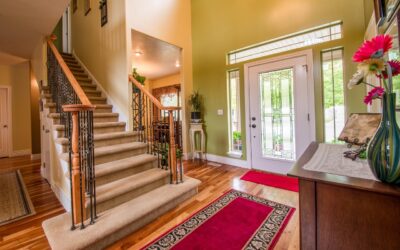
The staircase is often the first thing you see when you walk into a home, which makes it the perfect place to set a design tone. Modern farmhouse stairs hit a sweet spot that’s made the style so enduring: warm natural wood paired with crisp, simple lines and black accents. It’s rustic without being fussy and modern without feeling cold. The look comes down to a handful of material and detail choices, the treads, the railing, the balusters, and an optional runner, that together create that clean, welcoming farmhouse feel.
Part of our Stairs & Stair Flooring guide — explore the full guide →
The Core Formula
At its heart, the modern farmhouse staircase combines three elements: warm wood for the parts you touch and walk on, white or painted surfaces for the structure, and black metal for the railing and spindles. That contrast, light risers, wood treads, black iron, is what reads instantly as modern farmhouse. The wood brings warmth and texture, the white keeps it bright and clean, and the black grounds the whole composition and adds the modern edge. Almost every variation of the style plays with these same three ingredients.
Wood Treads That Set the Tone
The treads are the star. Solid wood treads in a warm, natural finish, oak is the classic choice, anchor the farmhouse look. Many homeowners pair stained wood treads with painted white risers, the vertical faces between steps, for that signature two-tone staircase. The stain color matters: warm mid-browns and honey tones feel traditional and cozy, while lighter natural or whitewashed oak leans more contemporary and Scandinavian-farmhouse. Match or coordinate the tread stain with your nearby wood flooring so the staircase feels integrated rather than bolted on.
- Stained wood treads + white risers: the iconic two-tone farmhouse look.
- All-wood treads and risers: warmer and more rustic, less contrast.
- Coordinate the stain with adjacent flooring for a seamless transition.
Black Metal Railings and Balusters
Nothing says modern farmhouse like a black handrail and black iron balusters. Slim, straight black metal spindles replace the turned wooden balusters of traditional staircases, giving a cleaner, more open feel. You’ll see a few common approaches: thin square or round black metal balusters, horizontal black bars for a more contemporary edge, or a black metal handrail paired with a warm wood cap. The black ironwork contrasts beautifully against white risers and wood treads, and it keeps sightlines open compared to bulky wood balustrades. A wood handrail in the same stain as the treads, set above black spindles, is an especially popular combination.
Newel Posts and Handrail Details
The newel post, the substantial post at the bottom and turns of the stair, is a chance to add character. A chunky square wood newel in a matching stain feels solid and farmhouse-appropriate, while a sleek black metal post reads more modern. The handrail can be all wood, all black metal, or wood capped over metal supports. Keep the profiles simple and the lines straight; ornate carved details pull the look toward traditional rather than modern farmhouse. Consistency matters, repeat the same metal finish and the same wood stain throughout the staircase.
Adding a Stair Runner
A runner is an optional but high-impact detail. A runner down the center of the treads adds softness, muffles footstep noise, and introduces pattern or color. For the modern farmhouse style, classic choices include a natural fiber like jute or wool in a neutral tone, a simple stripe, or a subtle geometric pattern. Black-and-white or muted patterns tie into the palette nicely. Secure the runner with a quality pad and proper installation so it stays put and wears evenly, and leave a margin of exposed wood on each side so the treads still show. A runner also adds traction on smooth wood stairs, a practical safety bonus.
Lighting and Surrounding Details
The staircase doesn’t exist in isolation. A simple black or matte-finish pendant or a row of recessed lights keeps the area bright and on-theme. Shiplap or board-and-batten paneling along the stair wall reinforces the farmhouse vibe, while a gallery wall of framed prints adds personality. Keep wall colors light, warm whites and soft greiges, so the wood and black accents stand out. The goal is a cohesive look where the stairs feel like part of a deliberate whole.
Open vs. Closed Risers
One structural choice has an outsized effect on the modern farmhouse feel: open versus closed risers. Closed risers, with a solid painted face between each tread, give the classic two-tone cottage look and feel cozy and traditional. Open risers, where there’s a gap and you can see through between the treads, read more contemporary and airy, letting light pass through the staircase and making a small entry feel larger. Many modern farmhouse designs split the difference with closed risers and slim black metal balusters for openness in the railing instead.
Keep safety in mind with open risers, building codes limit how large the gap can be, typically to prevent a small child from passing through, so check local requirements before opting for a fully open design. If you love the open look but have young kids, you can add a removable infill or simply choose a tighter gap. Either way, the riser decision shapes whether your staircase leans rustic-cozy or clean-modern within the same overall style.
Pulling the Look Together
Modern farmhouse stairs succeed when the elements stay simple and consistent: warm wood treads, clean white or painted risers, slim black metal railings and balusters, and an optional natural-fiber runner. Coordinate the wood stain with your floors, pick one black metal finish and stick to it, and avoid ornate detailing that tips the design back toward traditional. The result is a staircase that feels both timeless and current, the kind of welcoming, light-filled focal point that defines the modern farmhouse style from the moment you step through the door.
Budget and Renovation Tips
You don’t need a full rebuild to get the modern farmhouse look. If your existing staircase is structurally sound, you can transform it with surface-level updates that cost far less than new construction. Refinishing or replacing just the treads with stained wood, painting the risers white, and swapping out dated wooden balusters for slim black metal spindles together create the signature look on an existing frame. Painting an old oak handrail black, or refinishing it to match new treads, is an inexpensive high-impact change.
Prioritize where you’ll see the change most. The treads and the railing carry the most visual weight, so spend there first. Adding a runner is a quick, reversible upgrade that softens the look and adds traction. If you’re working stage by stage, do the messy refinishing work before installing a runner or repainting nearby walls. With smart sequencing, even a modest budget can turn a builder-grade staircase into the warm, clean centerpiece the style is known for.