
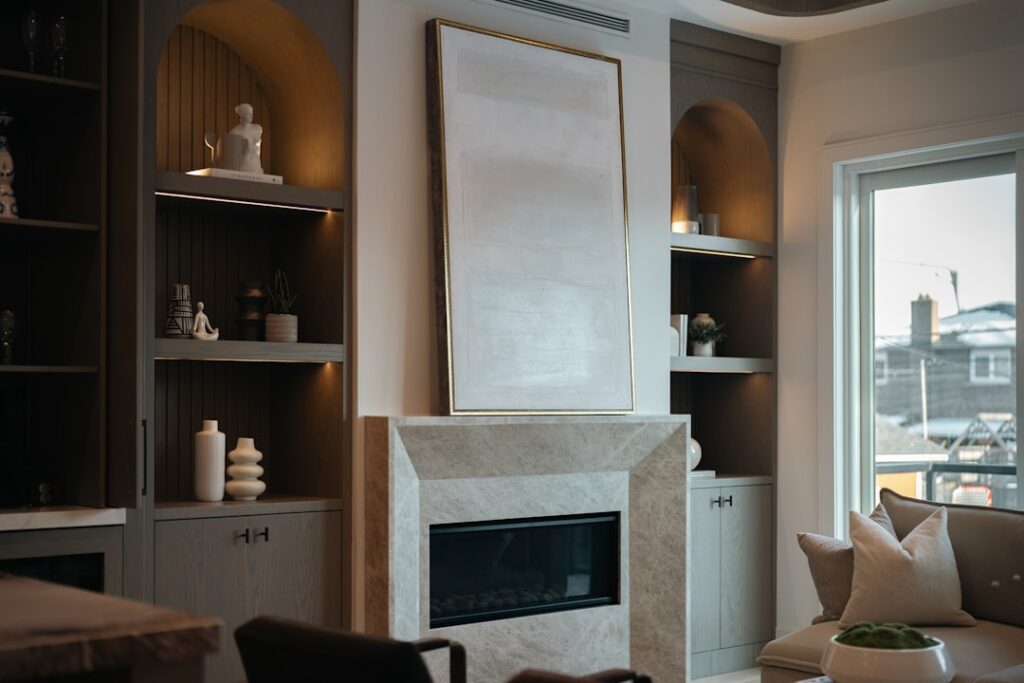
Window treatments do more than block light. They control privacy, insulate against heat and cold, dampen street noise, and set the visual tone for the entire room. The right modern window treatment ideas balance function with style, creating a finished look that cheap mini blinds simply cannot achieve. Whether you are outfitting a new build or updating a dated home, the options available today are more versatile and affordable than ever.
Part of our Windows & Doors guide — explore the full guide →
Roller Shades: The Clean Minimalist Choice
Roller shades sit flush against the window frame and disappear into a slim cassette when raised. They suit modern, Scandinavian, and minimalist interiors where you want the architecture to speak rather than the window coverings. Basic light-filtering roller shades start at $25-$50 per window. Blackout versions for bedrooms and media rooms run $40-$80.
Solar shades are a roller shade subcategory that blocks UV rays and glare while preserving your view. They come in openness factors from 1% (nearly opaque) to 14% (very sheer). A 3-5% openness factor works well for most living rooms, reducing glare on screens while still letting you see outdoors during daylight hours.
Cellular (Honeycomb) Shades for Energy Efficiency
Cellular shades trap air in honeycomb-shaped pockets that act as insulation against your windows. Single-cell shades offer moderate insulation. Double-cell versions block even more heat transfer, potentially reducing window heat loss by up to 40% according to the US Department of Energy.
They come in light-filtering and blackout fabrics, with the option of top-down/bottom-up operation that lets you lower the shade from the top for privacy while keeping the upper portion open for natural light. Custom cellular shades from brands like Hunter Douglas and Levolor cost $60-$200 per window depending on size and features.
Motorized Blinds and Shades
Motorized modern window treatment ideas have dropped significantly in price. Battery-powered motorized roller shades from IKEA start under $100. Hardwired smart shades from Lutron and Hunter Douglas range from $300-$800 per window but integrate seamlessly with home automation systems like Apple HomeKit, Google Home, and Amazon Alexa.
Scheduling shades to open at sunrise and close at sunset is more than a convenience trick. Automated routines protect hardwood floors and furniture from UV fading, improve energy efficiency, and create a lived-in appearance while you are on vacation. For hard-to-reach windows, skylights, and two-story great rooms, motorized operation is practically a necessity.
Sheer Curtains and Drapes
Sheer curtains softly diffuse light, creating a bright and airy atmosphere without sacrificing daytime privacy. They work beautifully in living rooms, dining rooms, and bedrooms when layered behind blackout drapes on a double rod. Linen-blend sheers from stores like West Elm and Pottery Barn run $40-$100 per panel.
For a modern look, hang curtain rods 4-6 inches above the window frame and extend the rod 6-10 inches past each side of the window. This trick makes windows appear larger and ceilings taller. Curtains should just kiss the floor or puddle 1-2 inches for a luxurious feel. Anything shorter than the windowsill looks dated.
Roman Shades for a Tailored Look
Roman shades fold into neat horizontal pleats when raised and lay flat when lowered. They bridge the gap between the softness of curtains and the clean functionality of blinds. Flat-fold Roman shades create a sleek, modern profile, while cascading or hobbled styles add texture and dimension.
Custom Roman shades in quality fabrics cost $150-$400 per window. Ready-made options from Target, Amazon, and Wayfair start at $30-$70 but offer fewer fabric choices and may not fit non-standard window sizes. If your windows are wider than 72 inches, custom is almost always necessary since ready-made shades rarely come that wide.
Natural Materials: Bamboo and Woven Wood
Woven wood shades made from bamboo, jute, grasses, or reeds bring organic warmth to any room. They pair especially well with bohemian, coastal, farmhouse, and transitional interiors. Prices range from $50 to $250 per window depending on the weave material and whether a privacy liner is added.
Without a liner, woven shades let light filter through gaps in the weave. Adding a light-filtering or blackout liner costs $20-$50 extra per shade but makes them functional for bedrooms and bathrooms where privacy matters. Top-down/bottom-up operation is available on most woven wood shades and solves the light-versus-privacy dilemma elegantly.
Choosing Treatments Room by Room
Kitchens need moisture-resistant treatments that clear the sink and stove areas. Roller shades, faux wood blinds, and cafe-height curtains all work well. Bedrooms demand blackout capability, making cellular blackout shades or layered drapes the best picks. Living rooms benefit from light-filtering options that reduce glare without darkening the space entirely.
Bathrooms require treatments that handle humidity. Faux wood blinds, vinyl roller shades, and composite shutters resist warping and mildew in wet environments. Avoid real wood and natural fiber treatments in full bathrooms. For a cohesive whole-house look, choose one or two treatment styles and carry them throughout, adjusting the fabric or opacity level by room rather than switching styles completely.


