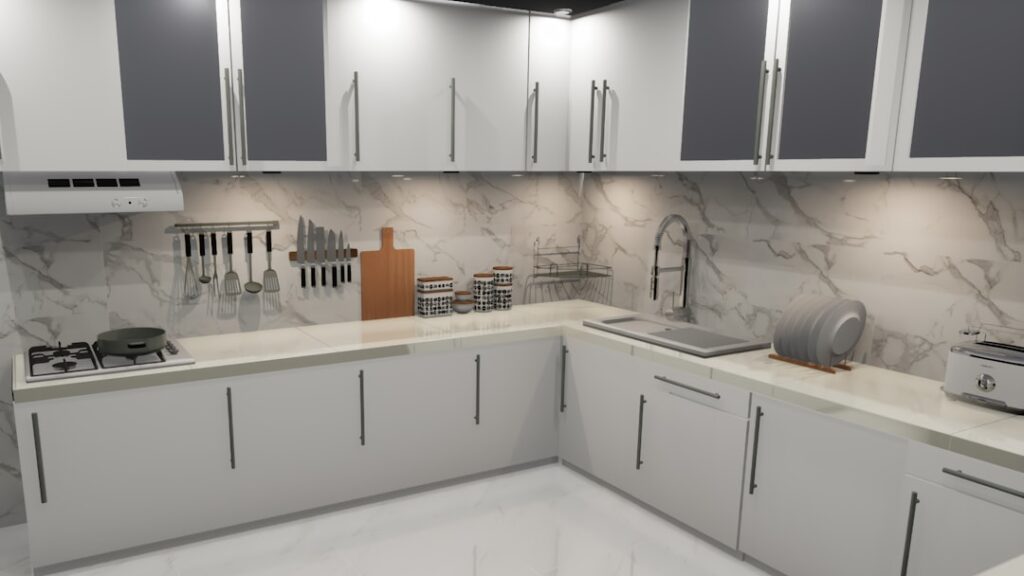
The window over the kitchen sink is one of the hardest-working spots in the house. It gets steam from the faucet, grease from the stove nearby, water splashes, and constant hand contact when you crank it open. That is why choosing kitchen sink window treatments is less about pure style and more about picking materials that tolerate moisture and wipe clean without falling apart. Get the material right first, then make it look good.
Part of our Kitchen Remodeling guide — explore the full guide →
- What Makes This Window Different
- Cafe Curtains and Tier Curtains
- Faux Wood and Aluminum Blinds
- Roller and Roman Shades
- Low-Maintenance and Hardware-Free Options
- Choosing by Your Kitchen's Conditions
- Measuring, Mounting, and Cleaning Tips
- Coordinating With the Rest of the Kitchen
- Budget vs. Custom Options
What Makes This Window Different
Unlike a living room window, the one above your sink lives in a humid, splash-prone zone. Fabric that soaks up moisture can mildew, warp, or hold cooking odors. Treatments that hang too long can dip into the basin or block the faucet. Anything mounted there also needs to clear the window crank or operating hardware.
Keep three priorities front of mind: moisture tolerance, easy cleaning, and a short, out-of-the-way length. A treatment that nails all three will look fresh for years instead of yellowing within a season.
Cafe Curtains and Tier Curtains
Cafe curtains cover only the lower half of the window, giving privacy while still letting light pour in over the top. Because they are short, they stay well clear of the sink and faucet. Choose a tight-weave cotton-poly blend or an outright washable polyester so you can toss them in the laundry when grease builds up.
Tier curtains paired with a valance are a classic over-sink look. The key is hardware you can remove easily, like a simple tension rod or clip rings, so washing is a two-minute job. Skip heavy linen and silk here; they stain, sag in humidity, and are a pain to clean.
Faux Wood and Aluminum Blinds
For a window that sees a lot of water, faux wood blinds are one of the most practical choices. Real wood warps and discolors in steam, but faux wood (a PVC or composite material) shrugs off moisture and wipes down with a damp cloth. They tilt for privacy and light control without ever touching the sink.
Aluminum mini blinds are the budget version of the same idea. They are fully waterproof, cheap to replace, and easy to dust. The downside is they can look utilitarian and may dent, so they suit a casual or rental kitchen better than a high-end remodel.
Roller and Roman Shades
Roller shades give a clean, modern profile and roll completely out of the way. Vinyl or vinyl-coated roller shades are the smart pick over the sink because they resist moisture and wipe clean in seconds. A solar or light-filtering version keeps daytime glare down while you do dishes.
Roman shades look more tailored and upscale, but be selective with fabric. A flat-fold Roman in an indoor-outdoor or performance fabric handles humidity far better than traditional drapery cloth. Mount any shade so its lowest position still clears the faucet and basin.
Low-Maintenance and Hardware-Free Options
Sometimes the best treatment is barely a treatment at all. Consider these when you want light and a clean look:
- Cellular (honeycomb) shades: insulate well and come in moisture-resistant versions, though deep grease can be hard to clean.
- Frosted window film: permanent privacy with zero fabric to clean, ideal if the view is unappealing anyway.
- A simple valance only: softens the top of the window while leaving the glass clear and easy to wash.
- Bamboo or woven-wood shades: warm and textural, but better suited to lower-humidity kitchens since natural fibers absorb steam.
Choosing by Your Kitchen’s Conditions
If your sink window sits right beside the cooktop, lean toward wipeable hard treatments like faux wood blinds or vinyl roller shades, because grease travels. If the window is across the room from the stove and mainly deals with sink splash, washable cafe curtains are perfectly fine and add warmth.
Privacy needs matter too. A street-facing window benefits from a tilt blind or bottom-up cellular shade that hides the lower glass while keeping the top open. A window facing a private yard can stay light and airy with just a valance or a sheer cafe panel.
Measuring, Mounting, and Cleaning Tips
Measure the window opening precisely and decide on an inside or outside mount. Inside mounts look trim but need enough depth to clear the crank; outside mounts forgive out-of-square windows and add the illusion of height. Always confirm the treatment, at its longest, sits above the faucet and rim.
For upkeep, dust hard treatments weekly and wipe them with a mild dish-soap solution when grease appears. Launder fabric panels on a gentle cycle and rehang while slightly damp to reduce wrinkles. With the right moisture-friendly material and a quick cleaning routine, your kitchen sink window treatments will stay crisp through years of dishes, steam, and splashes.
Coordinating With the Rest of the Kitchen
The sink window is usually a focal point, so its treatment sets a tone for the whole room. Pull a color from your backsplash, cabinet hardware, or a nearby rug to tie the window into the existing scheme rather than introducing a fourth or fifth color. A treatment that echoes elements already in the kitchen looks intentional and calm.
Scale matters too. In a small kitchen, a simple cafe curtain or a slim roller shade keeps the window from feeling busy, while a larger kitchen can carry a fuller valance or layered look. When in doubt, lean toward simple and clean; the sink area already has a lot going on with the faucet, dish supplies, and any window-ledge plants.
Budget vs. Custom Options
You can dress a sink window for almost any budget. Ready-made cafe curtains, stock aluminum mini blinds, and off-the-shelf vinyl roller shades are inexpensive and easy to swap when they wear out. Faux wood blinds and quality washable Roman shades cost more but last longer and look more finished.
If the window is an odd size, made-to-measure blinds or shades fit better and operate more smoothly than forcing a stock size to work. Spend a little more on the hardware mechanism than on the fabric; a smooth-operating shade or a sturdy rod outlasts cheap parts and is what you touch every single day.