
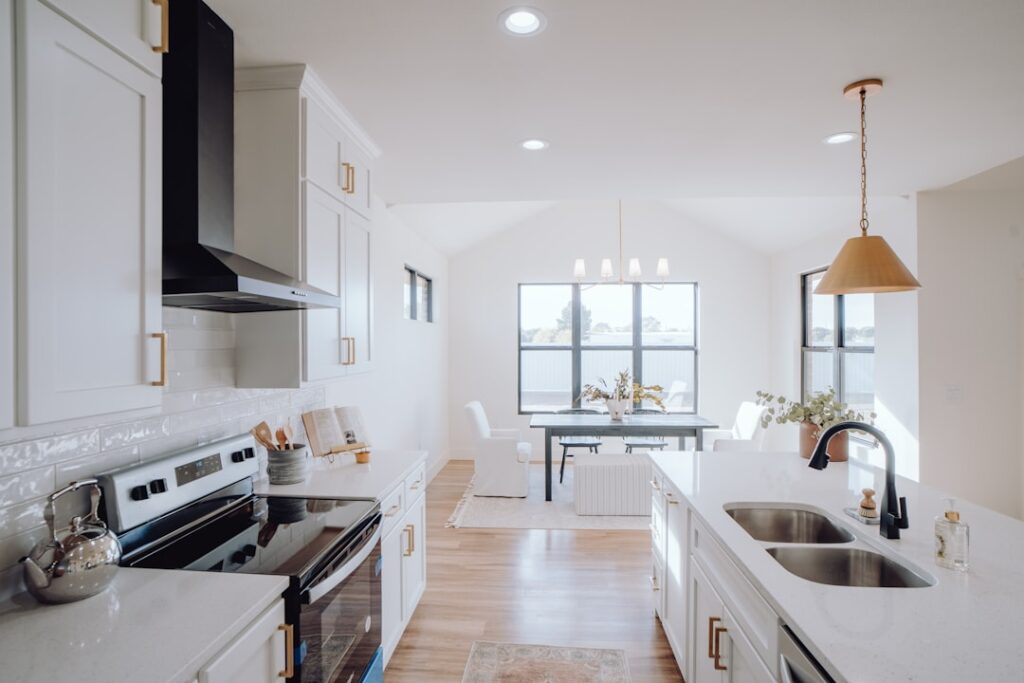
The kitchen is the toughest room in the house for window coverings. Between cooking grease, steam, splashes near the sink, and constant traffic, kitchen window treatments have to earn their keep in a way that living-room drapery never does. The right choice controls light and privacy, wipes clean in seconds, and holds up to humidity without warping, staining, or growing mildew. The wrong choice turns into a grease-soaked eyesore within a year.
Part of our Kitchen Remodeling guide — explore the full guide →
This guide walks through the treatment styles that actually work over a sink and stove, how to match them to your window’s location, and the materials that shrug off the mess a working kitchen throws at them.
What Makes a Good Kitchen Window Treatment
Before picking a style, understand the three demands unique to kitchens. First, moisture and grease resistance: anything within a few feet of the range or sink needs a surface you can wipe down. Second, easy operation: you will raise and lower these constantly while your hands are busy, so complicated ties and layers frustrate fast. Third, fire safety: fabric hanging near a gas or electric burner is a genuine hazard, which is why long flowing curtains rarely belong beside a cooktop.
Location within the kitchen changes the calculus. A window over the sink faces daily splashes and needs the most wipeable option. A window on the far side of a breakfast nook, well away from cooking, can accept softer fabric treatments that would never survive over the stove.
The Best Kitchen Window Treatment Styles
Faux Wood and Composite Blinds
Faux wood blinds are among the most practical kitchen choices. Made from PVC or composite rather than real wood, they resist warping from steam and wipe clean with a damp cloth. They deliver crisp light control through tiltable slats and read as more upscale than aluminum mini blinds. Expect $30 to $150 per window depending on size and whether you buy stock or custom.
Roller and Solar Shades
Roller shades give a clean, minimal look and roll completely out of the way when you want an unobstructed view. Vinyl or coated-fabric rollers wipe clean easily, and solar shade versions cut glare and UV while preserving your outdoor view, ideal for a sink window that faces a backyard. They pair well with modern and transitional kitchens.
Roman Shades
For warmth and softness without floor-length fabric, Roman shades fold up neatly and add color and pattern. Choose a moisture-resistant, easily cleaned fabric and keep them away from the range. They suit farmhouse and traditional kitchens beautifully but demand more upkeep than a wipeable blind.
Café Curtains
Café curtains cover only the bottom half of the window, mounted on a rod at the midpoint. They grant privacy where you need it, over a street-facing sink, while letting light pour in above. Because they are short and easily removed, you can toss them in the wash when grease builds up. This is one of the few fabric options that works well in a busy kitchen.
Plantation Shutters
The premium choice, plantation shutters offer excellent light control, insulation, and a permanent, high-end look that boosts resale value. Waterproof composite or vinyl shutters handle kitchen humidity far better than painted wood. They cost the most, often $200 to $400+ per window installed, but they are essentially maintenance-free and last for decades.
Matching Treatments to Your Window and Style
Coordinate your choice with both the window’s exposure and your kitchen’s design. A few pairings that consistently work:
- Over the sink: Faux wood blinds, roller shades, or a short café curtain, all easy to wipe and raise with wet hands.
- Near the range: Keep it hard-surfaced and short. Blinds or shutters, never long fabric.
- Breakfast nook or eating area: Roman shades, café curtains, or layered blinds with a soft valance for warmth.
- Modern kitchen: Solar or roller shades in neutral tones, or clean-lined shutters.
- Farmhouse or traditional: Café curtains, Roman shades, or wood-look shutters.
For south- and west-facing windows that get harsh afternoon sun, prioritize UV and glare control with solar shades or tilting slats, which also protect countertops and cabinets from fading.
Layering for Function and Style
You do not have to pick just one. A common upgrade is pairing a functional hard treatment with a soft decorative one: blinds or a roller shade for privacy and light, topped with a valance or short curtain panels for color and texture. This layered approach lets the wipeable layer do the daily work while the fabric layer softens the room. Just keep total fabric volume modest and well clear of heat sources.
Cleaning and Maintenance
Grease and steam are relentless, so build cleaning into your routine. Wipe faux wood blinds and shutters monthly with a damp microfiber cloth and a drop of dish soap, which cuts grease effectively. Vacuum shade fabric with a brush attachment and spot-clean stains promptly. Launder café curtains and washable fabrics on a gentle cycle a few times a year. Treatments near the stove will always need more frequent attention than those across the room, so factor that into your choice: the closer to the cooking, the more you should lean toward a hard, wipeable surface.
Measuring and Mounting for a Clean Look
Accurate measurement makes the difference between treatments that look tailored and ones that look like an afterthought. The first decision is whether to mount inside the window frame or outside it. An inside mount sits within the window recess for a clean, built-in appearance that shows off attractive trim, but it requires enough depth for the hardware and a perfectly square opening. An outside mount attaches to the wall or trim above and around the window, covering more area, blocking more light leakage, and making a small window appear larger, which is handy in a compact kitchen.
For an inside mount, measure the exact width at the top, middle, and bottom of the opening and use the narrowest figure, then measure the height in three places. For an outside mount, add several inches of overlap on each side and top for full coverage and privacy. Over-the-sink windows deserve special attention because a treatment mounted too low can interfere with the faucet or the crank of a casement window, so account for how the window and fixtures actually operate before committing to a mounting height.
Coordinating Color and Pattern
Kitchens already contain a lot of visual information, cabinets, countertops, backsplash, and hardware, so window treatments work best when they complement rather than compete. In a busy kitchen with a patterned backsplash and bold counters, solid neutral treatments in white, cream, gray, or natural wood tones keep the room from feeling chaotic. In a simpler kitchen with plain white cabinets and neutral counters, a patterned Roman shade or café curtain becomes a welcome opportunity to introduce color and personality.
Think about how the treatment interacts with light, too. White and light-colored treatments filter sunlight softly and keep the kitchen feeling bright and airy, while darker fabrics and finishes create contrast and drama but can darken the room when closed. If your kitchen runs cool and modern, lean into crisp whites and grays; if it leans warm and traditional, natural woods and warmer fabric tones will feel more at home. Coordinating the treatment’s finish with your cabinet hardware and faucet, matching a matte black blind to matte black pulls, for instance, ties the whole room together with very little effort.
Budgeting Your Kitchen Window Treatments
Costs span a wide range. Stock faux wood blinds or vinyl roller shades from a home center run $25 to $80 per window, while custom-sized versions climb to $100 to $200. Roman shades and quality café curtains land in the $40 to $150 range depending on fabric. Plantation shutters sit at the top, $200 to $450 per window installed. For most kitchens, a smart strategy is investing in durable, wipeable treatments over the sink and range where they take the most abuse, and saving softer decorative options for the eating areas where they will last. Chosen well, the right kitchen window treatments balance beauty and function and hold up through years of daily cooking.


