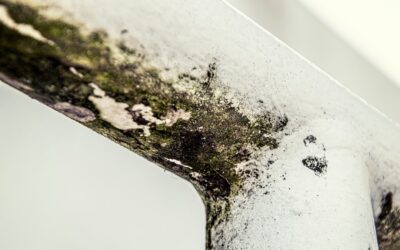
By the time most homeowners notice a problem, mold behind walls has already been growing for weeks or months in conditions no one can see. Drywall, insulation, and framing lumber are organic, porous, and easy for spores to colonize once moisture intrudes from a leaky pipe, a roof penetration, or an underperforming bathroom fan. The good news: there are reliable, low-cost ways to find hidden mold before it turns into a $9,000 remediation project.
What Causes Mold to Grow Behind Walls
Mold needs four things to colonize: moisture, oxygen, organic material, and temperatures between 40°F and 100°F. Wall cavities supply three of those passively. Add a moisture source and you have ideal conditions within 24 to 48 hours.
The most common sources are plumbing supply or drain leaks at fittings inside walls, condensation on cold-water lines in humid climates, ice-dam water intrusion at exterior walls, vapor drive through poorly insulated walls in cold climates, and bathroom exhaust fans that vent into wall cavities or attics instead of outdoors.
Telltale Signs That Are Easy to Miss
Visible black streaks at outlets and switch plates are obvious, but earlier signs show up first. A persistent musty odor in one specific room, especially worse on humid days, almost always means active microbial growth nearby. Discoloration that bleeds through paint as tan, yellow, or brown tea-like stains points to moisture moving through gypsum.
- Wallpaper that bubbles, peels, or curls at the seams
- Drywall that feels soft or spongy when pressed firmly
- Baseboard separation or warping that was not there a month ago
- Allergy symptoms, headaches, or sinus issues that resolve when you leave the house
- Visible mold at the bottom corners of closets or behind furniture pushed against exterior walls
If two or more of these signs show up in the same room, you have enough evidence to investigate before opening anything.
Tools That Find Hidden Moisture
Mold needs sustained moisture, so finding the moisture source finds the mold. A pinless moisture meter like the General Tools MMD7NP at $89 reads through paint and identifies wet zones without putting holes in drywall. Anything reading above 16 percent moisture content in gypsum signals a problem; sustained readings above 20 percent guarantee active mold growth.
Thermal cameras are the other game-changer. The FLIR ONE Pro for iPhone or Android at $419 plugs into your phone and reveals temperature differentials that flag wet insulation behind drywall. Cold spots in summer or warm spots in winter often correspond to saturated cavities. Some pest control and HVAC companies will run a free thermal scan if you book any service.
Air Quality Testing and Lab Verification
If you suspect hidden mold but cannot pinpoint it, air sampling tells you what is actually airborne. Send-in kits from My Mold Detective or Mold Inspection Network run $40 to $99 per sample. Take one sample in the suspect room, one outdoors as a baseline, and one in a known-clean room.
Compare the indoor spore count to the outdoor baseline. Indoor counts more than three times outdoor counts, or the presence of Stachybotrys (the black toxic mold) at any level, justifies professional inspection. Lab turnaround usually runs five to seven business days.
DIY Versus Professional Remediation
The EPA recommends DIY remediation only for affected areas under 10 sq ft, with no occupant health concerns and no HVAC contamination. Anything beyond that needs an IICRC S520-certified remediation contractor.
DIY remediation under 10 sq ft costs $50 to $250 in materials: N95 respirator, nitrile gloves, plastic sheeting, HEPA vacuum rental, EPA-registered cleaner like Concrobium Mold Control at $19.97 per quart, and replacement drywall. Pro remediation for a single contaminated wall cavity runs $1,500 to $4,500. Full-room remediation with containment, HEPA air scrubbers, and content protection ranges from $5,500 to $12,000. Whole-house events tied to flooding routinely exceed $25,000.
How Remediation Should Be Done Correctly
Proper remediation follows a strict sequence. Skipping steps means spores spread to clean parts of the house and the problem returns within months.
- Stop the moisture source completely before any other work begins
- Set up containment with 6-mil plastic sheeting and negative air pressure using a HEPA air scrubber
- Workers wear N95 or P100 respirators, Tyvek suits, and nitrile gloves
- Remove affected drywall, insulation, and trim, double-bagged in 6-mil bags
- HEPA vacuum exposed framing, then wipe with EPA-registered antimicrobial
- Dry framing to under 16 percent moisture content with commercial dehumidifiers
- Apply encapsulant if any staining remains, like Foster 40-51 Sherman-Williams
- Replace with new drywall, insulation, and trim only after post-remediation verification testing clears the area
Reputable companies like ServPro, ServiceMaster, and Rainbow International document each step with moisture readings, photos, and air sampling reports your insurer will require for any claim.
Preventing It from Happening Again
Once you have dealt with mold behind walls once, you do not want to repeat it. Inspect under sinks, behind toilets, and around tubs monthly with a flashlight. Run bathroom exhaust fans for 20 minutes after every shower. Insulate cold water pipes with 3/8-inch foam tubing where they pass through exterior walls. Add vapor retarders behind drywall when remodeling in cold climates.
Schedule annual HVAC inspections so condensate lines, drip pans, and coil drains stay clear. A $185 maintenance call beats a five-figure remediation every time.
Insurance and Disclosure Considerations
Standard homeowners policies under ISO HO-3 forms typically exclude mold damage unless the mold results from a covered sudden water loss like a burst pipe. Long-term moisture issues, condensation, or maintenance failures generally are not covered. Some carriers offer mold endorsements with limits between $5,000 and $50,000 for additional premium of $40 to $200 per year.
If you are selling a home where mold remediation was performed, most states require disclosure on the seller property disclosure form. Keep all remediation paperwork, including pre- and post-remediation air sampling, scope of work, and contractor warranties. Buyers in hot markets routinely walk away from listings with undisclosed mold history, so transparent documentation actually preserves transaction value. Stay ahead of moisture and the spores in your house will never get the conditions they need to take hold.