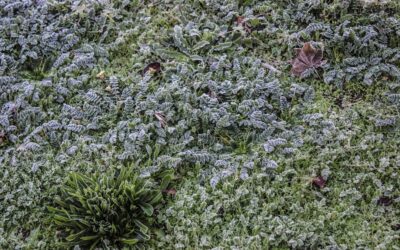
A moss lawn is one of the most sustainable and visually stunning alternatives to traditional grass. It requires no mowing, no fertilizing, and minimal watering once established. In 2026, moss lawns are surging in popularity as homeowners look for low-maintenance, eco-friendly landscaping solutions. This guide covers everything from species selection to installation and long-term care.
Why Choose a Moss Lawn?
Moss lawns offer advantages that traditional grass simply cannot match:
- Zero mowing: Moss grows to a maximum height of 1 to 4 inches and never requires cutting. The average American spends 70 hours per year mowing their lawn. A moss lawn gives you all that time back.
- No fertilizer needed: Moss absorbs nutrients directly from the air and rain through its leaves, not through roots. This eliminates fertilizer runoff, a major source of water pollution.
- Minimal watering: Once established, moss needs supplemental water only during extended dry spells exceeding 3 weeks. A mature moss lawn uses 75% less water than a Kentucky bluegrass lawn.
- Erosion control: Moss forms a dense mat that holds soil in place on slopes and shaded areas where grass struggles to grow.
- Year-round green: Most moss species stay green through winter in USDA zones 3 through 9, while traditional lawns go dormant and turn brown.
Best Moss Species for Lawns
| Species | Growth Habit | Light Preference | Foot Traffic Tolerance | Zones |
|---|---|---|---|---|
| Sheet Moss (Hypnum) | Flat, carpet-like | Shade to partial shade | Low | 3 – 9 |
| Fern Moss (Thuidium) | Feathery, spreading | Full shade | Low | 4 – 9 |
| Haircap Moss (Polytrichum) | Upright, star-shaped | Part shade to part sun | Moderate | 3 – 8 |
| Rock Cap Moss (Dicranum) | Mounding, cushion-like | Shade | Low | 3 – 9 |
| Mood Moss (Dicranum scoparium) | Dense mounds | Shade to part shade | Low | 4 – 9 |
For most residential lawns, sheet moss is the top choice. It creates a smooth, velvety carpet that looks like a living green rug. Haircap moss is the best option for areas that receive moderate foot traffic, as its upright growth habit allows it to bounce back after being stepped on. Combining 2 to 3 species creates a more natural, textured appearance.
Ideal Growing Conditions
Moss thrives in conditions that are typically hostile to traditional grass. Understanding these requirements is essential for success:
Light: Most moss species prefer 70% to 90% shade. This makes moss perfect for yards shaded by mature trees, north-facing slopes, or areas between buildings. A few species, like haircap moss, tolerate up to 4 hours of direct morning sun.
Soil pH: Moss prefers acidic soil with a pH between 5.0 and 5.5. Test your soil before planting. If your pH is above 6.0, you can lower it by applying eleite sulfur at a rate of 1 pound per 100 square feet, which reduces pH by approximately 0.5 units over 2 to 3 months.
Moisture: Moss needs consistent moisture during the first 3 to 6 months of establishment. After that, it survives on natural rainfall in most regions. Yards with poor drainage or clay soil are actually ideal because they retain moisture longer.
Soil compaction: Unlike grass, moss thrives on compacted soil. Hard-packed earth, rock surfaces, and thin soil layers over stone all work well. This is why moss naturally colonizes pathways, concrete edges, and shaded stone walls.
How to Grow a Moss Lawn Step by Step
- Test and adjust soil pH: Purchase a soil pH test kit ($8 to $15) and test multiple spots across your planting area. Apply sulfur if needed and retest in 8 weeks. Target pH: 5.0 to 5.5.
- Remove existing vegetation: Strip away grass, weeds, and leaf litter. Moss cannot establish on top of existing turf. For large areas, use a sod cutter rental ($50 to $75 per day). For smaller patches, a flat-edged spade works fine.
- Smooth and compact the soil: Rake the area smooth and compact it by walking over it or using a lawn roller. Moss bonds best to firm, flat surfaces.
- Source your moss: You have three options:
- Transplant wild moss: Harvest patches from your own property (never from public land). Press firmly onto dampened soil. Cost: free.
- Buy moss sheets: Live moss sheets (1 to 2 sq ft each) cost $5 to $12 per sheet and establish fastest. You need full coverage for best results.
- Moss slurry method: Blend 2 cups of moss fragments with 2 cups of buttermilk and 2 cups of water. Spread the mixture over the soil. Cheapest option but slowest, taking 6 to 12 months for full coverage.
- Press and water: Press transplanted sheets firmly against the soil to eliminate air gaps. Water thoroughly and keep the area consistently moist for the first 6 to 8 weeks. Mist 2 to 3 times daily during hot or dry periods.
- Keep off the moss: Avoid walking on newly planted moss for the first 3 months while it attaches to the soil. Place stepping stones for necessary foot traffic paths.
Cost Breakdown
| Method | Cost per 100 sq ft | Time to Full Coverage | Difficulty |
|---|---|---|---|
| Transplant (own property) | $0 – $10 | 3 – 6 months | Moderate |
| Moss slurry | $15 – $30 | 6 – 12 months | Easy |
| Live moss sheets | $50 – $120 | 1 – 3 months | Easy |
| Professional installation | $200 – $400 | Immediate | N/A |
For a typical 1,000-square-foot shaded yard, expect to spend $500 to $1,200 using live moss sheets or $150 to $300 using the slurry method. Compare that to seeding a traditional lawn at $150 to $400 or laying sod at $1,200 to $2,400 for the same area. The long-term savings from zero mowing and zero fertilizer make a moss lawn more economical over 3 to 5 years.
Maintenance Guide
A moss lawn requires dramatically less maintenance than grass, but it is not completely maintenance-free:
| Task | Frequency | Time (per 1,000 sq ft) |
|---|---|---|
| Remove fallen leaves | Weekly in autumn | 15 – 30 minutes |
| Hand-pull weeds | Monthly | 20 – 40 minutes |
| Supplemental watering | During dry spells (3+ weeks) | 10 minutes per session |
| Edge trimming | 2 – 3 times per year | 15 minutes |
| Debris removal | As needed | 5 – 10 minutes |
Leaf removal is the single most important maintenance task. Leaves left on moss for more than 7 to 10 days block sunlight and trap moisture, creating conditions for fungal disease. Use a leaf blower on the lowest setting or gently rake with a flexible bamboo rake. Never use a metal rake, as it can tear the moss from the soil. For paths between moss beds, a dust mop keeps stone or pavers clean without disturbing the moss edges.
Moss Lawn vs. Traditional Grass
| Factor | Moss Lawn | Traditional Grass Lawn |
|---|---|---|
| Annual mowing hours | 0 | 50 – 70 hours |
| Annual water use | 0 – 500 gallons | 20,000 – 60,000 gallons |
| Annual fertilizer | None | 4 – 6 applications |
| Herbicide needed | None | 1 – 3 applications |
| Foot traffic tolerance | Low to moderate | High |
| Sun requirement | Shade preferred | 6+ hours full sun |
| Annual maintenance cost | $0 – $50 | $500 – $1,500 |
| Carbon footprint | Negative (absorbs CO2) | Positive (mower emissions) |
The biggest drawback of a moss lawn is its low tolerance for heavy foot traffic. If you have children or pets that play actively on the lawn, designate specific play areas with grass or rubber surfacing and convert the shaded, low-traffic zones to moss. This hybrid approach captures the benefits of both options.
Common Problems & Solutions
Moss turning brown: Usually caused by extended drought or too much direct sun. Water deeply and consider adding shade cloth if the area receives more than 3 hours of direct afternoon sun. Brown moss is dormant, not dead, and typically recovers within 1 to 2 weeks of consistent moisture.
Weed invasion: Weeds are the biggest challenge in the first year. Hand-pull weeds weekly and avoid herbicides, which damage moss. Once the moss carpet is fully established (12 to 18 months), its dense mat naturally suppresses most weeds.
Moss not attaching to soil: This usually means the soil is too alkaline (pH above 6.0) or the surface is too loose. Re-compact the soil and apply a sulfur treatment to lower pH. You can also mist with a diluted buttermilk solution (1:4 ratio with water) to acidify the surface.
Animal damage: Squirrels and birds sometimes dig up moss patches looking for insects. Lay lightweight bird netting over newly transplanted areas for the first 6 to 8 weeks. Remove the netting once the moss has firmly attached.
Algae growth: Green or black algae on top of moss indicates excessive moisture and poor air circulation. Improve drainage and thin overhead tree canopy to increase airflow. Avoid watering in the evening, which promotes algae growth.
Frequently Asked Questions
Can you walk on a moss lawn?
You can walk on an established moss lawn occasionally, but it does not tolerate heavy or frequent foot traffic like grass. Haircap moss (Polytrichum) is the most traffic-tolerant species. Install stepping stones or flagstone paths through moss areas to create walkways that protect the moss while providing firm footing, especially over soft or laminate-like surfaces.
How long does it take to grow a moss lawn?
Live moss sheet transplants fill in within 1 to 3 months. The buttermilk slurry method takes 6 to 12 months for full coverage. Transplanted wild moss patches take 3 to 6 months. Full establishment (where the moss is firmly bonded and self-sustaining) takes 12 to 18 months regardless of the planting method.
Does a moss lawn attract bugs?
Moss lawns do not attract more insects than grass lawns. In fact, moss does not provide the food sources (grass seeds, nectar, thatch) that attract many common lawn pests. You may see more beneficial insects like springtails and ground beetles, which help decompose organic matter and control pest populations.
Will moss grow in full sun?
Most moss species struggle in full sun, especially with dry soil. However, haircap moss and a few Bryum species tolerate up to 4 to 6 hours of direct sun if the soil stays consistently moist. In full-sun areas, traditional grass or clover is usually a better choice.
How do I get rid of a moss lawn if I change my mind?
Moss is easy to remove. Rake it up (it has no true root system), lime the soil to raise the pH above 6.5, and overseed with grass. The entire conversion takes about 4 to 6 weeks in the growing season. The removed moss can be composted or transplanted to another shaded area.
Is a moss lawn cheaper than grass?
Initial installation costs are comparable, but long-term costs are dramatically lower. A moss lawn costs $0 to $50 per year to maintain versus $500 to $1,500 for a traditional grass lawn. Over 5 years, the average homeowner saves $2,500 to $7,000 by choosing moss in suitable locations.
Last updated: March 2026