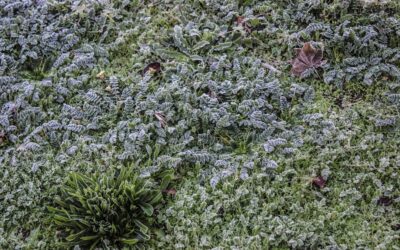
If you have spotted a spreading green carpet where your grass used to be, you are dealing with a common and misunderstood problem. Moss in a moss yard is almost never the real issue, it is a symptom. Moss moves in only where grass has already given up, so killing the moss without fixing what let it thrive just guarantees it comes right back. After decades diagnosing struggling lawns, I can tell you the moss is trying to send you a message about your soil, your shade, and your drainage.
This guide explains exactly what causes moss to take over, whether you should fight it or embrace it, and the specific steps to correct the underlying conditions so grass can compete again.
Why Moss Grows Where Grass Won’t
Moss is an opportunist. It has no true roots and cannot outcompete healthy, vigorous turf. It simply colonizes the bare, weak, or thin spots grass has abandoned. So when you see moss winning, it means the growing conditions have tipped in moss’s favor and against your lawn. There are five conditions that do this, and usually you have two or three of them at once.
Cause 1: Too Much Shade
Shade is the number one driver. Most lawn grasses, Kentucky bluegrass, perennial ryegrass, tall fescue, need at least four to six hours of direct sun to stay dense. Under mature trees or on the north side of the house, they thin out and weaken. Moss, by contrast, thrives in low light. Where a maple canopy blocks the sun, grass simply cannot generate the energy to hold its ground.
The fix is to increase light. Selectively prune or “limb up” tree canopies to let dappled sun reach the ground, and thin crowded branches so more filters through. If deep shade is permanent, accept that turf will always struggle there and plan a different groundcover.
Cause 2: Acidic Soil
Grass prefers a soil pH between 6.0 and 7.0. When the soil drifts below 6.0, turf struggles to take up nutrients and thins out, while moss is perfectly happy in that acidic range. Areas under pines, in high-rainfall regions, and where lime has never been applied tend to acidify over time.
Test your soil before assuming anything. A DIY pH kit costs $10 to $15, and a lab test through your county extension office runs $15 to $25 and tells you exactly how much lime to add. If the pH reads below 6.0, apply ground limestone. As a rule of thumb, it takes about 40 to 50 pounds of pelletized lime per 1,000 square feet to raise pH one point in loamy soil, though your soil test will give the precise rate. Lime works slowly, so apply in fall and retest the following season.
Cause 3: Poor Drainage and Compaction
Moss loves moisture, and soggy, compacted ground holds it. Where soil is packed hard from foot traffic, clay content, or heavy equipment, water sits on the surface instead of draining, air cannot reach grass roots, and turf declines. Moss, needing no root system, moves right in on that damp, oxygen-starved surface.
You can check for compaction by pushing a screwdriver into moist soil. If it resists going in more than a couple of inches, the ground is compacted. Core aeration is the cure: a machine pulls thousands of small soil plugs, opening the ground so water, air, and roots can move. Renting an aerator costs $70 to $100 for a day. For chronic wet spots, you may need to regrade to shed water or install a French drain.
Cause 4: Excess Moisture
Beyond drainage, simple persistent dampness feeds moss. North-facing slopes, low spots, areas under dripping eaves, and beds watered too often all stay wet long enough for moss to colonize. Overwatering an already-shady area is a common self-inflicted cause.
Improve air movement and light so surfaces dry faster, cut back overhanging shrubs that trap humidity, and reduce irrigation in problem zones. Water deeply but infrequently, about 1 inch a week in one or two sessions, rather than shallow daily sprinkling that keeps the surface perpetually moist.
Cause 5: Thin, Underfed Turf
Finally, a lawn that is simply weak, underfertilized, mowed too short, or worn out, leaves open ground for moss. Grass scalped below 2 inches loses vigor and root depth. A lawn that never gets fed thins out over years. Any bare patch is an open invitation.
Feed the lawn on a proper schedule with a balanced or slow-release fertilizer, and raise your mower deck to 3 to 3.5 inches. Taller grass shades out competitors, roots deeper, and holds its density. Overseed thin areas in early fall with a grass suited to your conditions, using a shade-tolerant fine fescue blend under trees.
Should You Kill It or Keep It?
Here is a question worth asking before you wage war: does the moss actually bother you? In deep shade where grass will never thrive, moss is arguably a feature, not a flaw. It stays green year-round, needs no mowing, no fertilizer, and no watering once established, and it feels wonderful underfoot.
Japanese garden designers prize moss for exactly these reasons. If your moss yard sits under a dense canopy where you have fought and lost the turf battle repeatedly, consider leaning in. A cultivated moss lawn or a shade garden of hostas (Zones 3-9), ferns, and moss can be lower maintenance and better looking than a perpetually struggling patch of thin grass. Choose your battles by location.
If You Want the Grass Back
If the area gets enough light to support turf and you want it back, the sequence matters. Correcting conditions comes first, killing moss second, or the moss simply returns. Work in this order:
- Test soil and apply lime if pH is below 6.0.
- Prune trees to increase light.
- Core aerate to relieve compaction and improve drainage.
- Rake out or treat the existing moss to expose bare soil.
- Fertilize, then overseed with a grass matched to the light level.
- Keep mowing high, at 3 inches or more, going forward.
To physically remove moss, you can rake it out vigorously once it is loosened, or treat it first with iron sulfate to blacken and kill it before raking. That control step is covered in detail separately, but remember: raking out moss without changing the shade, pH, and drainage that caused it just resets the clock. The moss will be back within a year.
Embracing a Moss Lawn Where It Makes Sense
If you decide the shade is too deep to fight, you can cultivate moss on purpose and get a genuinely beautiful, no-mow ground layer. The same conditions that plague a grass lawn, shade, acidity, and moisture, are exactly what a moss lawn wants, so you are working with nature instead of against it.
To encourage a moss lawn, clear away leaves and debris that would smother it, keep the surface consistently moist during dry spells, and hand-pull any weeds that try to root in. You can even transplant patches of moss from elsewhere on the property: press them firmly onto bare, raked soil, keep them watered daily for a few weeks, and they knit in. A moss lawn needs no mowing, no fertilizer, and no lime, and it stays a soft, deep green through seasons when nearby grass browns out. Pair it with shade lovers like ferns, hostas (Zones 3-9), and astilbe (Zones 4-9) for a woodland garden that practically cares for itself.
Preventing Moss From Coming Back
Whether you keep the moss in the shade and restore grass in the sun, the way to hold your ground is to keep turf areas vigorous. A dense, healthy lawn is the single best defense, because moss cannot invade where grass is thick. Build that density with a few consistent habits.
- Mow high. Keep the deck at 3 to 3.5 inches so grass shades out competitors and roots deeply.
- Feed on schedule. A slow-release fertilizer applied in spring and fall keeps turf thick and vigorous.
- Aerate yearly. Annual core aeration in shade-prone or compacted areas keeps water and air moving.
- Watch your pH. Retest soil every two to three years and add lime as needed to hold pH near 6.5.
- Water smart. Deep, infrequent watering keeps the surface dry between soakings, which favors grass over moss.
The Bottom Line
Moss in the yard is a diagnosis, not a disease. It tells you the ground is too shady, too acidic, too compacted, too wet, or too underfed for grass to compete. Read the signal, fix the two or three conditions actually at play, and you either restore a lawn that can hold its own or make peace with an easy-care green carpet where turf was always going to lose. Either way, you stop wasting money on quick fixes that never last.