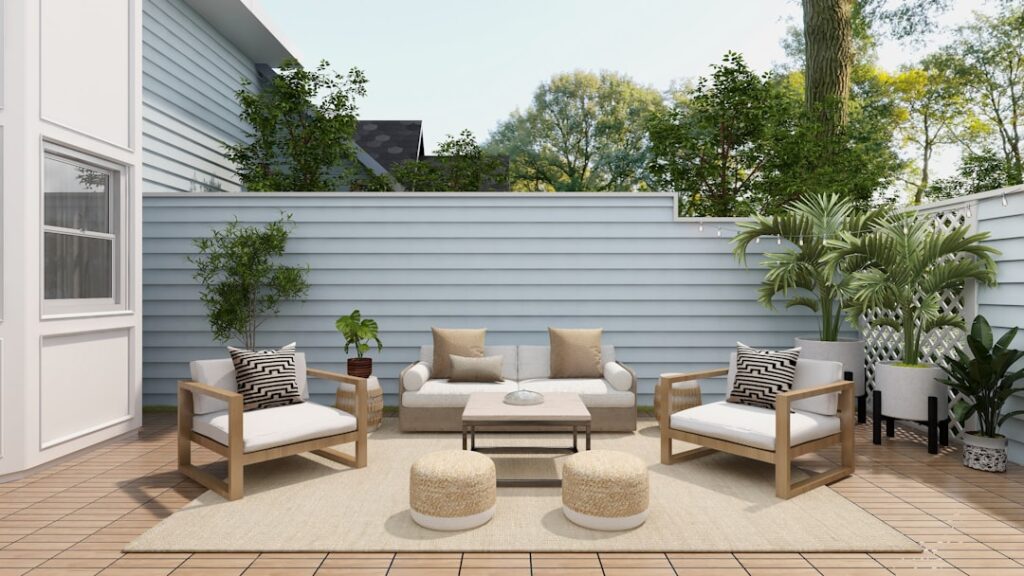
Showroom comfort is a trap: nearly any chair feels fine for the ninety seconds you test it. The most comfortable patio furniture proves itself in hour two of a long dinner or halfway through a Sunday afternoon book, and the difference comes down to measurable specs — seat depth, cushion density, back angle, and frame geometry — not marketing adjectives. Outdoor sets run anywhere from $500 to $6,000, and price correlates with comfort far less than you would hope. Once you know the six or seven numbers that actually govern how furniture feels, you can walk past the pretty-but-punishing sets and spend your budget where your back will notice it.
- The Measurements That Decide Comfort
- Cushions: Density Is Everything
- Frame Styles Ranked by Comfort Potential
- Motion Seating: The Comfort Multiplier
- Comfort by Body Type: One Size Fits Nobody
- Layout Choices That Add Comfort for Free
- Keeping Comfortable Furniture Comfortable
- Where to Spend and Where to Save
The Measurements That Decide Comfort
Start with seat depth. Lounge seating should measure 22 to 26 inches from front edge to back cushion; dining chairs 18 to 21 inches. Deeper is not automatically better — a 30-inch-deep “crash pit” sofa forces shorter adults to choose between dangling feet and no back support. Seat height for dining runs 17 to 19 inches; for lounging, 15 to 18 inches. Then check the back. A backrest reclined 10 to 15 degrees from vertical suits conversation and dining; 20 to 30 degrees suits true lounging. Backs under 16 inches tall abandon your shoulders entirely, which is why so many sleek modern sets feel great for photos and terrible for evenings.
Armrest height matters more than most buyers realize: 7 to 9 inches above the seat surface lets shoulders relax. And test the front seat edge — a hard rail or bar pressing the back of your knees cuts circulation and is the number one reason cheap sling chairs get abandoned after one season.
Cushions: Density Is Everything
Cushion comfort lives in the foam spec, which better brands publish. Look for outdoor high-resiliency foam at 1.8 to 2.5 pounds per cubic foot density wrapped in polyester batting; that combination supports without bottoming out and springs back for years. Bargain sets use 1.2-density open foam that packs flat within a single summer. Seat cushions should be at least 4 inches thick — 5 to 6 inches on premium lounge pieces — and back cushions can go softer, often blown fiber or cluster fill.
Fabric determines whether comfort survives the weather. Solution-dyed acrylic (Sunbrella is the benchmark; Outdura is a solid value alternative) stays soft, resists fading for 5-plus years, and dries fast. Cheaper printed polyester feels similar new but stiffens and fades by year two. Check that cushions have drainable reticulated foam or mesh bottom panels; a cushion that stores rainwater is a mildew farm no fabric can save.
Frame Styles Ranked by Comfort Potential
- Deep-seating cushioned frames (aluminum or wicker with thick cushions) are the comfort ceiling — essentially indoor sofas engineered for outside. Expect $1,500 to $4,000 for a quality four-piece set.
- Sling seating (fabric stretched on frames) is the dark horse. Quality sling chairs from brands like Telescope Casual or Tropitone conform to the body, drain instantly, and need zero cushion storage. Bad slings hammock sideways and press the knee rail. Test before buying.
- Strap and rope-woven seating flexes pleasantly and handles weather brilliantly; comfort depends on weave tension and seat curvature.
- Cast aluminum and wrought iron look timeless but are rigid; they are only as comfortable as the cushions you add. Budget for 3-inch minimum seat pads.
- Molded Adirondacks (Polywood and similar HDPE) surprise people — the contoured seat and 25-degree recline are ergonomically excellent bare, and the material never needs cushions at all.
Motion Seating: The Comfort Multiplier
If one upgrade transforms a patio, it is motion. Swivel gliders, rockers, and spring-base dining chairs get chosen first by guests every single time, and there is a physiological reason: gentle motion keeps pressure shifting and joints unloaded. A swivel-glider lounge chair typically costs $100 to $250 more than its stationary twin and is worth every dollar for anyone who sits longer than 30 minutes. The same logic drives the popularity of porch swings, egg chairs on spring stands, and gliding loveseats. Check the mechanism spec before buying: sealed ball-bearing swivels and stainless glide bushings survive outdoors, while dry nylon bushings start squeaking by August. A drop of silicone spray twice a season keeps any mechanism smooth.
Comfort by Body Type: One Size Fits Nobody
Households rarely share one body type, and outdoor lines increasingly acknowledge it. Taller users (over 6 feet) need 24-inch-plus seat depths, 17-inch-plus back heights, and high-back lounge chairs — Polywood’s tall-back Adirondack and most “captain’s” deep-seating chairs accommodate them. Petite users get better support from 20-to-22-inch seat depths and firmer foam that keeps hips from sinking below knees. Weight capacity is a published spec worth respecting: standard outdoor chairs rate 250 to 300 pounds, while commercial-grade and “oversized” lines (look for contract furniture rated to 400-plus pounds, or Grosfillex commercial resin) are engineered with reinforced joints that also happen to eliminate the wobble everyone hates. Buying mixed seating — two deep loungers, two firmer club chairs, one glider — serves a real family far better than six identical chairs.
Layout Choices That Add Comfort for Free
Furniture feels more comfortable when the space around it works. Allow 18 inches between seat edge and coffee table for legroom, and keep conversation seating within an 8-to-10-foot circle so nobody shouts. Every seat needs a drink surface within arm’s reach — side tables are cheap comfort. Shade is comfort too: direct July sun raises the surface temperature of dark cushions and metal frames past 140°F, hot enough to make furniture unusable from noon to four. A $150 cantilever umbrella or a sail shade effectively adds four hours of daily comfort to whatever furniture sits under it. Finally, add two or three outdoor throw pillows and a pouf; adjustable lumbar support fixes the one dimension mass-produced furniture cannot customize.
Keeping Comfortable Furniture Comfortable
Comfort degrades quietly, and most of the degradation is preventable. Store or cover cushions when rain threatens — even quick-dry foam that soaks weekly loses loft noticeably faster, and a $30 deck box or breathable cover set extends cushion life by years. Rotate and flip seat cushions monthly the way you would a mattress, because everyone has a favorite chair and that cushion compresses first. Wash solution-dyed acrylic covers each spring with mild soap and a soft brush, then re-treat with 303 Fabric Guard ($17 a can) to restore water beading. On frames, snug every visible bolt at the start of the season; a wobble that develops mid-summer is usually one loose barrel nut, not a failing frame. And when cushions finally pack out at year six or eight, replace the foam inserts rather than the furniture — a foam supplier will cut 2.5-density outdoor inserts for roughly $40 per seat, which resurrects a $2,000 set for under $300. Sling furniture has its own second act: replacement sling fabric runs $30 to $50 per chair from outdoor fabric suppliers, and re-slinging a sagging frame restores showroom tension in an afternoon with a spline roller and a helper.
Where to Spend and Where to Save
Spend on the pieces bodies occupy for hours: the lounge sofa, your two favorite chairs, the chaise. This is where 2.5-density foam, Sunbrella fabric, and motion bases pay daily dividends, and where quality brands like Homecrest, Tropitone, Lloyd Flanders, or Harmonia Living justify their tags. Save on dining chairs used two hours a week — a $400 sling dining set serves as well as a $1,500 cushioned one for meal-length sitting — and on side tables, where a $60 aluminum table does everything a $250 designer piece does. Before any purchase, run the showroom endurance test: sit a full ten minutes, lean back hard, cross your legs, and try to feel the frame through the cushion. If any edge, bar, or sling seam announces itself in ten minutes, it will torture you in sixty. The most comfortable patio furniture is simply the set that stays silent under you all evening — the specs above are how you find it before the credit card comes out.