
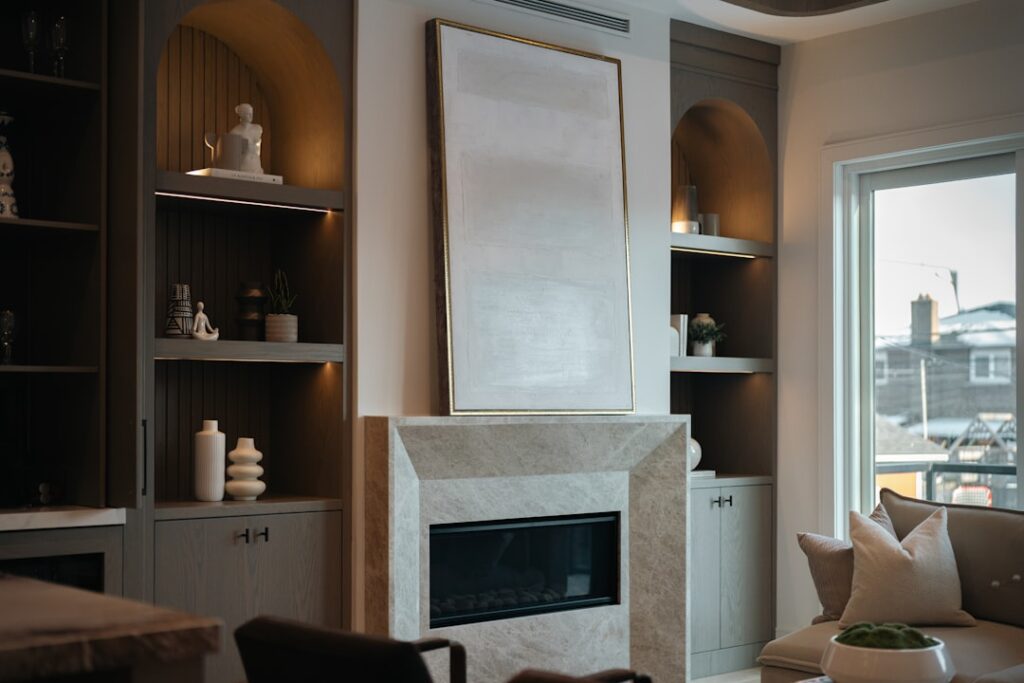
A mudroom fails the moment the hooks run out. Coats pile on benches, backpacks block doors, and wet boots migrate into the kitchen within a week. Smart mudroom storage ideas start by counting people and items first, then working backward to layout — not the other way around. Plan for two coats per person, one pair of everyday shoes plus one seasonal pair, and a dedicated zone for everything that gets dumped at the door.
Sizing the Space to Real Daily Traffic
A family of four needs roughly 36-48 inches of hook space, 24-36 inches of bench seating, and one cubby or bin per person. That works out to a minimum mudroom footprint of 5×7 feet for a proper bench-and-locker setup, or 3×5 feet if you use wall hooks and a narrow shoe bench only. Below 15 square feet, accept that you are building a drop zone rather than a full mudroom and focus on vertical storage.
Measure your tallest family member before setting hook height. Most adults reach 66-72 inches comfortably; install hooks at 60 inches for shared use so kids can grab their own coats. Double rows — one at 60 inches and one at 44 inches — double the capacity without adding wall length.
The Four Zones Every Mudroom Needs
Think in zones, not furniture. You need a landing zone (bench plus shoe storage), a hanging zone (coats, bags, hats), a drop zone (keys, mail, phones), and a seasonal zone (closed storage for gear you rotate quarterly). Skip any zone and the others overflow within a month.
Landing zones work best 16-18 inches deep — enough for boots underneath and a bench you can actually sit on. Hanging zones need at least 14 inches of clear depth so coats hang flat instead of crushing against the wall.
Built-In Lockers Versus Open Cubbies
Built-in lockers look magazine-ready and hide clutter behind cabinet doors, but they cost $800-$2,500 per bay installed. Open cubbies with hooks run $200-$500 per person to build and force the family to keep gear organized because everything shows. For most homes, a hybrid works: open hooks and a bench at kid height, closed upper cabinets for out-of-season storage.
If you go custom, ask the cabinet shop for 3/4 inch plywood box construction with a hardwood face frame. MDF boxes sag within five years under the weight of winter coats and backpacks.
Smart Hardware That Earns Its Keep
- Double-prong hooks at $4-$12 each hold twice the gear of single hooks. Brands like Liberty and Amerock sell sturdy options at Home Depot.
- Bench with flip-top storage from companies like Prepac or NewAge runs $180-$450 and hides blankets, hats, and gloves.
- Wire baskets labeled per person — one per cubby — keep mail, gloves, and hats from mixing. Expect to pay $12-$25 per basket.
- Boot trays made of recycled rubber handle snow melt and mud without staining. 30-inch trays run $15-$30.
- USB-equipped charging shelves turn the drop zone into a phone-charging station and hide cord clutter.
Flooring That Survives Mud and Salt
Carpet and hardwood are wrong answers here. Porcelain tile is the durability champion — rated for exterior use if you pick frost-rated products — and wipes clean with a damp mop. Expect $8-$16 per sq ft installed. Luxury vinyl plank with a 20+ mil wear layer is the DIY-friendly runner-up at $4-$7 per sq ft installed and handles salt, sand, and wet boots without warping.
Whichever you pick, add a 4×6 foot washable entry mat at the door. Ruggable and Bungalow Flooring both sell machine-washable options that trap debris before it reaches the rest of the house.
Lighting, Outlets, and Ventilation
Mudrooms are dim because they tend to live at the back of the house between the garage and kitchen. Add a 4-inch LED recessed light every 4 linear feet and a sconce over the bench for task light. Install two duplex outlets — one at bench level for vacuums and one at 48 inches for charging devices.
If boots come in wet daily, add a low-profile exhaust fan wired to a humidity sensor. It prevents the musty smell that develops in any enclosed space holding damp leather and rubber for hours.
Small-Space and Budget-Friendly Solutions
A 4-foot wall can become a functional mudroom with a $120 IKEA TRONES shoe cabinet, a $35 wall-mounted hook rail, and a $60 bench. Total under $250 and no contractor needed. For renters, tension-rod systems from brands like Umbra create full hanging walls without drilling.
Pegboards are the budget MVP. A 4×4 foot pegboard with hooks and small shelves handles helmets, bags, leashes, and odd gear for under $60. Paint it the same color as the wall and it disappears visually.
Design Touches That Elevate the Space
Chalkboard or magnetic paint behind the drop zone turns it into a family command center for schedules and grocery lists. Beadboard wainscoting up to bench height hides scuffs and is cheaper to refresh than full-height paint. Wallpaper on the upper wall only — a durable vinyl like Spoonflower Peel-and-Stick — adds personality without risking water damage.
Color the lockers a bold shade like Benjamin Moore Hale Navy or Sherwin-Williams Iron Ore to make the mudroom feel intentional rather than utilitarian. Contrasting hardware in brass or matte black pulls the look together. Done right, mudroom storage ideas turn a chaotic drop zone into the hardest-working square footage in the house.


