Walk into ten flooring showrooms and you will see the same phrase on nearly every display board, because natural oak LVP has quietly become the default choice for homeowners who want the warmth of real wood without the maintenance headaches. The look sells itself: soft honey-to-caramel tones, subtle grain, and a matte finish that reads as genuine oak from across the room. What most shoppers do not realize is that “natural oak” is a visual style, not a single product, and the plank you pick can range from a $1.79 builder-grade special to a $6 rigid-core board that outlasts the family that installed it. Getting the details right matters more than the color swatch.
What Natural Oak LVP Actually Is
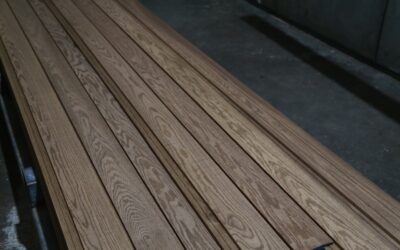
LVP stands for luxury vinyl plank, a multi-layer flooring built around a printed image film that mimics wood. A “natural oak” design captures the pale, neutral coloring of white or European oak before it has been stained dark or bleached light. You get medium-brown planks with visible cathedral grain, occasional knots, and a color that leans warm without going orange.
Underneath that photo layer sits the real engineering. A clear wear layer protects the print, a core provides rigidity and dimensional stability, and many planks include an attached pad. Most natural oak LVP today uses either an SPC (stone plastic composite) or WPC (wood plastic composite) core, and both are fully waterproof. That combination is why the style works in kitchens, basements, and bathrooms where solid oak would cup and warp.
Wear Layer and Thickness: The Numbers That Matter
Ignore the pretty photo for a minute and read the spec sheet. The wear layer is measured in mils, and it is the single best predictor of how long your floor survives. Here is the practical breakdown:
- 6 mil: Rental units and low-traffic rooms only. Expect visible wear within 3 to 5 years.
- 12 mil: The sweet spot for busy family homes. Handles kids, chairs, and light pet claws.
- 20 mil and up: Commercial-grade. Overkill for a bedroom, ideal for an entryway or a home with large dogs.
Total plank thickness runs from about 4 mm on thin glue-down products to 8 mm on premium rigid core. Thicker planks feel more solid underfoot, hide minor subfloor imperfections, and click together more forgivingly. For most homeowners, a 5 mm to 6.5 mm SPC plank with a 12 to 20 mil wear layer hits the value ceiling. Anything thicker is a comfort upgrade, not a durability one.
What Natural Oak LVP Costs
Budget for the whole project, not just the boxes. Material pricing for natural oak LVP typically lands like this:
- Entry level: $1.79 to $2.49 per sq ft, thin core, 6 to 8 mil wear layer.
- Mid grade: $2.99 to $4.49 per sq ft, rigid core, 12 to 20 mil, attached pad.
- Premium: $4.99 to $6.50 per sq ft, thick SPC, enhanced embossing, longer warranties.
Professional installation adds $1.50 to $4 per sq ft depending on your region and how much subfloor prep the job needs. Add roughly 7 to 10 percent to your square footage for cutting waste, and more if you are running planks diagonally. A 300 sq ft living room in mid-grade natural oak LVP, installed, generally runs $1,700 to $2,600 all in.
Why Homeowners Choose Natural Oak LVP
The appeal goes beyond looks. Because the core is waterproof, a spilled glass of wine or a leaking dishwasher becomes a paper-towel problem instead of a replacement project. Cleaning is a dry sweep plus an occasional damp mop with a pH-neutral cleaner. No refinishing, no waxing, no annual sealing.
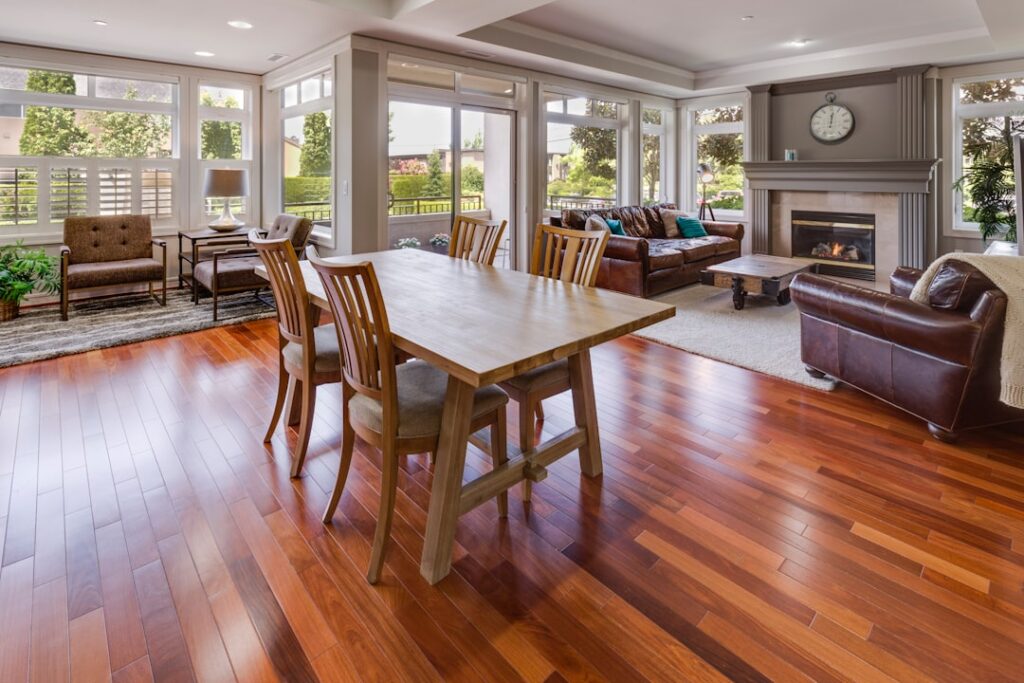
Natural oak also happens to be the most forgiving color for resale. It is neutral enough to sit under gray, greige, white, or navy walls, and it photographs well in listings. Real estate agents love it because buyers do not have to imagine changing it. Compared with a dark espresso plank that shows every crumb and dust bunny, the natural oak tone hides daily mess beautifully.
Installation Basics You Should Know
Most natural oak LVP installs as a floating floor using a click-lock system, which means the planks connect to each other rather than gluing to the subfloor. This makes it one of the friendlier DIY flooring projects. A few rules keep the job clean:
- Let the boxes acclimate in the room for 48 hours so the material adjusts to your home’s temperature and humidity.
- Start with a flat subfloor. Rigid core tolerates minor dips, but anything over 3/16 inch across 10 feet needs leveling compound.
- Leave a 1/4 inch expansion gap at every wall and cover it with baseboard or quarter round.
- Stagger your seams at least 6 to 8 inches so the joints do not line up and telegraph a repeating pattern.
Glue-down versions exist and are worth considering in very large rooms, sunrooms with wide temperature swings, or commercial spaces, because they eliminate the hollow underfoot feel and resist thermal movement. They cost more in labor, though, and repairs are harder.
Natural Oak LVP vs. Real Oak and Laminate
Set the three side by side and the trade-offs get clear. Solid oak hardwood costs $8 to $15 per sq ft installed, can be refinished multiple times, and adds arguably the strongest resale story, but it swells with moisture and scratches show raw wood underneath. Laminate looks similar and often costs a hair less than mid-grade LVP, yet its fiberboard core swells permanently if water sits on a seam.
Natural oak LVP sits in the practical middle. You give up the refinishing option and some of the underfoot authenticity of real wood, and in exchange you get true waterproofing, easy replacement of a single damaged plank, and a price that undercuts hardwood by half. For families, pets, and anyone tired of babying their floors, that is usually the right trade.
Underlayment, Sound, and Comfort
The underfoot experience of natural oak LVP depends heavily on what sits beneath it. Many rigid-core planks ship with an attached pad, usually a thin IXPE foam or a premium cork layer, that quiets the hollow tapping sound floating floors can make. If your planks do not include a pad, you can add a separate 1 mm to 1.5 mm underlayment rated for LVP, but never stack a second pad under a plank that already has one, because too much cushion causes the click joints to flex and eventually fail.
Over a concrete slab, look for an underlayment with a built-in moisture barrier, or lay 6 mil poly first, since vapor rising through the slab can otherwise collect under the floor. In a bedroom over a living room, a cork-backed plank noticeably cuts the footstep noise transmitted downstairs, which is why upstairs installs often justify the small upcharge for a better pad.
Choosing the Right Product
Bring home samples and view them in your own light before you commit, because showroom lighting flatters everything. Lay a plank next to your cabinets and trim. Check whether the embossing lines up with the printed grain, called embossed-in-register or EIR, which is the detail that separates convincing planks from plastic-looking ones. Ask about the residential warranty; a genuine mid-grade product carries 15 to 25 years, and a lifetime residential warranty signals the manufacturer’s confidence. Finally, confirm the finish. A low-sheen matte or satin surface sells the natural oak illusion far better than a glossy coat, which reflects light and reads as vinyl.
Choose carefully and natural oak LVP gives you a floor that looks like a designer specified it and wears like it was built for a rental fleet. Match the wear layer to your traffic, pick a rigid core for waterproof peace of mind, and insist on a matte finish with real embossing. Do those three things, and the only people who will know your floor is not solid oak are the ones you tell.
Prefer to explore on your own?
See how new flooring looks in your actual room in seconds — free, no signup.
Try the free Floor Studio →