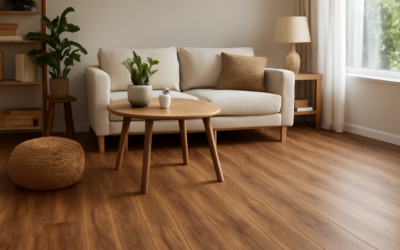
Flooring terminology moves fast, and “neo” has become shorthand for the latest generation of engineered, waterproof, click-together floors that have largely displaced traditional laminate and glue-down vinyl. Neo flooring generally refers to modern rigid-core and hybrid products, think SPC and WPC vinyl planks, that combine a printed wood- or stone-look surface with a dense, dimensionally stable core and an attached underlayment. If you’ve shopped for floors in the last few years, you’ve almost certainly walked across this category, even if the label confused you.
What “Neo Flooring” Actually Means
The term isn’t a single brand or a regulated category, so it’s worth cutting through the marketing. In practice, neo flooring describes contemporary multilayer floors engineered to be waterproof, easy to install, and convincing in appearance. The two dominant constructions are SPC (stone plastic composite) and WPC (wood plastic composite), both built around a rigid core under a printed wear layer.
This generation replaced older floors in two ways. It solved laminate’s biggest weakness, water damage, by making the core waterproof. And it improved on flexible glue-down vinyl by adding a rigid click-lock system that floats over the subfloor without adhesive, making installation far faster.
How It’s Built
A typical rigid-core plank stacks several engineered layers from bottom to top:
- Attached underlayment: a foam or cork pad that cushions and quiets the floor.
- Rigid core: the SPC or WPC layer, usually 4 to 7 mm thick, that gives the plank its stability and waterproof body.
- Printed design layer: a high-resolution photographic image of wood grain or stone.
- Wear layer: a clear protective top film measured in mils. Thicker is tougher; 12 mil suits light residential use, 20 mil or more handles heavy traffic and pets.
The wear layer thickness is the single most useful spec to compare across products, since it directly predicts how the floor resists scratches and scuffs over time.
Durability and Waterproof Performance
The headline benefit is that these floors are genuinely waterproof, not merely water-resistant. The rigid core won’t swell when exposed to spills, pet accidents, or steam mopping, which makes the category a strong choice for kitchens, bathrooms, basements, and laundry rooms where laminate would fail.
SPC cores are denser and more dent-resistant, ideal for high-traffic areas and rooms with heavy furniture. WPC cores are slightly softer and warmer underfoot, which some homeowners prefer in living spaces. Both handle the dimensional swings of temperature better than older vinyl, though you should still acclimate planks to the room for 48 hours before installing.
Cost Per Square Foot
Material pricing for quality rigid-core neo flooring generally lands between $2.50 and $6 per square foot. Entry-level products with thin wear layers sit at the low end, while thick-wear-layer SPC with realistic embossing and wider planks runs higher. Installed, expect roughly $5 to $9 per square foot when you add professional labor.
Because it floats over most existing hard surfaces with minimal prep, the labor cost is often lower than tile or hardwood. Many homeowners install it themselves, since the click-lock system needs only a tapping block, a utility knife or saw, and spacers for the perimeter expansion gap.
Pros and Cons
The strengths explain the category’s popularity. It’s waterproof, scratch- and dent-resistant, fast to install as a floating floor, and convincingly mimics hardwood or stone at a fraction of the price. It needs no acclimation-heavy refinishing and cleans up with a damp mop.
The tradeoffs are honest ones. Cheaper products with thin wear layers scratch and show wear faster, so skimping backfires. The hard rigid core can feel less warm than carpet or real wood, though the attached pad helps. And like all printed floors, repeated identical grain patterns can look artificial if you choose a low-quality product with few plank variations.
How to Buy Smart
Shop the spec sheet, not just the showroom sample. Prioritize a wear layer of at least 20 mil if you have kids, pets, or heavy traffic. Confirm the product carries a residential or commercial warranty that matches your use, and check that the click-lock system is from a reputable mechanism, since cheap locking edges chip during installation.
Buy 10 percent extra for cuts and waste, and request a full plank sample to see the print variation across multiple boards rather than judging from one. Approached this way, neo flooring delivers a durable, waterproof, attractive floor that fits most rooms and most budgets, which is exactly why it has taken over so much of the market.
SPC vs. WPC: Which Core Is Right for You
The choice between the two rigid-core types comes down to how you’ll use the room. SPC uses a stone-powder-and-PVC core that’s denser and harder, which makes it more dent-resistant and better at hiding minor subfloor imperfections. It’s also thinner for the same strength, an advantage at doorways and transitions. Choose SPC for kitchens, entryways, basements, commercial-grade traffic, and homes with large dogs or heavy furniture.
WPC uses a wood-flour-and-plastic core with a foaming agent, making it slightly thicker, softer, and warmer underfoot. That cushioning feels better in bedrooms and living rooms where comfort matters more than maximum dent resistance. WPC also tends to absorb sound a bit better. If your priority is a plush, quiet feel in a low-to-moderate traffic space, WPC earns its keep; if you want maximum toughness, SPC wins.
Installation and Subfloor Prep
Part of what makes this category so popular is how forgiving it is to install, but a few prep steps still matter. The subfloor must be clean, dry, and flat, generally within 3/16 inch over a 10-foot span, since rigid planks can rock or develop gaps over high and low spots. Most products float over existing tile, vinyl, plywood, or concrete with no glue, locking together with a click mechanism.
Leave the manufacturer-specified expansion gap, usually about 1/4 inch, around the entire perimeter and at all fixed objects, then cover it with baseboard or quarter round. Skip this and a large floor can buckle when it expands with temperature changes. Acclimate the planks flat in the installation room for 48 hours first, especially in spaces with big seasonal temperature swings, and your floating floor will stay tight and quiet for years.
Prefer to explore on your own?
See how new flooring looks in your actual room in seconds — free, no signup.
Try the free Floor Studio →