Oak is the most beloved wood species in flooring, and oak vinyl flooring brings that timeless aesthetic to every room in your home — including kitchens, bathrooms, and basements where real hardwood would be risky. Modern vinyl manufacturing technology produces oak-look planks so realistic that many people cannot tell the difference from genuine hardwood flooring at a glance.
- Why Choose Oak Vinyl Flooring?
- Types of Oak Vinyl Flooring
- Popular Oak Vinyl Colors
- How to Choose the Most Realistic Oak Vinyl
- Embossed-in-Register (EIR) Texture
- Wide and Long Planks
- Multiple Design Variations
- Natural Color Variation
- Matte or Low-Sheen Finish
- Oak Vinyl Flooring vs. Real Oak Hardwood
- Best Rooms for Oak Vinyl Flooring
- Installation Tips for Oak Vinyl Flooring
- Frequently Asked Questions
- Does oak vinyl flooring look fake?
- How long does oak vinyl flooring last?
- Can oak vinyl flooring be installed over existing floors?
- Is oak vinyl flooring good for pets?
- Final Thoughts
This guide covers everything about oak vinyl flooring, from the different formats and core types available to color options, installation methods, and how to choose the most realistic product for your space. If you love the look of oak but want waterproof, low-maintenance performance, oak vinyl is the answer.
Why Choose Oak Vinyl Flooring?
The appeal of oak vinyl flooring comes down to getting the look you love with performance characteristics that real oak cannot match.
Waterproof: Unlike real oak, which warps, swells, and stains when exposed to water, vinyl flooring is 100% waterproof. Spills, splashes, and humidity have zero effect on the material. This makes oak vinyl ideal for kitchens, bathrooms, laundry rooms, and basements.
Affordable: Quality oak vinyl costs $2 to $7 per square foot — a fraction of solid oak hardwood at $6 to $20 per square foot. For a whole-house installation, the savings are substantial.
Low maintenance: No sanding, refinishing, or special cleaners required. Sweep and mop as needed. The surface resists scratches, stains, and fading without any protective treatments.
Easy installation: Most oak vinyl products use click-lock systems that float over the subfloor. A handy homeowner can install a room in a day — no adhesive, nails, or professional skills needed.
Realistic visuals: Premium oak vinyl features high-definition printing, embossed-in-register (EIR) textures where the grain you feel matches the grain you see, and varied plank designs that prevent pattern repetition. The realism gap between vinyl and real wood continues to narrow every year.
Types of Oak Vinyl Flooring
Oak LVP (Luxury Vinyl Plank)
LVP flooring in oak styles is the most popular category. Available in both rigid-core (SPC and WPC) and flexible formats, LVP planks typically measure 5 to 9 inches wide and 36 to 72 inches long, closely mimicking real hardwood plank dimensions.
Rigid-core oak LVP is the go-to choice for most homeowners. The stiff core provides excellent dent resistance, dimensional stability, and a satisfying solid feel underfoot. It clicks together without adhesive and can be installed over most existing hard-surface floors.
Oak SPC Vinyl
SPC flooring in oak looks features the densest, most rigid core available in vinyl. The stone polymer composite construction handles heavy furniture, high foot traffic, and temperature fluctuations without denting or expanding. Oak SPC is the premium choice for commercial spaces and residential areas that demand maximum durability.
Oak WPC Vinyl
WPC (wood polymer composite) oak vinyl has a softer, foam-enhanced core that provides superior comfort and sound dampening compared to SPC. It feels warmer and quieter underfoot, making it popular for bedrooms, living rooms, and upper floors where comfort and acoustics matter.
Oak Vinyl Sheet
Sheet vinyl in oak patterns comes in 6-foot or 12-foot wide rolls, creating a nearly seamless floor. While sheet vinyl lacks the plank-by-plank realism of LVP, modern products offer convincing oak visuals at the lowest price point in the vinyl category. Sheet vinyl is best for budget renovations in kitchens, bathrooms, and utility spaces.
Oak Vinyl Tiles
Vinyl tiles in oak parquet patterns (herringbone, chevron, basket weave) combine the beauty of oak with geometric pattern interest. These tiles are growing in popularity for entryways, kitchens, and statement rooms where a standard plank layout feels too ordinary.
Popular Oak Vinyl Colors
Natural Oak
Warm, golden-brown tones with visible grain — the most popular color in the entire vinyl market. Natural oak vinyl creates a welcoming, organic atmosphere that complements virtually any decor style.
White Oak
Cool, light tan tones that mimic the look of white oak hardwood finished with water-based polyurethane. White oak vinyl is trending strongly in 2026, driven by the broader shift toward warmer-toned light floors.
Gray Oak
Cool gray tones applied over an oak grain pattern. Gray oak vinyl delivers a contemporary, modern look popular in urban apartments, Scandinavian-inspired spaces, and coastal homes.
Weathered Oak
A multi-toned blend of gray, brown, and tan that mimics the look of sun-aged barn wood or driftwood. Weathered oak vinyl is perfect for farmhouse, cottage, and rustic-modern interiors.
Dark Oak
Rich, deep brown tones that evoke the look of stained red oak or antique floors. Dark oak vinyl adds drama and sophistication to formal spaces. Keep in mind that dark floors show dust and pet hair more readily.
Honey Oak
Warm, amber-tinted oak with a hint of golden yellow. Honey oak vinyl creates a cozy, inviting atmosphere and pairs beautifully with warm-toned furnishings and earth-toned walls.
How to Choose the Most Realistic Oak Vinyl
Not all oak vinyl flooring looks equally convincing. Here is what to look for to ensure your vinyl floor passes for real wood.
Embossed-in-Register (EIR) Texture
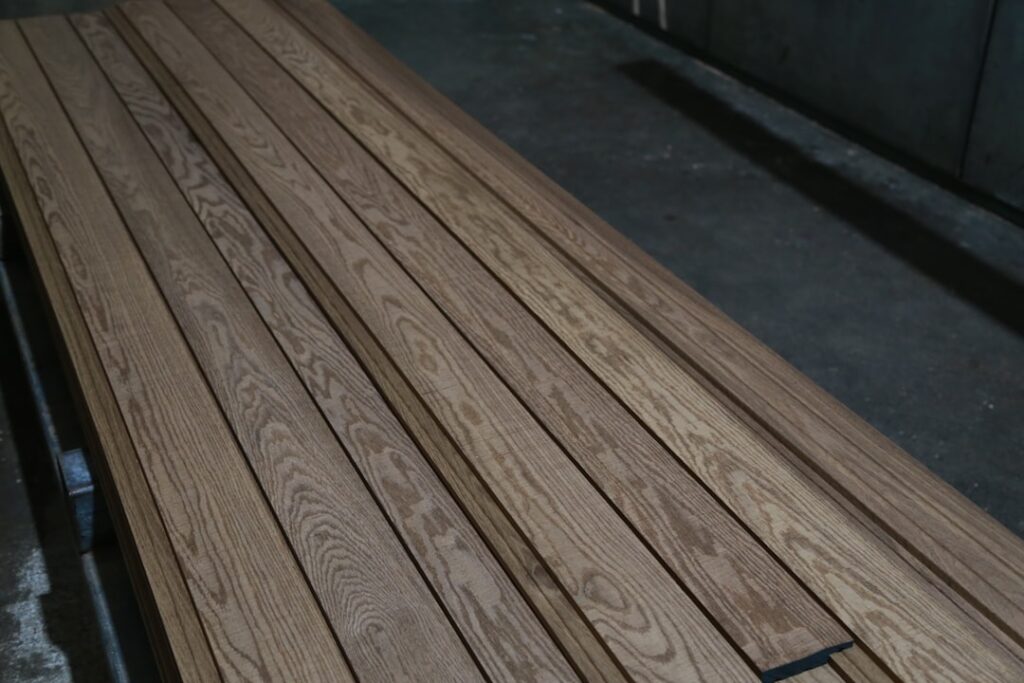
EIR technology aligns the surface texture with the printed grain image so that the grooves and ridges you feel correspond to the knots and grain lines you see. This creates a multisensory illusion of real wood that flat-textured vinyl cannot achieve. EIR is the single most important feature for realism.
Wide and Long Planks
Real hardwood planks are typically 5 to 8 inches wide and 4 to 7 feet long. Oak vinyl that matches these dimensions looks more authentic than narrow, short planks. Wide-plank formats (7 inches or wider) showcase the oak grain beautifully and reduce the number of visible seams.
Multiple Design Variations
Look for products with a high number of unique plank designs per box — ideally 10 or more. This prevents the same pattern from repeating visibly across your floor, which is a telltale sign of manufactured flooring. Premium products offer 15 to 20+ unique designs.
Natural Color Variation
Real oak planks vary in color — some are lighter, some darker, and many have mineral streaks or knots. The most realistic oak vinyl replicates this variation between planks. Uniform, identical planks look manufactured; varied planks look natural.
Matte or Low-Sheen Finish
Real hardwood floors have a matte or satin sheen. High-gloss vinyl looks obviously synthetic. Choose oak vinyl with a matte, satin, or low-luster finish for the most authentic appearance. This also has the practical benefit of hiding minor scratches and imperfections.
Oak Vinyl Flooring vs. Real Oak Hardwood
How does oak vinyl compare to genuine oak hardwood flooring?
Appearance: Premium oak vinyl is highly realistic but does not perfectly replicate the depth, warmth, and tactile quality of real wood. Close inspection reveals the difference. At normal viewing distance, the gap is minimal.
Durability: Oak vinyl resists scratches, water, and stains better than real oak. Real oak is harder (Janka 1,360 for white oak) but dents under sharp impacts. Vinyl resists denting but can be punctured by sharp objects.
Water resistance: Oak vinyl is 100% waterproof. Real oak is damaged by water. Clear advantage to vinyl for wet environments.
Refinishing: Real oak can be sanded and refinished 3 to 5 times over its lifespan. Oak vinyl cannot be refinished — when the wear layer is gone, the plank must be replaced. This gives real oak a longer potential lifespan.
Home value: Real hardwood adds more resale value than vinyl. Buyers and real estate agents consistently prefer genuine wood. However, quality vinyl is viewed positively — far better than worn carpet or dated flooring.
Cost: Oak vinyl costs 40% to 70% less than real oak hardwood when factoring in materials and installation. For budget-conscious homeowners, the savings are compelling.
Best Rooms for Oak Vinyl Flooring
Kitchens: The waterproof performance and easy cleanup make oak vinyl ideal for kitchens. The warm oak aesthetic creates an inviting cooking and gathering space.
Bathrooms: Oak vinyl brings warmth to bathrooms without the moisture risk of real wood. It is comfortable underfoot — warmer and softer than tile flooring.
Living rooms and bedrooms: Oak vinyl creates a cohesive, warm foundation for living spaces. WPC versions with attached underlayment provide the comfort and quiet these rooms demand.
Basements: The waterproof, temperature-stable properties of SPC oak vinyl make it the ideal basement flooring choice. It handles the moisture and temperature variations common in below-grade spaces.
Whole-house installations: Oak vinyl’s versatility allows it to flow through every room, creating a unified aesthetic from the front door to the back bedroom. This continuity makes homes feel larger and more cohesive.
Installation Tips for Oak Vinyl Flooring
Oak vinyl installs the same way as any click-lock LVP flooring. Here are tips specific to getting the best results with oak-look products.
Mix planks from multiple boxes: Open three or four boxes and pull planks randomly from each during installation. This distributes color and pattern variations evenly across the floor for a natural appearance.
Run planks along the room’s longest wall: This elongates the space and creates the most natural wood-floor appearance. Running planks perpendicular to the longest wall can make the room feel wider but less natural.
Stagger end joints at least 6 inches: Random stagger patterns look more like real hardwood than uniform stagger. Vary the offset between adjacent rows for the most authentic appearance.
Use coordinating transitions: Oak vinyl manufacturers offer matching T-moldings, reducers, and stair nosing in the same oak finish. Using matched transitions creates a professional, cohesive look throughout your home.
Frequently Asked Questions
Does oak vinyl flooring look fake?
Budget oak vinyl can look synthetic, but premium products with EIR textures, wide planks, and varied designs are remarkably realistic. Most visitors will not notice the difference from real wood at normal viewing distance.
How long does oak vinyl flooring last?
Quality oak vinyl with a 12-mil to 20-mil wear layer lasts 15 to 25 years in residential use. Premium products with 20+ mil wear layers and lifetime warranties can last even longer with proper care.
Can oak vinyl flooring be installed over existing floors?
Yes. Click-lock oak vinyl can be installed over existing tile, vinyl, concrete flooring, and plywood — as long as the surface is flat, clean, and structurally sound. It is one of the easiest flooring types to install in renovation projects.
Is oak vinyl flooring good for pets?
Excellent. Oak vinyl resists scratches from pet claws better than real hardwood, is waterproof against accidents, and cleans up easily. It is one of the most pet-friendly flooring options available.
Final Thoughts
Oak vinyl flooring delivers the warm, classic beauty of real oak with waterproof performance, easy maintenance, and budget-friendly pricing. The technology behind vinyl printing and texturing has advanced to a point where premium oak vinyl is genuinely difficult to distinguish from hardwood in everyday use. Whether you choose an LVP for click-lock simplicity, SPC for maximum durability, or WPC for underfoot comfort, oak vinyl is a smart choice that looks beautiful and performs flawlessly in every room of your home.
Prefer to explore on your own?
See how new flooring looks in your actual room in seconds — free, no signup.
Try the free Floor Studio →