If pet accidents, musty basements, or lingering kitchen smells have you reaching for cleaner after cleaner, a concentrated odor eliminator can do double duty on your floors. OdoBan floor cleaner is a popular multipurpose concentrate from the OdoBan brand that cleans, deodorizes, and freshens hard surfaces, and it is best known for tackling stubborn odors that ordinary mopping leaves behind. This guide explains what it does, which floors it works on, how to dilute it correctly, and how to use it safely.
What OdoBan Is
OdoBan is a concentrated cleaning and odor-eliminating product that you dilute with water for most uses. The OdoBan brand sells several formulas, and the classic concentrate is widely used as a multipurpose cleaner and deodorizer for floors, surfaces, fabrics, and more. Its main appeal is that it does not just mask smells; it is formulated to eliminate odors at the source while cleaning the surface at the same time. Because it is a concentrate, one bottle makes many gallons of cleaning solution.
What It Does Well
OdoBan earns its reputation in homes that battle odors:
- Eliminates odors: Pet messes, smoke, must, and food smells.
- Cleans hard surfaces: Cuts everyday dirt and grime on floors.
- Deodorizes: Leaves a fresh scent across the room, not just the floor.
- Versatile: The diluted solution works on many washable surfaces beyond flooring.
For households with pets, this combination of cleaning and odor control is the main reason people keep a bottle on hand.
Which Floors It Works On
Diluted OdoBan is generally suitable for sealed, water-resistant hard floors such as tile, sealed concrete, and many vinyl and laminate surfaces. As with any cleaner, the safest approach is to follow the label directions and the flooring manufacturer’s guidance, and to test in a hidden spot first. For sensitive surfaces like unsealed wood, natural stone, or waxed floors, check compatibility carefully, since these materials can be damaged by excess water or the wrong cleaner. Wring your mop well so floors are never left soaking.
How to Dilute It
Dilution depends on the job, and the label is your authority, but a few general principles apply:
- Routine floor cleaning: A standard general-purpose dilution mixed into a bucket of water.
- Tough odors: A stronger dilution for problem areas like pet zones.
- Light freshening: A weaker mix for quick maintenance mopping.
Always read the specific dilution ratios printed on your bottle, since formulas and concentrations vary. Measure rather than eyeballing, and mix only what you will use so the solution stays effective.
How to Use It on Floors
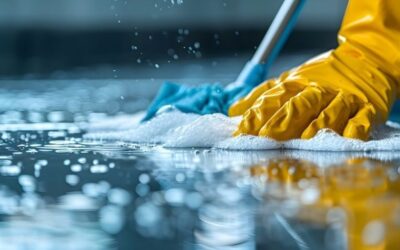
Mopping with OdoBan follows the same steps as any good floor-cleaning routine.
- Sweep or vacuum first to remove loose dirt and debris.
- Mix the diluted solution in a bucket according to the label.
- Dip and wring the mop well so it is damp, not dripping.
- Mop in sections, working toward the exit, and rinse the mop as it gets dirty.
- Let the floor air dry, and rinse with clean water afterward if the label recommends it.
For set-in pet odors, treat the spot directly with the diluted solution, let it dwell briefly, then wipe and let it dry.
Tackling Pet Odors Specifically
Pet messes are where an odor-eliminating cleaner really proves its worth, but technique matters. For fresh accidents on a sealed hard floor, blot up as much liquid as possible first, then clean the spot with the diluted solution and let it dwell briefly before wiping. The dwell time gives the product a chance to break down the odor source rather than just covering it. For recurring problem zones, clean regularly and address the root cause, such as a litter area or a favorite marking spot, since no cleaner fixes a behavior issue on its own.
Beyond Floors: Other Uses
Because it is a multipurpose concentrate, the diluted solution is handy well beyond mopping. People use it to freshen trash cans, wipe down washable surfaces, deodorize fabrics that can tolerate it, and tackle musty smells in basements and closets. Always follow the label for each use, test fabrics and finishes in a hidden spot, and never assume a floor dilution is correct for every surface. Keeping one concentrate that handles several odor-control jobs simplifies your cleaning cabinet and stretches your dollar further.
Safety and Ventilation
Treat OdoBan like any concentrated household cleaner. Keep the concentrate out of reach of children and pets, wear gloves if you have sensitive skin, and work in a ventilated area. Never mix it with bleach or other cleaners unless the label explicitly says it is safe, since combining chemicals can create harmful fumes. Keep pets off treated floors until they are dry, and always follow the directions on your specific product.
Tips for Best Results
Sweeping or vacuuming before you mop makes a noticeable difference, because dragging a mop over grit just smears it around. Use the right dilution for the job rather than going stronger than needed, which wastes product and can leave residue. Change the mop water when it turns gray so you are not redistributing dirt. And for ongoing odor issues, address the source, such as cleaning under appliances or treating pet areas, rather than relying on cleaner alone.
Spot-Testing Before You Commit
No matter how confident you are in a cleaner, the smart move on any new floor is a spot test, and OdoBan is no exception. Pick an out-of-the-way area, like a closet corner or under a cabinet toe-kick, mix your intended dilution, and apply a small amount. Let it dwell for the time you plan to use, wipe it up, and let the spot dry fully before you judge the result. You are checking for two things: whether the finish dulls, hazes, or discolors, and whether any residue or stickiness remains after drying. Sealed surfaces almost always pass, but waxed floors, certain laminates with worn seams, and porous stone can react unpredictably to water and surfactants. Spending five minutes on a hidden patch beats discovering a problem across an entire room.
Storing and Measuring the Concentrate
Because OdoBan ships as a concentrate, a little goes a long way, and treating it accordingly saves money and avoids residue. Store the bottle tightly capped in a cool spot away from direct sun and out of reach of children and pets, and keep it in its original container so the label and dilution directions stay with the product. When you mix, use a measuring cup or the cap rather than free-pouring, since over-concentrating wastes product and can leave a tacky film that actually attracts dirt. A common homeowner mistake is assuming stronger is better; for routine mopping on sealed floors, the lighter general-purpose dilution cleans and deodorizes just fine. Mix only the amount you will use in a session, because diluted solution is best fresh, and label any spray bottle you fill so no one mistakes it for water or another cleaner.
Final Thoughts
OdoBan floor cleaner is a budget-friendly concentrate that cleans and deodorizes in one step, which makes it especially handy in pet-friendly and odor-prone homes. Match the dilution to the task, confirm your flooring is compatible, and follow the label for safety. Used correctly on sealed hard floors, it leaves surfaces clean and rooms noticeably fresher without breaking the bank.
Prefer to explore on your own?
See how new flooring looks in your actual room in seconds — free, no signup.
Try the free Floor Studio →