For years beige was the safe default, but designers have rediscovered that a grounded, earthy floor can do far more for a room than another neutral ever could. Olive green carpet is leading that shift, a warm, muted green with brown and gray undertones that reads as sophisticated rather than loud. It hides dirt better than pale colors, flatters both modern and traditional furniture, and brings a bit of the outdoors inside. The trick is picking the right shade and building the rest of the room around it, because olive is a color that rewards planning.
Understanding the Olive Family
“Olive” is not one color but a range, and small shifts in undertone change everything. On the lighter end you find sage-leaning olives with more gray, which feel airy and contemporary. In the middle sit true olives, that classic drab-green with a warm brown base. On the deeper end are forest-tinged and khaki olives that anchor a room dramatically. Before you commit, look at large samples in the actual room, morning and evening, because a swatch that looks gray-green under showroom lights can turn distinctly brown under warm home bulbs.
My rule of thumb: the smaller and darker the room, the lighter the olive you should choose. Deep olive in a windowless den can feel like a cave, while a light sage-olive keeps it grounded without swallowing the light.
Where Olive Green Carpet Works Best
This color earns its place in rooms meant to feel cozy and lived-in. It is a natural fit for a bedroom, where the muted tone promotes calm, and for a study or home office, where green is easy on the eyes during long hours at a screen. Basements and dens benefit too, since olive’s warmth counteracts the coolness of below-grade spaces.
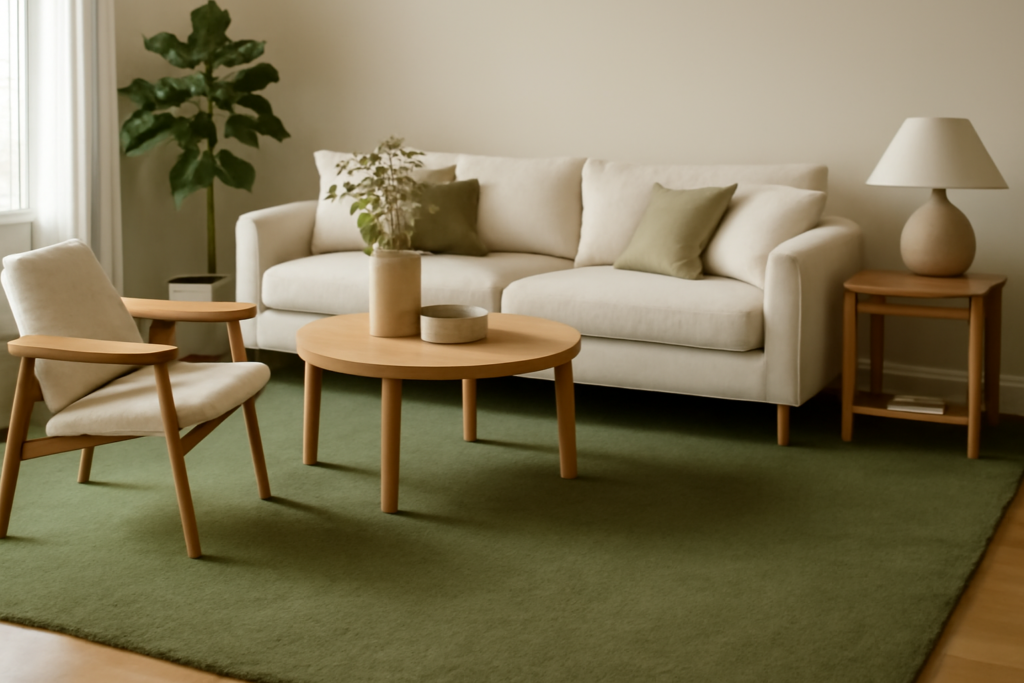
I steer clients away from olive in a formal, high-gloss space unless the goal is a deliberate retro or mid-century look. Where it truly sings is in organic, textured interiors, think wood, linen, leather, and plants, because it acts like a neutral that happens to have personality.
Pairing Walls, Trim, and Furniture
Olive is remarkably flexible, but a few pairings are reliable winners:
- Warm whites and creams on the walls let the carpet be the star and keep the room bright.
- Terracotta, rust, and mustard accents echo the earthy palette for a rich, layered look.
- Charcoal and black furniture create crisp, modern contrast against the green.
- Natural wood tones, especially walnut and oak, feel effortlessly coordinated.
Avoid cool, stark grays with a blue undertone; they fight olive’s warmth and make the green look muddy. If you love gray, choose a greige with a warm base instead.
Choosing the Right Fiber and Pile
Color is only half the decision. For a bedroom you can indulge in a soft cut-pile or plush Saxony in olive, since the traffic is light and comfort matters most. For stairs, hallways, or a busy family den, a textured cut-pile or level loop holds up far better and shows fewer footprints.
On fiber, solution-dyed nylon and PET polyester both take olive tones beautifully and resist fading. Solution-dyed nylon is my pick where sun exposure is a concern, because the pigment runs through the fiber and will not bleach out near a big window. Polyester delivers rich color at a lower price and resists water-based stains, which suits bedrooms and low-traffic rooms.
Managing Light and Fade Risk
Green pigments, especially warmer olives, can shift over years of direct sun. If your room gets strong afternoon light, prioritize a fade-resistant solution-dyed fiber and consider UV-filtering window film. Rotating area rugs and rearranging furniture occasionally also prevents the tell-tale lighter patches under windows.
Even the best carpet ages, so buy a little extra from the same dye lot and store it. Should you ever need to patch a burn or stain in a closet or under a couch, matching material from the original run beats trying to find the same olive years later.
What Olive Green Carpet Costs
Because olive is a mainstream color option, it carries no meaningful price premium over other shades. Budget polyester runs about $1.50 to $3 per square foot for material. Mid-grade nylon and premium polyester land around $3 to $5 per square foot. High-end wool or wool-blend olive carpet, which produces a truly gorgeous depth of color, can run $8 to $15 per square foot. Add roughly $1 to $2 per square foot for pad and professional installation.
For a 200-square-foot bedroom, a solid mid-grade olive nylon carpet installed will typically total $900 to $1,600, pad included.
Cleaning and Keeping the Color True
Olive is forgiving of dirt but not of careless cleaning. Because it sits in the mid-tone range with warm undertones, everyday soil blends in far better than it would on a pale carpet, which means you can stretch the time between deep cleans. Vacuum once or twice a week to keep grit from grinding at the fiber base, and address spills fast by blotting, never rubbing. For most stains, a mild pH-neutral detergent diluted in cool water lifts the mess without disturbing the dye.
Be cautious with harsh or high-pH cleaners on olive, especially on nylon; strong alkaline solutions can shift the green toward a yellowed or brassy cast over repeated use. Test any new product in a closet corner first. Schedule a professional hot-water extraction every 12 to 18 months to pull embedded soil, and the color will stay rich and true for the life of the carpet.
Design Styles That Suit Olive
Certain looks were practically made for an olive floor. Mid-century modern is the obvious match, since drab greens were a signature of the era; pair the carpet with walnut furniture, tapered legs, and warm brass and the room feels effortlessly retro without being a costume. Organic modern and Scandinavian-inspired spaces also thrive on olive, leaning into linen, rattan, pale wood, and plenty of greenery.
Even a traditional or transitional room benefits. Against cream millwork and classic furniture, a muted olive reads as a sophisticated, grounded neutral rather than a bold statement. The color’s versatility is exactly why designers keep reaching for it: it adapts to the style around it instead of dictating one. Decide on your overall direction first, then let the olive carpet reinforce it from the ground up.
Styling Tips to Pull It Together
Once the carpet is down, layer in texture rather than more color. A cream boucle chair, a walnut nightstand, and a couple of brass fixtures will make an olive floor feel intentional and designer-grade. Bring in one or two live plants; the green echoes the carpet and reinforces the organic mood without any effort.
If you are nervous about committing wall-to-wall, start with a large olive area rug over an existing neutral floor to test how the color lives in your space. Nine times out of ten, homeowners who try it fall for the warmth and end up wishing they had gone bigger from the start.