Walk into a mid-century ranch or a 1970s rec room and there is a good chance the original floor was an orange-toned vinyl. Orange vinyl flooring has cycled back into popularity as homeowners chase the warm, terracotta-influenced palettes that define current Mediterranean, boho, and retro design trends. The look ranges from rich teak-toned planks to bold solid orange sheet vinyl, and the right pick depends entirely on the design intent. Here is the practical buyer’s guide.
- The Two Categories of Orange Vinyl
- Real Pricing You Should Expect
- Pros of Going Orange
- Cons Worth Considering
- Where Orange Vinyl Flooring Works Best
- Construction Specs That Matter
- Best Brands for Orange and Warm Tones
- Installation Method by Product
- Maintenance Routine
- Pairing With Walls, Trim, and Furniture
- Final Take
The Two Categories of Orange Vinyl
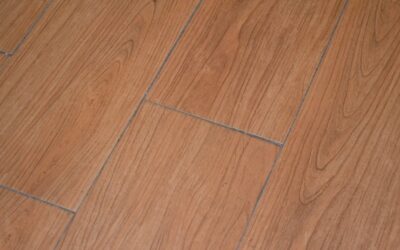
Most “orange vinyl flooring” falls into one of two product families. The first is wood-look LVP and SPC in warm teak, cherry, mahogany, and Brazilian cherry tones, where the photographic decor leans heavily into orange-amber hues. The second is solid-color sheet vinyl or LVT in actual orange shades, common in retro design, kids’ play spaces, retail, and restaurant environments.
The wood-look products outsell solid orange roughly 30-to-1, but the solid-color category is growing as designers spec saturated tones into specific accent areas.
Real Pricing You Should Expect
- Warm-tone wood-look LVP/SPC: $1.99 to $4.99 per sq ft
- Premium teak-look rigid core (Karndean Korlok, Coretec): $4.99 to $7.50 per sq ft
- Solid orange commercial sheet vinyl (Armstrong Medintech, Forbo Marmoleum): $3.50 to $6 per sq ft
- Solid orange LVT for design accents: $4 to $8 per sq ft
- Custom-color sheet vinyl: $7 to $12 per sq ft
Installation adds $2.50 to $5 per sq ft for click-floating, $3.50 to $6 for sheet vinyl glue-down. A 600 sq ft installation in mid-grade orange wood-look SPC typically lands at $4,000 to $6,500 fully installed.
Pros of Going Orange
Warm orange tones add visual heat to spaces that read cold. North-facing rooms with limited natural light especially benefit; the floor reflects warm light back into the space and makes it feel cozier without changing wall paint or furniture.
Wood-look orange vinyl flooring also pairs naturally with current trends: terracotta accents, sage green walls, brass hardware, and natural fiber rugs. It is the floor that lets a home feel curated rather than catalog-ordered.
Cons Worth Considering
Trend cycles work against bold orange tones. The cool grey that dominated 2018 to 2023 felt fresh and now feels dated; saturated solid orange may follow the same arc. For a long-hold home, lean toward warm wood-look tones that read as natural rather than statement-bold.
Color consistency matters. Always pull samples in the actual room lighting before committing. Orange tones shift dramatically under different bulb temperatures (2700K warm white versus 4000K cool white), and what looked great in the showroom can read as bright pumpkin under your fixtures.
Where Orange Vinyl Flooring Works Best
- Open-plan living and dining: Warm tones tie sectional sofas, woven rugs, and timber furniture together
- Sunrooms and three-season porches: Reinforces the natural-warmth feel of indoor-outdoor spaces
- Retro mid-century kitchens: Period-correct orange sheet vinyl pairs with wood cabinets and stainless
- Kids’ playrooms and creative studios: Solid orange LVT adds energy and is easy to clean
- Boho and Mediterranean designs: Warm wood-look orange supports terracotta and saturated wall tones
Construction Specs That Matter
For residential orange vinyl flooring, look for a 12-mil minimum wear layer for moderate traffic and 20-mil for households with kids and pets. Rigid core SPC at 5mm to 7mm with attached IXPE pad gives the most realistic underfoot feel and best click-joint stability.
For commercial sheet vinyl applications (restaurants, retail), spec a homogeneous through-color sheet like Forbo Sphera Element so wear over time does not expose a different color underneath. Heterogeneous (printed) sheets show wear-through patterns within 5 to 7 years in heavy use.
Best Brands for Orange and Warm Tones
For wood-look LVP/SPC: Coretec Pro Plus, Karndean Korlok Reserve, Mohawk SolidTech Plus, Shaw Floorte Pro Plus, and Quick-Step Livyn all carry teak, mahogany, and cherry tones with strong realism.
For solid orange LVT and sheet vinyl: Armstrong Migrations, Forbo Marmoleum (technically linoleum, not vinyl, but often grouped together), Mannington Quantum Guard, and Tarkett iD Inspiration cover the design-driven solid-color category.
Installation Method by Product
Click-floating SPC and WPC are the standard for wood-look. Acclimate 48 hours, lay over an even subfloor with proper expansion gaps, and use a tapping block sized for the plank thickness.
Solid-color sheet vinyl typically goes down with a full-spread urethane or acrylic adhesive (Mapei Ultrabond ECO 711, Bostik Pro-Cure). Heat-welded seams are required for commercial installs to prevent dirt and moisture infiltration; residential can use chemical-bond seam sealer instead.
Maintenance Routine
Vacuum or microfiber sweep two to three times a week. Damp mop weekly with Bona Pro Luxury Vinyl Cleaner, Shaw R2X, or a manufacturer-approved equivalent. Avoid abrasive scrub pads, bleach, and oil soaps that haze the wear layer over time.
For solid-color orange floors, rotate furniture and rugs occasionally to prevent uneven UV fading near windows. Premium products with UV-stable wear layers resist this better than budget SKUs.
Pairing With Walls, Trim, and Furniture
Warm orange floors pair best with off-white, sage green, terracotta, and warm grey walls. Avoid cool blue or true grey walls, which fight the orange undertone. Brass and matte black hardware both work; chrome and polished nickel often feel disconnected against orange tones.
Natural fiber rugs (jute, sisal, wool) bridge the orange floor to other zones. Solid white or cream area rugs visually reset the floor color in conversation areas where you want a calmer base.
Final Take
Orange vinyl flooring earns its place in homes where warmth and personality drive the design. Lean toward wood-look teak, mahogany, and cherry tones for long-term resale safety. Reserve solid orange sheet vinyl and LVT for accent zones, kids’ rooms, and retail spaces where the bold statement is intentional. Either way, spec a 20-mil wear layer, a quality SPC or rigid core construction, and prepare the subfloor properly for a 20-year floor that reads warm and inviting rather than dated.
Prefer to explore on your own?
See how new flooring looks in your actual room in seconds — free, no signup.
Try the free Floor Studio →