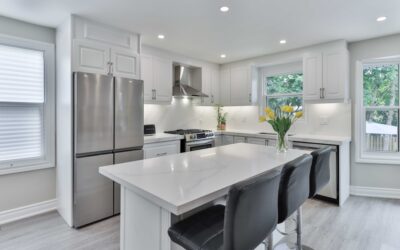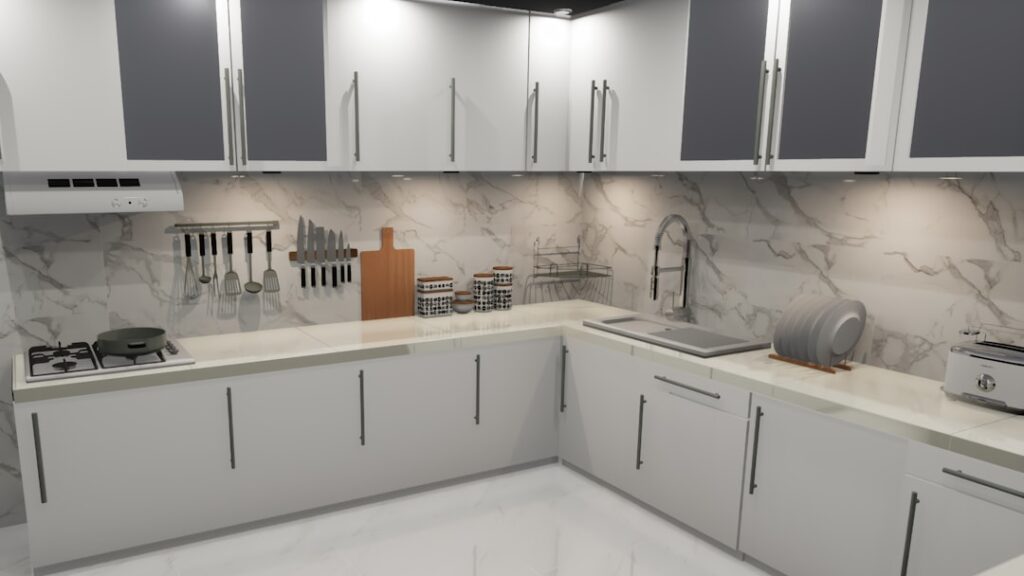
The average American family of four owns 31 percent more kitchen items than will fit comfortably in their cabinets, according to UCLA’s Center on Everyday Lives of Families. That’s why organizing kitchen spaces collapse within weeks of a fresh start — the system can’t handle the volume. Real organization isn’t about color-coded labels, it’s about ruthless editing, smart zoning, and putting the things you use daily within arm’s reach of where you actually use them. This guide walks through the framework that works in any kitchen, from 8×10 galley to oversized open plan.
Part of our Kitchen Remodeling guide — explore the full guide →
Start with the Hard Edit
Pull everything out of one zone at a time — never the whole kitchen at once. Sort into four piles: keep, donate, trash, and “maybe” (put in a labeled box and revisit in 30 days). The keep pile usually shrinks by 30 to 50 percent once you confront the duplicates, expired pantry items, and gadgets you haven’t touched in two years.
Be honest about aspirational tools. The pasta maker, the bread machine, the ice cream churner — if you haven’t used them in 12 months, the kitchen is paying real estate rent on regret.
Define Your Zones
Professional kitchen designers organize around five activity zones. Even in a small kitchen, the principle applies:
- Cooking zone — pots, pans, oils, spatulas near the stove
- Prep zone — knives, cutting boards, mixing bowls between sink and stove
- Cleaning zone — dishwasher, sink, drying rack, cleaning supplies clustered
- Food storage zone — pantry items, refrigerator-adjacent dry goods
- Eating and serving zone — dishes, glasses, silverware near the dining area
An item belongs in the zone where it’s used. The skillet stored in a cabinet across the kitchen from the stove is not just inefficient — it’s a daily annoyance.
Drawer Strategy
Deep drawers outperform shelves for almost everything. Pots and pans stack better, lids stay paired with bodies, and you see every item when the drawer opens. If your kitchen has cabinets without drawers, drawer conversion kits ($35 to $60 per shelf) install in an afternoon and reclaim hidden storage.
Custom-cut drawer dividers in bamboo or acrylic (Joseph Joseph DrawerStore, $25 to $40) keep utensils separated. Knife docks like the BergHOFF in-drawer block ($45) protect blades and save counter space.
Cabinet Optimization
The space inside cabinets is usually used at 40 to 60 percent capacity because tall items sit next to short ones and air takes the difference. Three upgrades change that:
- Two-tier shelving — doubles usable capacity for cans, spices, and mugs
- Pull-out wire baskets — convert lower cabinets to drawer functionality, $45 to $80
- Door-mounted racks — add storage for cutting boards, baking sheets, and pot lids
Pantry Organization
Decant cereals, grains, pasta, and snacks into clear airtight containers (OXO POP, $13 to $30 each). You see inventory at a glance, food stays fresher longer, and the visual consistency calms cluttered shelves. Label with chalk markers showing contents and expiration dates.
Group like with like — baking supplies together, breakfast items together, kid snacks at kid height. A lazy Susan in deep corner pantries ($25 to $45) saves the cans buried behind the rice from being lost forever.
Counter Discipline
Clean counters read as organized regardless of what’s in the cabinets. Anything not used daily belongs off the counter. The coffee maker stays — the standing mixer that gets used twice a month does not. Build appliance garages or dedicate a cabinet shelf to keep counters open.
Aim for fewer than five items on visible counter surfaces. Houzz’s 2024 kitchen survey found homes with clear counters consistently photograph as larger and feel calmer to occupants.
Vertical Space Wins
Walls and the inside of cabinet doors are the most underused storage in any kitchen. Magnetic knife strips, hanging pot rails, pegboards, and door-mounted spice racks all expand capacity without taking floor or shelf space. A magnetic spice rack mounted on the side of the refrigerator ($35 for six jars) holds frequent spices within reach of the stove.
Refrigerator Order
Bins inside the refrigerator (mDesign clear bins, $10 to $20 each) corral categories — beverages, dairy, leftovers, kid lunches, condiments — and stop the “I’ll just shove it in here” backslide. A magnetic dry-erase board on the front tracks what’s in there before it expires and what’s needed for the next grocery run.
Under-Sink Reality
Under the sink is the hardest space in any kitchen because of the plumbing and the dampness. A two-tier expandable shelf that straddles the P-trap (Simple Houseware, $30) doubles usable space. Add a sliding drawer mount ($45) to bring rear items forward without unloading the front. Store cleaning supplies in a portable caddy so you can carry them room to room.
Build Habits, Not Just Systems
Every organizing kitchen project fails without three habits. Reset counters before bed every night. Empty the sink completely before starting the next meal. Take 60 seconds to put items back in their assigned spots when unloading the dishwasher — not the nearest open shelf.
Once a quarter, run a 20-minute audit on one zone. Pull everything, wipe surfaces, toss expired items, and reaffirm the system. This is the single behavior that separates kitchens that stay organized from kitchens that drift back to chaos.
Hardware Worth Buying
- Soft-close drawer slides (retrofit kit, $45) — reduces slamming and protects contents
- Cabinet hinges that hold doors open at 110 degrees instead of 90 — easier access
- Roll-out trash and recycling pull-out ($120) — hides bins inside a base cabinet
- Adhesive LED strip lighting under upper cabinets ($35) — better food prep visibility
Final Thoughts
Real kitchen organization is a one-time hard edit plus a daily five-minute reset. Skip the labels and color coordination if they don’t serve a purpose — the goal is functionality, not Instagram aesthetics. Match storage to actual zones, eliminate duplicates ruthlessly, and use vertical space the kitchen has been ignoring. Within two weeks the new system will feel like the only sensible way the kitchen could have been arranged.