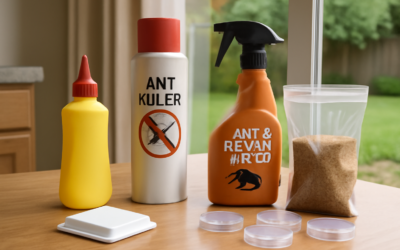
Ant mounds popping up across your lawn, trails of tiny invaders marching toward your foundation — it is a problem that only gets worse if you ignore it. Choosing the right outdoor ant killer depends on the species you are dealing with, the severity of the infestation, and whether you have kids or pets using the yard. The goal is not just killing the ants you see on the surface but eliminating the queen buried deep underground.
Part of our Windows & Doors guide — explore the full guide →
Understanding Why Surface Sprays Fail
Spraying a visible ant trail with contact killer feels satisfying, but it rarely solves the problem. A single fire ant colony can contain 200,000-500,000 workers, and the queen produces 1,500 eggs per day. Kill a few hundred foragers on the surface and the colony barely notices. Worse, some species respond to surface attacks by budding — splitting into multiple new colonies that spread across your property.
Effective outdoor ant control targets the queen. That means bait products the workers carry back to the nest, or drenches that penetrate deep enough to reach the brood chambers 12-18 inches underground.
Best Outdoor Ant Killer Products
Different products work best for different situations. Here are the most effective options available to homeowners:
Granular Baits
Amdro Ant Block ($8-$12 for 12 oz) is a broadcast bait you sprinkle around your yard perimeter. Worker ants carry the granules back to the colony where the active ingredient (hydramethylnon) spreads through the population. Results take 1-2 weeks but the colony kill rate is significantly higher than spray products.
Advion Fire Ant Bait ($20-$25 for 2 lbs) uses indoxacarb and works particularly well against fire ants. Apply it in late afternoon when ants are actively foraging for the best uptake.
Liquid Baits and Stations
Terro Outdoor Liquid Ant Baits ($7-$10 for 6 stations) use borax as the active ingredient. They excel against sugar-feeding species like Argentine ants and odorous house ants. Stakes push into the ground near ant trails and last 2-4 weeks per station.
Mound Drenches
For visible mounds, a drench treatment delivers insecticide directly into the colony. Mix Ortho Orthene Fire Ant Killer ($8-$10) with water per label instructions and pour 1-2 gallons slowly over the mound. Apply early morning or late evening when ants are clustered near the surface.
Natural and Pet-Safe Options
If chemical treatments concern you, several outdoor ant killer alternatives work without synthetic pesticides. Diatomaceous earth (food grade) damages ant exoskeletons on contact — dust it around mound entrances and along foundation walls. It works best in dry conditions and needs reapplication after rain.
Boiling water poured directly into mound openings kills ants on contact and can reach the queen if you use enough volume — 3-4 gallons per mound. Success rate is around 60% per treatment. White vinegar sprayed along ant trails disrupts their pheromone navigation but does not kill colonies.
Identifying Common Outdoor Ant Species
- Fire ants — reddish-brown, 1/8 to 1/4 inch, build dome-shaped mounds with no visible entry hole on top
- Carpenter ants — black or dark brown, 1/4 to 1/2 inch, nest in damp or rotting wood
- Argentine ants — light brown, 1/16 inch, form massive super-colonies with multiple queens
- Pavement ants — dark brown, 1/8 inch, nest in cracks in sidewalks, driveways, and patios
Identification matters because bait preferences vary by species. Fire ants prefer protein-based baits in spring and oil-based baits in summer. Argentine ants favor sweet liquid baits year-round.
Application Timing and Technique
Apply granular baits when the ground is dry and no rain is forecast for 24 hours. Late afternoon applications work best because most ant species forage heavily at dusk. Scatter bait around mounds and along trails rather than placing it directly on top of nests — many species will avoid disturbed mound areas.
For perimeter treatments, create a 3-foot band of granular product around your home’s foundation. Reapply every 4-6 weeks during active season (March through October in most US regions).
When to Call a Professional Exterminator
DIY outdoor ant killer products handle most residential infestations effectively, but certain situations call for professional help. If you have multiple fire ant mounds reappearing within weeks of treatment, carpenter ants nesting inside structural wood, or a persistent Argentine ant super-colony that spans your property and your neighbors’, a licensed pest control operator has access to commercial-grade products and colony-mapping techniques that consumer products cannot match. Professional treatment typically costs $150 to $300 per visit with follow-up included.
Preventing Ant Infestations Long-Term
Killing existing colonies is only half the battle. Prevent reinfestation by eliminating what attracts ants to your yard in the first place. Keep mulch at least 12 inches away from your foundation. Trim tree branches and shrubs so they do not touch your house — ants use these as highways to access your siding and roof.
Fix leaky outdoor faucets and ensure sprinkler heads are not creating soggy areas near the foundation. Store firewood at least 20 feet from the house and elevated off the ground. Seal cracks in your foundation with silicone caulk to block entry points. Consistent prevention combined with a quality outdoor ant killer keeps colonies from re-establishing on your property season after season.