Outdoor ant colonies number in the thousands to millions, and the best outdoor ant killer must reach the queen deep underground — not just the workers you see on the surface. Contact sprays kill visible ants but leave the colony intact. Baits and drenches penetrate the nest, eliminating the queen and collapsing the entire colony within days to weeks. Here are the most effective products by application type, with realistic expectations for each.
Part of our Windows & Doors guide — explore the full guide →
Top Picks
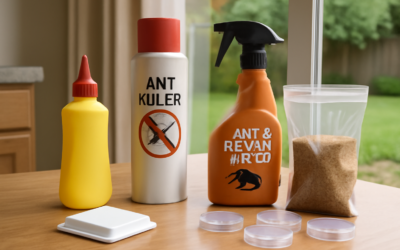
- Best granular bait: Amdro Ant Block ($8-$12 for 12 oz) — scatter around mounds and along trails. Workers collect the bait and share it with the colony. Kills the queen in 1-2 weeks. Effective on most outdoor ant species including fire ants
- Best liquid bait station: Terro Outdoor Liquid Ant Bait ($8-$12 for 6 stakes) — pre-filled weatherproof stations that push into the ground along ant trails. Borax-based bait kills the colony in 3-14 days. Easy to place and replace
- Best perimeter spray: Ortho Home Defense ($10-$15 for 1.33 gal) — ready-to-use spray with a comfort wand. Creates a barrier around the home’s foundation that kills ants on contact and provides residual protection for up to 12 months
- Best mound drench: Suspend SC ($25-$35 for 16 oz concentrate) — professional-grade deltamethrin mixed with water and poured into mound openings. Kills the colony within 48-72 hours. One bottle makes 16-32 gallons
- Best fire ant killer: Advion Fire Ant Bait ($20-$25 for 2 lbs) — indoxacarb-based granular that workers carry deep into the colony. Eliminates fire ant mounds within 24-72 hours. The fastest-acting fire ant product available to consumers
- Best natural option: Diatomaceous earth, food-grade ($10-$14 for 4 lbs) — dust around mound openings, trails, and entry points. Physical kill mechanism — microscopic sharp particles damage ant exoskeletons. Safe around children and pets. Takes 24-48 hours to work
Bait vs. Spray vs. Drench
Understanding how each product type works helps you choose the most effective approach for your specific ant problem:
- Granular and liquid bait: Workers find the bait, consume it, and share it with the colony through social feeding. The slow-acting toxicant allows the bait to spread through the entire nest before ants begin dying — reaching the queen that spray cannot touch. Most effective for colony elimination. Takes 3-14 days
- Perimeter spray: Creates a chemical barrier that kills ants crossing it and deters new ants from entering the treated zone. Does not eliminate colonies but prevents ants from entering your home. Residual lasts 1-12 months depending on the product. Best as a supplement to bait, not a replacement
- Mound drench: Liquid insecticide poured directly into a visible mound opening. The liquid floods the tunnels and contacts ants throughout the nest. Fast-acting (24-72 hours) but requires knowing where the mound is and having a visible entrance. Does not work on colonies nesting under concrete, inside walls, or with inaccessible entrances
Application Strategy
The most effective outdoor ant control combines bait and barrier treatment:
- Apply granular bait around visible mounds and along active ant trails. Scatter bait in a 3-foot circle around each mound — do not place bait on top of the mound, as this alerts ants to relocate. Do not disturb the mound
- Place liquid bait stations near entry points to the house — along the foundation, beside garage doors, and near patio edges where ants forage
- Apply perimeter spray around the entire foundation after bait has been in place for 7-14 days (allowing the bait to work first). The barrier prevents surviving ants and new colonies from entering the home
- Wait 14-21 days and evaluate. If mound activity has stopped and no new indoor ants appear, the colonies are dead. If activity continues, apply a second round of bait
Timing Your Application
Apply the best outdoor ant killer in early spring (March-April) when colonies are establishing new nests and queen ants are most vulnerable. This early-season treatment intercepts colonies before they reach peak population in summer (June-August). A second application in early fall (September) catches colonies stocking up for winter. These two seasonal treatments prevent 90% of outdoor ant problems throughout the year.
Apply products in the early morning or evening when ants are most active on the surface. Midday heat drives ants underground where they do not encounter surface-applied bait and spray. Avoid application before rain — most products require 24 hours of dry conditions to establish their effect. Check the 24-hour weather forecast before treating.
Safety for Pets, Children, and Gardens
Most outdoor ant killers are low-toxicity to mammals once dried or contained in bait stations. However, keep pets and children away from freshly applied granular bait until it has been dispersed by rain or watering (usually 24 hours). Bait stations (Terro outdoor stakes) are enclosed — the active ingredient is inside the station where pets and children cannot easily access it.
For vegetable gardens, use only products labeled safe for edible gardens, or choose physical/biological methods: diatomaceous earth (food-grade, safe up to harvest), boiling water poured into mounds (free, immediate kill of the visible nest), and beneficial nematodes ($15-$25, biological control that parasitizes ant larvae). Avoid broadcast spraying chemical insecticides near food crops — the residual can persist on soil and migrate into plant tissue.