Most of the dirt that ends up ground into your floors comes through the front and back doors on the bottoms of shoes, and the cheapest defense against it costs about thirty dollars. Outdoor floor mats are the first line of defense for your home, scraping grit, mud, and moisture off shoes before any of it reaches your interior flooring. The right mat at each entrance can cut indoor cleaning dramatically while adding traction on slick, wet steps and giving your entryway a finished, welcoming look. The wrong mat traps water against your decking, fades in a season, or slides around like a hazard. Knowing the materials and features helps you buy once and buy right.
Part of our Windows & Doors guide — explore the full guide →
Why a Good Outdoor Mat Earns Its Keep
An outdoor mat does three jobs at once. It scrapes and traps debris so it never reaches your carpet, hardwood, or vinyl. It absorbs or channels water so wet shoes do not track puddles inside, which protects floors and prevents slips. And it adds grip on smooth, rain-slicked surfaces like concrete porches and tile entries where a fall is a real risk. A coarse scraper mat outside paired with an absorbent mat just inside the door is the combination professional facilities use, and it works just as well at home.
There is an aesthetic payoff too. A clean, well-chosen mat frames a doorway and signals a cared-for home before a guest even rings the bell.
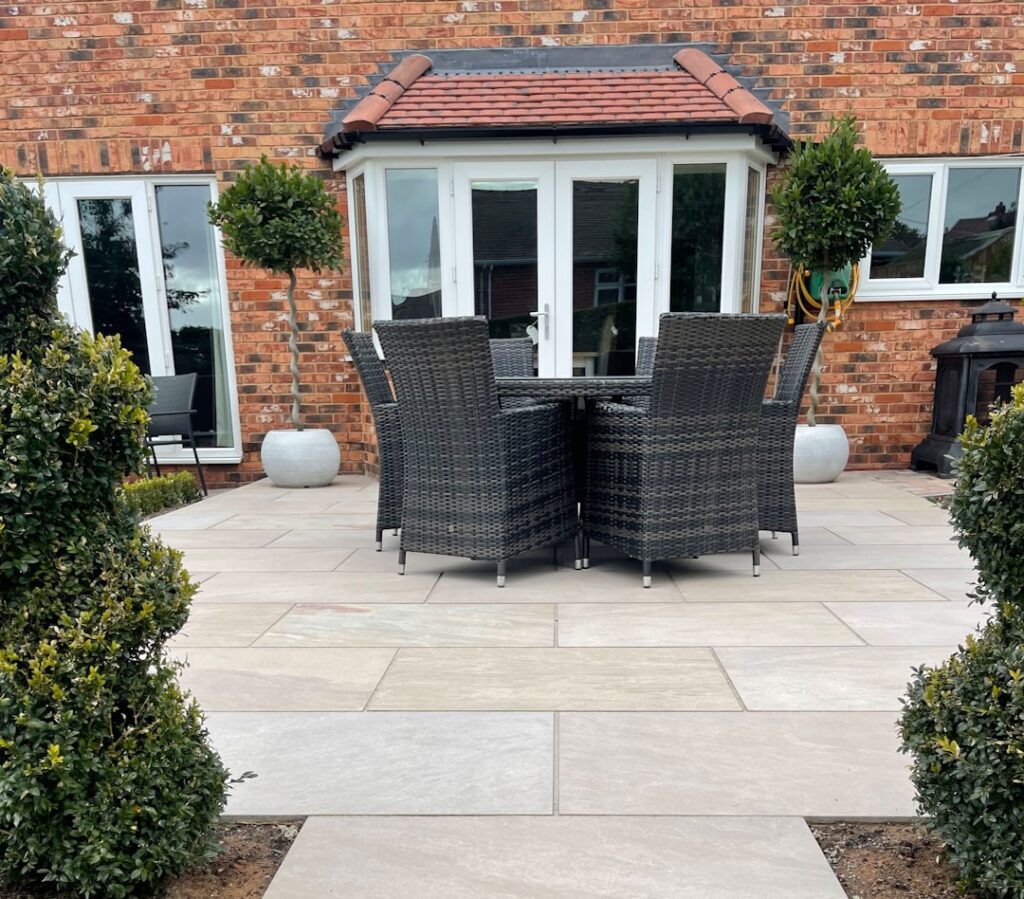
Once your patio flooring is in place, think about how you’ll use the space. A gazebo adds shade and structure, while a good outdoor furniture set turns it into a spot you’ll actually want to hang out in. A deck box is also worth considering if you need somewhere to stash cushions and outdoor gear.
We may earn a commission when you purchase through our links.
Materials and What Each Does Best
Material is the most important choice because outdoor mats live in sun, rain, snow, and constant foot traffic. Each option has a clear strength.
- Rubber — Tough, heavy, and weatherproof. Excellent at scraping, naturally slip resistant, and it lies flat without curling. The most durable all-around choice for entryways.
- Coir (coconut fiber) — The classic bristly natural mat. Outstanding at scraping mud off shoes, with a warm, traditional look, though it wears faster and is best under a covered porch.
- Polypropylene and recycled plastic — Fade resistant, quick drying, mold resistant, and easy to hose off. Great for fully exposed spots and patios.
- Rubber-backed loop and turf-style — Combine a scrubbing top with a gripping base, good for trapping fine dirt.
Drainage: The Feature People Forget
For a mat that lives in the rain, drainage matters as much as the surface. A solid-backed mat sitting in standing water traps moisture against your deck or porch, which can stain wood, breed mold, and even rot the boards underneath. Look for mats with drainage holes, raised ridges, or an open-grid construction that lets water flow through and air circulate beneath. On a covered porch a solid mat is fine, but for an exposed step or a poolside patio, choose a draining design and lift the mat occasionally to let the surface below dry out.
Choosing the Right Size and Placement
Size and placement quietly determine how well a mat actually works. A mat that is too small only catches a step or two and misses most of the dirt. Aim for a mat long enough that a person takes at least two full strides on it, and wide enough to span the doorway with room to spare. Common entry sizes run from about 18 by 30 inches for a single door up to runner-style mats for double doors and long porches. For the best dirt capture, place a scraper mat outside and a softer absorbent mat just inside, so the two work as a team. On patios and decks, larger area-style outdoor mats define a seating zone and add comfort and color underfoot.
Style and Curb Appeal
Outdoor mats are no longer just utilitarian rubber rectangles. You can find monogrammed coir mats, bold geometric patterns, seasonal designs, and flatweave outdoor rugs in stripes and prints that hold up to weather. For curb appeal, match the mat’s scale to your entry and pick a color that complements your door rather than clashing with it. A layered look, with a large patterned outdoor rug under a smaller scraper mat, adds depth to a porch. Just remember that function comes first at a working entrance; save the most decorative, less scrubby options for covered or low-traffic spots.
What They Cost and How to Care for Them
Pricing is friendly. Basic rubber and coir entry mats run roughly $15 to $40, larger patio and runner mats $30 to $80, and decorative outdoor area rugs $50 to $200 or more depending on size and design. Given how much indoor cleaning they prevent, even the pricier options pay for themselves.
Maintenance is simple. Shake or sweep mats regularly to clear loose grit, and hose down rubber and synthetic mats when they get muddy, letting them dry fully before laying them back down. Keep coir mats under cover and out of standing water, since they degrade when constantly wet. Flip and rotate mats occasionally so they wear evenly, and replace any mat that has gone slick, curled, or flattened, since a worn mat loses both its grip and its scraping power. Choose the right material, get the size and drainage right, and a set of good outdoor floor mats will protect your floors and dress up your doorways for years.
Matching the Mat to the Spot
Not every entrance has the same needs, and tailoring the mat to the location gets the best results. A covered front porch is a friendly home for a decorative coir or low-pile mat, since it stays mostly dry and is the spot guests see first. A back or side door that takes muddy boots, paws, and garden traffic calls for a tough rubber scraper mat with deep ridges and good drainage. A poolside or lakefront entry needs a quick-drying, mold-resistant synthetic or open-grid mat that shrugs off constant wet feet. A garage service door benefits from a heavy industrial scraper that handles grit and the occasional dropped tool. Sun exposure matters too; a fully exposed south-facing step wants fade-resistant polypropylene, while a shaded spot can wear natural coir longer. Reading the conditions of each doorway leads to mats that actually last.
Building a Two-Mat System
The most effective setup professionals use is a simple two-stage system, and it works just as well at home. The first stage is a coarse, aggressive scraper mat outside the door, where stiff bristles or deep rubber ridges knock the bulk of the mud, sand, and grit off shoes. The second stage is a softer, absorbent mat just inside the threshold, which wicks remaining moisture and catches the fine dust that survived the scraper. Together they remove far more soil than either could alone, and they keep wet shoes from tracking puddles across your entry floor. For the highest-traffic doors, some homeowners add a third element, a boot tray or a slatted mat to one side for setting genuinely muddy footwear. Pair this system with a no-shoes-inside habit and the amount of grit reaching your carpet, hardwood, and vinyl drops dramatically, which protects the floors and cuts your indoor cleaning time.
Prefer to explore on your own?
See how new flooring looks in your actual room in seconds — free, no signup.
Try the free Floor Studio →