
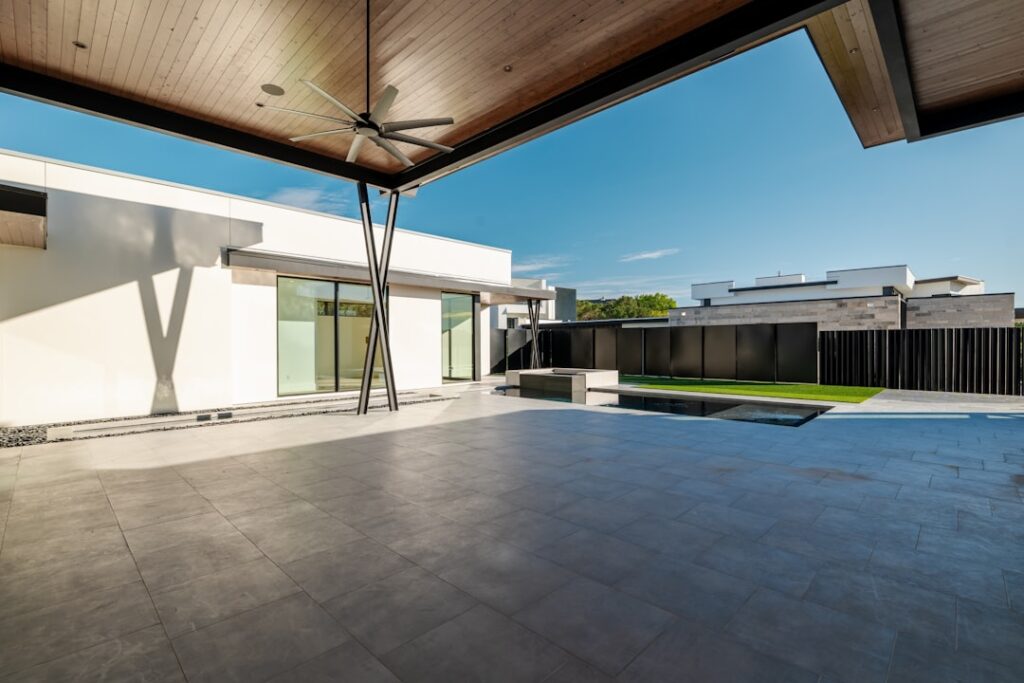
When a client tells me they want a breeze on the back porch that survives a summer thunderstorm, the first thing I explain is that truly outdoor patio fans waterproof enough for direct rain are a specific category with a UL rating to prove it. Plenty of fans look rugged but are only built for covered, dry spots. Picking the wrong one means rust streaks on your siding and a motor that seizes within a season, so it pays to understand the labels before you spend a dime.
Part of our Roofing guide — explore the full guide →
I have installed dozens of these fans on decks, pergolas, screened porches, and open patios across humid coastal climates and dry inland ones. The good news is that the technology has come a long way. A well-chosen fan will move real air, resist corrosion for a decade or more, and cost less to run than most people expect. Let me walk you through exactly what to look for.
Wet-Rated vs Damp-Rated: The Distinction That Matters
Every outdoor fan carries a UL listing that falls into one of three buckets. Understanding these is the single most important part of your purchase.
- Dry-rated: Indoor use only. Ignore these for any outdoor project, even a covered one.
- Damp-rated: Safe for humidity and indirect moisture. Good for a covered porch, screened lanai, or under a solid roof overhang where rain cannot land directly on the blades.
- Wet-rated: Sealed to handle direct rain, snow, and sprinkler spray. This is the true waterproof category. Choose this for an open pergola, an uncovered deck, or anywhere splashing is likely.
If your fan will ever get rained on directly, buy wet-rated and nothing less. The price difference between damp and wet is usually only $30 to $60, and it is the cheapest insurance you will ever purchase for an outdoor fixture.
What Makes a Fan Actually Weatherproof
Marketing copy throws around “all-weather” loosely, so I judge fans by their materials and seals instead. A genuinely durable unit has a sealed motor housing that keeps moisture off the windings, stainless-steel or coated hardware that will not bleed rust, and blades made of ABS plastic, marine-grade resin, or powder-coated aluminum rather than raw wood.
Raw wood blades warp and delaminate outdoors, even under cover, within a couple of years. I steer clients toward composite or ABS blades every time. For hardware, look for the phrase “corrosion-resistant” backed by stainless fasteners. On the coast within a mile of salt air, I insist on a marine-grade finish because standard powder coat will pit noticeably faster in that environment.
Sizing the Fan to Your Space
Blade span, measured tip to tip, should match the square footage you want to cool. Undersizing is the most common mistake I see.
- Up to 75 sq ft (a small balcony): 29 to 36 inch span
- 75 to 175 sq ft (a typical patio): 42 to 48 inch span
- 175 to 350 sq ft (a large deck): 52 to 56 inch span
- Over 350 sq ft or a big pergola: 60 inches or larger, or two fans
Ceiling height matters too. You want the blades at least 8 feet off the floor for safety and roughly 8 to 10 inches below the mounting surface for airflow. On a tall pergola, use a downrod to bring the fan into the zone where people actually feel it. A fan mounted 14 feet up with no downrod moves plenty of air that nobody enjoys.
Mounting Types and Where They Fit
How you attach the fan depends on your structure. A standard flush or downrod ceiling mount works under a solid porch roof or pergola beam. For sloped ceilings, buy an angled mount adapter rated for your pitch. If you have no overhead structure at all, consider a wall-mounted oscillating outdoor fan or a pedestal fan, both of which come in wet-rated versions now.
Always confirm the electrical box is rated for outdoor use and for fan support, meaning it is a listed fan brace box that can carry the weight and the wobble load. A standard lighting box is not enough and will eventually pull loose. If you are running new wiring, budget for weatherproof conduit and an in-use covered outlet or a switch in a bubble cover.
Airflow, Motors, and Efficiency
Airflow is rated in CFM, cubic feet per minute. A quality 52-inch outdoor fan moves 5,000 to 7,000 CFM on high. Compare CFM per watt to judge efficiency; DC-motor fans are the standout here. A DC motor draws roughly 60 to 70 percent less electricity than an older AC motor, runs quieter, and usually includes a remote with six speeds and a reverse function.
Reverse mode is underrated outdoors. In summer, run the fan counterclockwise to push air down for a cooling wind-chill effect. Some folks in screened porches use the clockwise reverse in cooler months to gently circulate heat from a patio heater. Expect to pay $150 to $250 for a solid DC-motor wet-rated fan, versus $80 to $150 for a basic AC model.
Cost Breakdown and Installation Budget
Here is a realistic budget so nobody is surprised at checkout.
- Entry wet-rated fan: $90 to $160
- Mid-range DC-motor fan with remote: $180 to $300
- Premium designer or oversized pergola fan: $350 to $700
- Downrod, angled mount, or brace box: $20 to $60
- Electrician labor if new wiring is needed: $150 to $400
If a fan-rated box already exists, a competent DIYer can swap in a new outdoor fan in about two hours. Running fresh weatherproof circuits, however, is a job for a licensed electrician in most jurisdictions, both for code compliance and for your homeowner’s insurance.
Maintenance That Extends the Lifespan
Even wet-rated fans last longer with a little care. Twice a year I wipe the blades with a damp cloth to knock off pollen and grime that unbalances them. Check the mounting screws each spring since seasonal expansion loosens hardware. If you live where winters are harsh, some manufacturers recommend covering or removing the fan; a $15 breathable fan cover keeps grit out of the bearings during the off-season.
Any wobble usually traces to dust buildup or a loose blade arm, not a failing motor. A blade-balancing kit costs about $5 and solves it in ten minutes. Keep the finish clean and you will get well over a decade out of a good outdoor fan.
Frequently Asked Questions
Can I put a regular indoor fan on a covered porch?
No. An indoor dry-rated fan lacks the sealed motor and corrosion protection needed for outdoor humidity. Even fully covered, a porch sees moisture swings that will ruin an indoor fan. Use a damp-rated fan at minimum, or wet-rated if any rain reaches it.
How much does it cost to run an outdoor patio fan?
A DC-motor fan draws roughly 5 to 35 watts depending on speed. Running it eight hours a day for a month costs only a few dollars on a typical electric rate. AC-motor fans use more, but even those rarely add more than $5 to $10 a month to a bill.
Do waterproof fans come with lights?
Many do, and the light kits on wet-rated fans use sealed LED modules. If you want a light, confirm the light kit itself carries a wet or damp rating that matches the fan, since not all bundled kits are sealed to the same standard.
Will a patio fan keep mosquitoes away?
Somewhat. Mosquitoes are weak fliers, and a steady breeze of even a few miles per hour makes it hard for them to land and bite. A fan is not a substitute for repellent, but people consistently report fewer bites in the direct airflow zone.
Choosing the right fan comes down to matching the UL rating to your exposure, sizing the blade span to the space, and buying quality materials that shrug off weather. Get those three right and your patio stays comfortable through years of summers with almost no fuss.


