A mature oak or maple wrapped in soft light turns an ordinary yard into something you actually want to sit in after dinner. Outdoor solar tree lights make that possible without trenching a single wire, drawing power from the sun during the day and glowing on their own from dusk until the battery runs low. For homeowners who want ambiance, safety, or a little seasonal magic, they are one of the easiest upgrades you can install in an afternoon.
Part of our Windows & Doors guide — explore the full guide →
The catch is that “solar” covers a huge range of products, from delicate fairy-light strands to serious ground spotlights that uplight a 40-foot trunk. Knowing how the technology works, and where each style earns its keep, is the difference between a display that dazzles all season and one that flickers out by 9 p.m. This guide covers the types, the real-world brightness, installation, and the maintenance that keeps them running.
How Solar Tree Lights Actually Work
Every solar light shares the same basic chain: a photovoltaic panel captures daylight, a small circuit charges a rechargeable battery, and at dusk a light sensor switches the LEDs on. The panel is the heart of the system. A larger, higher-quality monocrystalline panel gathers more energy in less time, which matters enormously in winter or under partial shade.
Battery capacity, measured in milliamp-hours, determines runtime. Budget strands often carry a 600 to 1,200 mAh battery that lasts four to six hours. Better spotlights use 2,000 to 4,000 mAh lithium cells and can push eight to ten hours after a sunny day. Because trees create shade, the smartest designs separate the panel from the light on a 10- to 16-foot cable, letting you stake the panel in an open sunny spot while the fixture sits under the canopy.
Keep in mind that solar output is entirely dependent on charge. After a gray, rainy day, even a good light may only manage two or three hours. This is normal physics, not a defect, and it is the single most important expectation to set before you buy.
Types of Outdoor Solar Tree Lights
Solar tree lighting falls into a few distinct categories, each solving a different problem. Wrap strands, sometimes sold as solar fairy lights, use thin copper or PVC wire studded with tiny LEDs. A single 100-LED strand runs about 33 feet and wraps a slim trunk or a few branches. These create the classic twinkling look and cost $12 to $30 per strand.
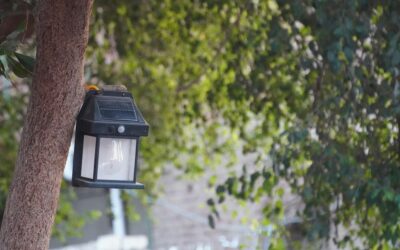
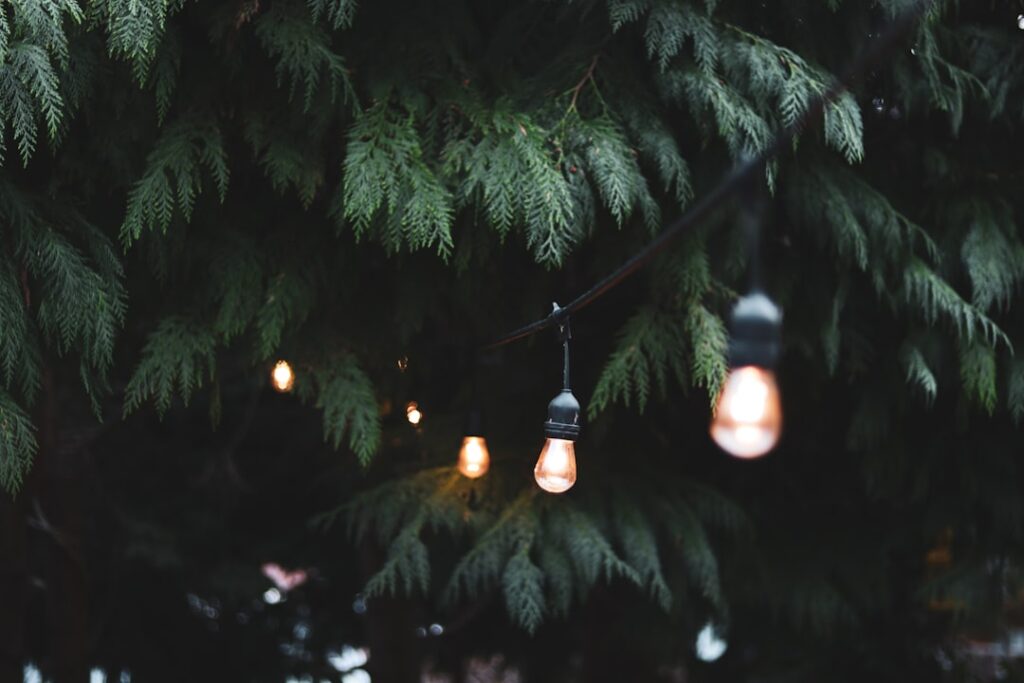
Spotlights and uplights sit on the ground or stake into the soil and aim upward, washing the trunk and lower canopy in a broad beam. A quality solar uplight delivers 100 to 300 lumens and dramatizes a large specimen tree far better than any wrap could. Hanging lantern and orb styles dangle from branches for a decorative, lit-from-within effect, while string bistro lights strung between trees light a whole seating area.
For most yards, a combination works best. Two or three uplights at the base of a big tree provide the drama, while a wrap strand on a nearby smaller tree adds sparkle. Mixing types gives depth that a single product line rarely achieves on its own.
How Bright Can You Expect Them to Be?
Set realistic brightness expectations and you will be happy; expect floodlight power and you will be disappointed. Decorative wrap strands produce a gentle, diffuse glow rather than task light, typically well under 50 lumens total across the strand. That is by design, meant to charm rather than illuminate.
Solar spotlights are where usable brightness lives. Entry models put out 50 to 100 lumens, enough to graze a trunk. Premium units with larger panels reach 200 to 400 lumens and can genuinely light a tree so it reads from across the street. Color temperature shapes the mood: warm white around 2,700K to 3,000K feels cozy and natural against bark, while cool white near 6,000K looks stark and modern but can feel clinical in a garden setting. Many buyers regret going too cool, so lean warm unless you specifically want a crisp, contemporary look.
Installation Tips That Make or Break the Look
Good placement separates a professional-looking display from a scattered one. For wraps, start at the base and spiral upward with roughly six to eight inches between passes, keeping tension even so the strand hugs the bark. Leave a little slack; trees grow, and a strand cinched tight can girdle a young branch over a couple of seasons.
For uplights, position the fixture 12 to 24 inches from the trunk and angle it so the beam rakes up the bark, revealing texture. Placing two lights on opposite sides eliminates the harsh single shadow that one light throws. The most common installation mistake is burying the solar panel in the same shade as the tree; the panel needs four to six hours of direct sun to charge fully, so run that separate cable out to a bright patch of lawn or a fence top that catches afternoon light.
Secure everything against wind. Zip ties, garden staples, and the fixture’s own ground spike all help, but check them after the first big storm. A strand that blows loose looks messy and can chafe against branches.
Seasonal Performance and Weatherproofing
Weather resistance is not optional for lights that live outside year-round. Look for an IP65 rating at minimum, which means the unit shrugs off rain and sprinkler spray. Cheaper products rated IP44 tolerate light rain but often fail in a downpour, with water reaching the battery compartment and corroding contacts.
Winter is the true test. Short days and low sun angles cut charging time dramatically, and lithium batteries lose capacity in the cold, so a light that ran eight hours in July may manage only three in December. In regions with heavy snow or sustained freezes below 10 degrees Fahrenheit, many homeowners bring delicate strands indoors for the coldest months and rely on sturdier spotlights the rest of the year. Positioning panels where snow slides off, rather than accumulates, keeps them working through winter.
Maintenance and Battery Life
These lights are low-maintenance, not no-maintenance. The panel is the part that needs attention: a thin film of dust, pollen, or bird droppings can slash charging efficiency by a third. Wipe each panel with a damp cloth every four to six weeks and after any dust storm or heavy pollen season.
Rechargeable batteries are consumable. Most solar tree lights use replaceable AA or AAA NiMH cells, or a small lithium pack, that hold up for one to three years before capacity fades noticeably. When your lights start dimming early despite sunny days and clean panels, a fresh battery usually restores them for a few more dollars rather than a full replacement. Buy fixtures with a screw-access battery door rather than a sealed unit, since serviceability doubles the useful life of the product.
Are They Worth It?
For pure ambiance, safety near a dark path, and zero running cost, outdoor solar tree lights are hard to beat. There is no wiring, no electrician, and no monthly draw on your power bill, and a well-chosen setup can transform a plain yard into a nightly retreat for well under $100. The tradeoff is honesty about brightness and runtime; these are decorative and accent tools, not floodlights, and their performance rises and falls with the sun.
If you want reliable, all-night, high-output lighting on a specimen tree for security or grand effect, a low-voltage hardwired system will outperform solar. But for the vast majority of homeowners who simply want their trees to glow warmly through the evening with almost no effort, solar delivers exactly that, and it does so the moment the sun sets on the day you install it.