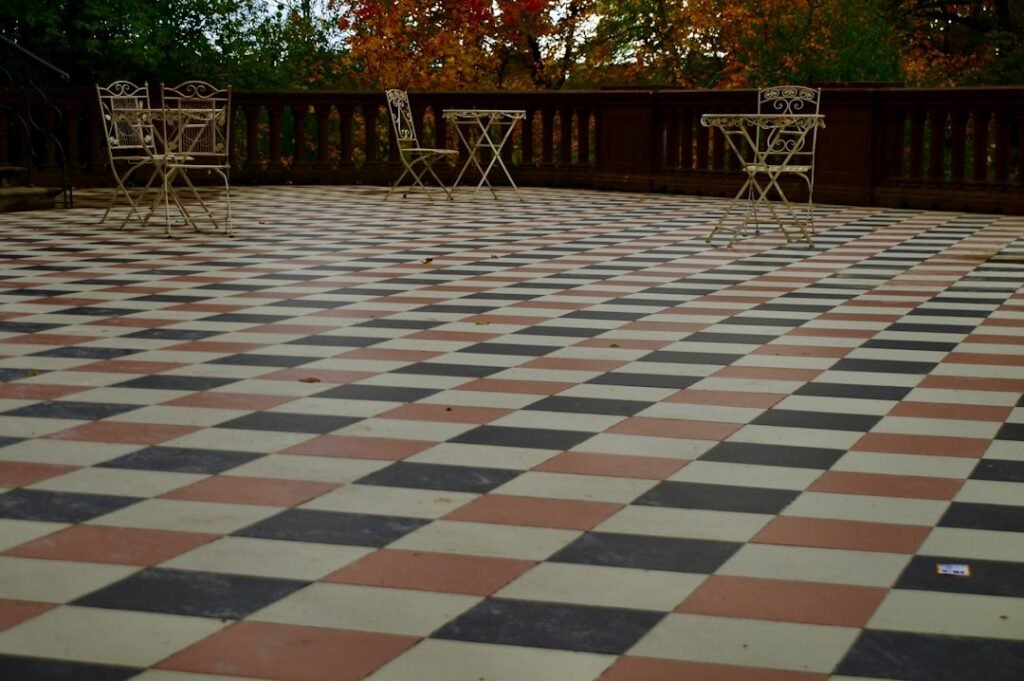
Choosing the right outdoor tile is more demanding than selecting indoor tile. Outdoor tiles must withstand freezing temperatures, heavy rain, direct sunlight, temperature swings, and foot traffic — all while providing a safe, slip-resistant surface. Not every tile that looks great indoors can survive a single winter outside.
- What Outdoor Tile Needs to Survive
- Porcelain Pavers — Best Overall Outdoor Tile
- Slate
- Travertine
- Quartzite
- Concrete Tile and Pavers
- Outdoor Tile Comparison
- Frost Resistance Explained
- Slip Ratings for Outdoor Use
- Installation Methods
- Outdoor Grout and Jointing
- Cost Breakdown
- Outdoor Tile Maintenance
- Frequently Asked Questions
This guide covers the best outdoor tile materials, frost resistance requirements, slip safety ratings, installation methods, cost expectations, and maintenance for patios, pool surrounds, walkways, and other exterior applications.
Once your patio flooring is in place, think about how you’ll use the space. A gazebo adds shade and structure, while a good outdoor furniture set turns it into a spot you’ll actually want to hang out in. A deck box is also worth considering if you need somewhere to stash cushions and outdoor gear.
We may earn a commission when you purchase through our links.
What Outdoor Tile Needs to Survive
Indoor tiles fail outdoors because they cannot handle the environmental stresses that exterior installations face. Before choosing any outdoor tile, understand these requirements.
Low water absorption. Outdoor tiles must resist water absorption because absorbed water expands when it freezes, cracking the tile from within. The key metric is the water absorption rate. Porcelain (less than 0.5%) and dense natural stones are suitable. Standard ceramic tile (3% to 7% absorption) will crack in freeze-thaw climates within the first few winters.
Slip resistance. Outdoor surfaces get wet from rain, sprinklers, and pool splash. A minimum R11 rating (European standard) or DCOF of 0.60+ is recommended for outdoor tiles. Polished or glossy tiles are never appropriate for outdoor use.
UV stability. Direct sunlight causes some materials to fade or discolor over time. Quality porcelain pavers maintain their color indefinitely. Natural stone develops a patina that most homeowners consider desirable. Some low-quality imported tiles can fade noticeably within a few years.
Structural strength. Outdoor tiles bear more weight and stress than indoor tiles — furniture, planters, foot traffic, and sometimes vehicle weight on driveways. Choose tiles rated for exterior use with appropriate thickness (typically 3/4 inch to 1 inch for pavers).
Porcelain Pavers — Best Overall Outdoor Tile
Porcelain pavers are the gold standard for outdoor flooring. They combine near-zero water absorption (less than 0.5%), excellent slip resistance, UV stability, frost immunity, and virtually unlimited design options. Modern porcelain pavers convincingly replicate the look of natural stone, wood, and concrete at a fraction of the maintenance.
Thickness: Outdoor porcelain pavers are typically 3/4 inch (20 mm) thick — significantly thicker than indoor porcelain tile (typically 8 to 10 mm). This thickness provides structural strength for outdoor use and allows pedestal or sand-set installation without a concrete base.
Design options: Stone-look (travertine, slate, limestone), wood-look (plank format pavers), concrete-look (modern industrial), and solid colors. The print technology on quality pavers is so advanced that they are difficult to distinguish from the real materials they mimic.
Advantages: Frost-proof, stain-resistant, color-fast, low maintenance, consistent thickness, won’t crack from freeze-thaw, and available in virtually any aesthetic. Disadvantages: Higher upfront cost than concrete pavers, requires professional installation for best results on large areas.
Browse our complete selection of porcelain floor tiles for both indoor and outdoor applications.
Slate
Slate is a natural stone with a distinctive layered, textured surface that provides excellent slip resistance even when wet. Its natural cleft surface (the rough, split texture) is inherently non-slip, making it a popular choice for pool surrounds and walkways.
Color range: Slate comes in grays, greens, blacks, purples, and rusty reds depending on the quarry of origin. Indian slate tends toward multi-colored blends. Brazilian slate runs darker and more uniform. Vermont slate offers distinctive greens and purples.
Outdoor performance: Dense slate with low porosity (less than 1% absorption) performs well outdoors in freeze-thaw climates. However, not all slate is equal — some varieties are more porous and prone to flaking (delamination along the natural layers). Choose grade A or “gauged” slate that has been calibrated to a uniform thickness for easier installation.
Maintenance: Seal slate upon installation and every 2 to 3 years to prevent staining and moisture penetration. Slate’s textured surface can trap dirt and require more aggressive cleaning than smooth porcelain.
Travertine
Travertine is a natural limestone with a warm, earthy aesthetic that has been used in outdoor architecture for thousands of years (think Roman ruins). Its natural pits and surface variation give it organic character that porcelain reproductions struggle to fully capture.
Finish types for outdoors: Tumbled travertine (soft edges, rustic look) and brushed/honed travertine are appropriate for outdoor use. Never use polished travertine outdoors — it becomes extremely slippery when wet. Chiseled-edge travertine adds a more rustic, old-world character.
Frost considerations: Travertine is more porous than porcelain (typically 1% to 5% absorption depending on quality). Premium, dense travertine survives freeze-thaw cycles well, but lower-quality travertine can crack and spall in harsh winters. If you live in a cold climate, choose premium-grade travertine and seal it annually.
Pool surrounds: Travertine is one of the most popular materials for pool coping and decking because it stays cool underfoot in direct sunlight — a property that porcelain and concrete do not share to the same degree. Its natural surface also provides good barefoot traction.
Quartzite
Quartzite is a metamorphic natural stone that offers marble-like beauty with granite-like durability. It is one of the hardest natural stones available, making it extremely resistant to scratching, weathering, and wear.
Outdoor advantages: Very low water absorption (dense varieties under 1%), excellent freeze-thaw resistance, extremely hard (Mohs 7 — harder than granite), and UV stable. Quartzite patios look stunning and last generations with minimal maintenance.
Color range: White, gray, gold, and rose tones with subtle veining. The aesthetic falls between marble (which it resembles) and granite (which it rivals in hardness). Popular varieties include Silver quartzite, Golden quartzite, and Taj Mahal quartzite.
Drawbacks: Quartzite is one of the most expensive outdoor tile options ($15 to $40 per square foot for materials alone). Its hardness makes cutting and fabrication more difficult (and more expensive for installation). Weight can also be a consideration for elevated decks and balconies.
Concrete Tile and Pavers
Concrete pavers are the most affordable outdoor tile option and are available in an enormous range of shapes, sizes, colors, and patterns. They are manufactured by pouring concrete into molds, which allows for consistent dimensions and interlocking designs.
Types: Standard concrete pavers (solid colors, brick-like shapes), architectural concrete pavers (premium finishes that mimic stone), and large-format concrete slabs. Concrete tiles for outdoor use are typically 2 to 2.5 inches thick.
Performance: Quality concrete pavers are rated for freeze-thaw cycles and outdoor use. They are strong, affordable, and easy to replace individually if one cracks. However, concrete is more porous than porcelain and absorbs stains more readily. Sealing is recommended.
Color fading: Concrete pavers can fade over time, especially cheaper products with surface-applied color. Through-body colored pavers (where pigment is mixed throughout the concrete) resist fading significantly better.
Outdoor Tile Comparison
| Material | Cost (per sq ft) | Frost Resistance | Slip Rating | Maintenance | Lifespan |
|---|---|---|---|---|---|
| Porcelain pavers | $5 – $15 | Excellent | R11 – R12 | Very low | 50+ years |
| Slate | $5 – $20 | Good (dense grades) | R11+ | Moderate | 40+ years |
| Travertine | $5 – $20 | Moderate | R10 – R11 | Moderate to high | 30+ years |
| Quartzite | $15 – $40 | Excellent | R11+ | Low | 50+ years |
| Concrete pavers | $3 – $10 | Good | R10 – R11 | Moderate | 25 – 40 years |
Frost Resistance Explained
Frost damage (also called freeze-thaw damage or spalling) is the number one cause of outdoor tile failure. Understanding how it works helps you choose the right product.
How freeze-thaw damages tile: Water absorbed into the tile body expands by approximately 9% when it freezes. This expansion creates internal pressure that cracks, chips, or flakes the tile surface — a process called spalling. Each freeze-thaw cycle compounds the damage until the tile disintegrates.
Water absorption rate is the key metric. Tiles with absorption rates below 0.5% (porcelain, dense quartzite) are virtually immune to freeze-thaw damage. Tiles with 1% to 3% absorption (some travertine, dense slate) can survive in moderate climates with proper sealing. Tiles above 3% (standard ceramic, soft limestone) should never be used outdoors in freeze-thaw climates.
Frost ratings on product labels: Look for designations like “frost-proof,” “freeze-thaw rated,” or the European standard symbol (a snowflake icon). Products tested to ASTM C1026 (freeze-thaw cycling) or ISO 10545-12 have been verified for outdoor use in cold climates.
Slip Ratings for Outdoor Use
Outdoor surfaces must provide safe footing in wet conditions. Here are the minimum slip ratings for common outdoor applications:
| Application | Minimum R Rating | Minimum DCOF |
|---|---|---|
| Covered patio (sheltered) | R10 | 0.50 |
| Open patio / walkway | R11 | 0.60 |
| Pool surround | R11 – R12 | 0.60+ |
| Ramps and slopes | R12+ | 0.65+ |
| Commercial outdoor areas | R11+ | 0.60+ |
Always check the specific product’s slip rating — do not assume a material is non-slip based on appearance. Some textured-looking tiles have lower slip ratings than expected due to their glaze composition.
Installation Methods
Mortar-set over concrete slab. The most durable outdoor tile installation method. Tiles are bonded to a concrete slab with a polymer-modified thin-set mortar rated for exterior use. The concrete must be properly sloped for drainage (minimum 1/4 inch per foot). A crack isolation membrane is recommended between the concrete and tile to prevent slab cracks from telegraphing through the tile.
Sand-set (dry-laid). Porcelain pavers and thick concrete pavers can be laid on a compacted gravel base with a sand leveling layer — no concrete slab required. The pavers sit on the sand, held in place by edge restraints and their own weight. Joints are filled with polymeric sand. This method allows natural drainage, is easy to repair (lift and relay individual pavers), and avoids the cost of a concrete slab.
Pedestal system. For elevated decks, rooftops, and areas where drainage beneath the tile is important, porcelain pavers are placed on adjustable plastic pedestals. The pedestals create a gap between the paver and the substrate, allowing water to drain freely underneath. Height-adjustable pedestals also compensate for uneven substrates and create perfectly level surfaces on sloped rooftops.
For a general overview of tile installation, see our guide on tile flooring.
Outdoor Grout and Jointing
Mortar-set installations: Use a polymer-modified grout rated for exterior use. Standard non-modified grout cracks in outdoor environments due to temperature expansion and water exposure. Sanded grout is used for joints wider than 1/8 inch (which is most outdoor tile). Epoxy grout provides the most durable joint but is harder to install and more expensive.
Sand-set installations: Use polymeric sand (jointing sand that contains a polymer binder activated by water). Once set, polymeric sand hardens to resist wash-out from rain and inhibits weed growth between pavers. Reapply as needed — polymeric sand may need refreshing every 3 to 5 years.
Joint width: Outdoor tile joints are typically wider than indoor joints (3/16 to 3/8 inch) to accommodate thermal expansion. In hot climates, tiles expand significantly — wider joints prevent the tiles from pushing against each other and cracking.
Cost Breakdown
| Cost Component | Price Range (per sq ft) |
|---|---|
| Porcelain pavers (material) | $5 – $15 |
| Natural stone (material) | $5 – $40 |
| Concrete pavers (material) | $3 – $10 |
| Mortar-set installation (labor) | $8 – $15 |
| Sand-set installation (labor + base) | $6 – $12 |
| Concrete slab (if needed) | $5 – $10 |
| Total installed (porcelain, mortar-set) | $13 – $30 |
| Total installed (concrete pavers, sand-set) | $9 – $22 |
Outdoor Tile Maintenance
Porcelain pavers: Sweep debris regularly and pressure wash once or twice per year. No sealing required. Stains from leaves, berries, or BBQ grease clean up with a degreaser. Porcelain is the lowest-maintenance outdoor tile option.
Natural stone: Seal upon installation and reseal every 1 to 3 years depending on stone type and exposure. Clean with pH-neutral stone cleaner — avoid acidic cleaners (vinegar, citrus) on limestone and travertine. Remove organic stains (leaves, algae) with a poultice or diluted bleach solution.
Concrete pavers: Seal every 2 to 3 years to maintain color and prevent staining. Treat weeds growing between joints with a weed preventer or by reapplying polymeric sand. Pressure wash annually to remove algae and dirt buildup.
Winter care (cold climates): Avoid using rock salt or calcium chloride deicers on natural stone — they can cause surface pitting and discoloration. Use sand for traction instead. Porcelain pavers tolerate most deicers, but check manufacturer recommendations. Shovel snow with a plastic shovel to avoid scratching the tile surface.
Frequently Asked Questions
What is the best tile for outdoor patios?
Porcelain pavers are the best overall outdoor tile for patios. They are frost-proof, slip-resistant (R11+), UV stable, stain-resistant, and available in a wide range of styles. For a natural look with superior heat resistance, travertine is a popular alternative, especially around pools.
Can indoor tile be used outdoors?
No, in most cases. Standard indoor ceramic and porcelain tile is too thin, too porous, and not rated for outdoor exposure. Outdoor tile must have a water absorption rate below 0.5% (for freeze-thaw climates), adequate thickness (typically 3/4 inch for pavers), and an R11 or higher slip rating.
What outdoor tile does not get hot in the sun?
Natural stone tiles — especially travertine and limestone — stay cooler in direct sunlight than porcelain or concrete. Lighter-colored tiles reflect more heat than darker tiles. For pool surrounds where bare feet are common, travertine or light-colored porcelain pavers are the best choices.
How long does outdoor tile last?
Porcelain pavers and quartzite can last 50+ years with minimal maintenance. Quality travertine and slate last 30 to 40+ years with regular sealing. Concrete pavers last 25 to 40 years. Proper installation (particularly drainage and base preparation) is the biggest factor in outdoor tile longevity.
Can you pressure wash outdoor tile?
Yes. Porcelain pavers and concrete can be pressure washed at up to 2,000 PSI without damage. Natural stone should be pressure washed more gently (under 1,500 PSI) to avoid surface erosion, especially on softer stones like travertine. Keep the nozzle at least 12 inches from the surface and use a wide fan tip.
Do outdoor tiles need to be sealed?
Porcelain pavers do not need sealing — their near-zero porosity makes them inherently stain and moisture resistant. All natural stone tiles (slate, travertine, quartzite) should be sealed upon installation and resealed every 1 to 3 years. Concrete pavers benefit from sealing to maintain color and prevent stains.
Prefer to explore on your own?
See how new flooring looks in your actual room in seconds — free, no signup.
Try the free Floor Studio →