Few additions transform a yard as quickly as moving water. The right outdoor water feature ideas bring sound, movement, and a sense of calm to a garden, mask traffic noise, and create a natural focal point that draws people outside. From a simple self-contained fountain to a full pond with a waterfall, there is a water feature for nearly every budget and skill level. This guide walks through the main types, where to place them, what they cost, and how to keep them running cleanly.
Part of our Windows & Doors guide — explore the full guide →
Why Add a Water Feature
Beyond curb appeal, water features deliver real sensory benefits. The gentle sound of moving water is soothing and helps drown out street and neighbor noise. A feature attracts birds, bees, and other beneficial wildlife, and a well-placed fountain or pond becomes the visual anchor of a patio or garden bed. Because options scale from a tabletop fountain to an elaborate stream, you can match the project to your space and ambitions.
Popular Types of Water Features
Choosing a type is the first decision, and it sets the budget, maintenance, and installation effort. Here are the most common options.
- Freestanding fountain: A self-contained, tiered or bowl-style fountain that recirculates water. The easiest entry point and often plug-and-play.
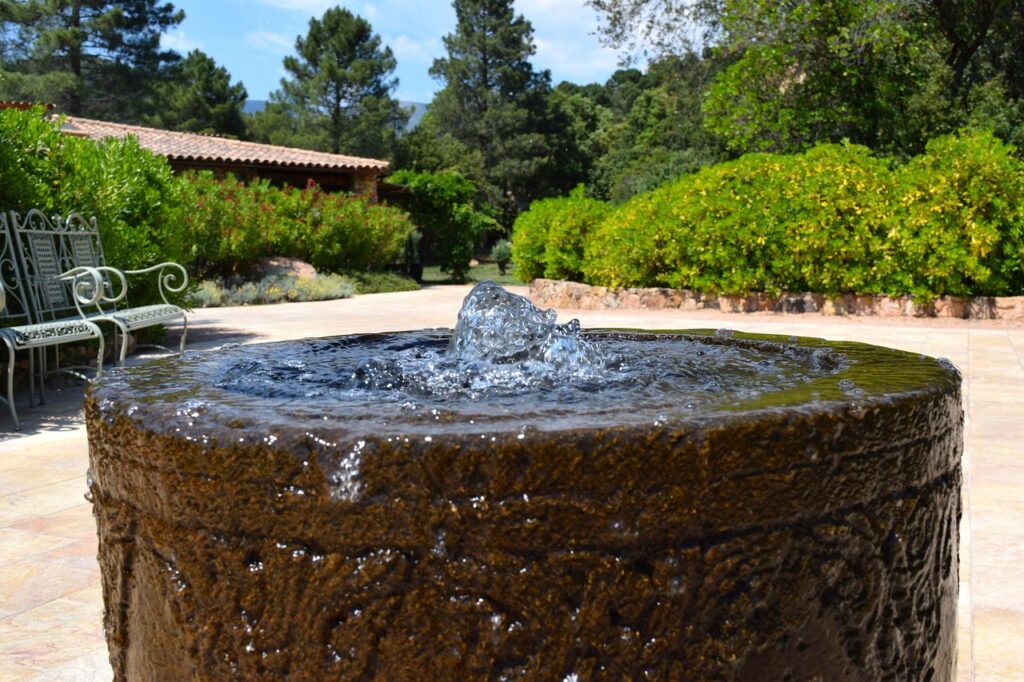
- Bubbling rock or urn: Water bubbles up through a drilled stone or vessel into a hidden basin. Safe around children because there is no open standing water.
- Pondless waterfall: A cascade that disappears into a gravel reservoir below grade. Dramatic movement with low maintenance and no pond to manage.
- Garden pond: An open water feature for fish and aquatic plants. The most rewarding and the most demanding to maintain.
- Wall or spillway fountain: Water sheets down a vertical surface, ideal for patios and small courtyards where floor space is tight.
- Container water garden: A pot or trough planted with water plants, perfect for balconies and small patios.
Placement Makes the Difference
Where you put a water feature determines how much you enjoy it. Position it where you will see and hear it most, near a patio, a deck, or a window you look through often. Most features need a nearby outdoor electrical outlet for the pump, so plan around power access or budget for an electrician to add a GFCI-protected outlet.
Avoid placing a pond directly under trees, since falling leaves clog pumps and foul the water. Consider sun exposure too: some aquatic plants need sun, while too much sun on a small feature accelerates algae growth and evaporation. A spot with morning sun and afternoon shade is often ideal.
Budgeting Your Project
Costs span a wide range depending on scale and whether you DIY or hire out. As a general planning guide, a small self-contained fountain might run $100 to $500, a bubbling rock or pondless waterfall kit often lands at $500 to $3,000 in materials, and a professionally installed pond with a waterfall can reach $5,000 to $15,000 or more. Factor in the pump, liner or basin, stone, plumbing, and electrical work, which are easy to underestimate.
Keeping the Water Clean
The difference between a water feature that delights and one that becomes a chore is maintenance. Moving water stays cleaner than still water because circulation discourages algae and mosquitoes. A few habits keep things healthy.
- Run the pump regularly. Circulation prevents stagnation; standing water breeds algae and mosquitoes.
- Clean the pump and skim debris. Remove leaves and rinse the pump intake to keep flow strong.
- Top off the water. Evaporation drops the level; a pump running dry can burn out.
- Manage algae naturally. Shade, aquatic plants, and proper circulation reduce algae without harsh chemicals.
- Winterize where it freezes. Drain or protect features and pumps before hard frost to prevent cracking.
Adding Plants and Wildlife
The right plantings turn a water feature from a hardscape element into a living ecosystem. For ponds and container water gardens, aquatic plants serve both beauty and function: floating plants like water lilies shade the surface and slow algae, marginal plants around the edge soften the transition to the garden, and submerged oxygenating plants keep the water healthy. Plants also draw pollinators, dragonflies, and birds, adding movement and life beyond the water itself.
If you want fish, start modestly and make sure the feature is deep enough for them to survive, since shallow water heats and freezes more drastically. A small pump and a bit of filtration go a long way toward keeping fish healthy. Even without fish, a balanced planting and good circulation create a self-sustaining little habitat that needs less intervention over time.
Lighting Your Water Feature
Lighting extends the enjoyment of a water feature into the evening and dramatically changes its character after dark. Submersible LED lights placed at the base of a waterfall or under a fountain make the moving water glow, while a well-placed spotlight aimed across the feature highlights its texture. Warm-toned, low-voltage or solar fixtures are easy to install and energy-efficient. Keep the lighting subtle; a few well-aimed fixtures create drama, while too many flatten the effect. Always use outdoor-rated, properly protected wiring for any underwater or landscape lighting.
Safety and Practical Notes
If you have young children, prioritize features with no open standing water, such as a bubbling rock or a pondless waterfall, where the reservoir is safely below a grate. Always use outdoor-rated, GFCI-protected electrical connections for pumps and lighting, and keep cords protected from mowers and foot traffic. For larger ponds, consider that you may need to address local codes the way you would for any standing water on the property, since some jurisdictions treat ponds over a certain depth like a pool.
Final Thoughts
An outdoor water feature is one of the most enjoyable upgrades you can make to a yard, adding sound, movement, and a natural gathering point. Start by matching the type to your space and budget, place it where you will experience it daily, ensure safe power access, and commit to simple regular maintenance. Choose the idea that fits your life, and you will gain a peaceful retreat just outside your door.