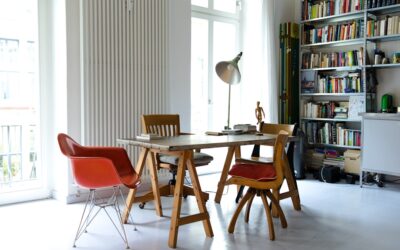
Pull up a failed parquet floor and nine times out of ten the wood is fine, the subfloor is fine, and the adhesive is what let you down. Picking the right parquet flooring adhesive matters more than the species of wood you are laying, because the glue bed controls how the block moves, how it sounds underfoot, and how it handles seasonal humidity swings. Modern options split into three chemistries: polyurethane (PU), MS-polymer (silane modified), and solvent-free water-based. Each has a specific job. This guide walks through where each one wins, where each one fails, and what you should actually pay per square foot.
Why Adhesive Choice Decides Parquet Success
Parquet blocks are small, usually 4 to 9 inches long, and they expand and contract with moisture far more aggressively than a plank floor because every edge is a short grain edge. A rigid adhesive will crack as the wood flexes. A floppy adhesive will let blocks shift and telegraph every seam. The sweet spot is elastic strength: shear resistance near 2.0 N/mm² with elongation around 60 to 100 percent. That is why old bitumen and even older hot hide glue have disappeared from professional jobs in the last twenty years.
Subfloor moisture is the second variable. Concrete slabs routinely test between 3 and 5 pounds per 1,000 square feet per 24 hours on a calcium chloride test. Anything above 3 pounds will blow a water-based glue within a season. That alone rules out certain chemistries for most ground-floor installs.
Polyurethane (PU) Parquet Adhesives
Two-part PU glues like Bona R848, Sika SikaBond-54 Parquet, and Mapei Ultrabond P990 1K remain the workhorse for demanding jobs. They cure through chemical reaction rather than evaporation, so they tolerate slabs up to 5 pounds MVER, shrug off in-floor radiant heat, and bond to almost any primed substrate. Shear strength lands around 2.4 N/mm², plenty for oak, maple, jatoba, or wenge blocks.
Downsides are real. Single-component PU costs $55 to $80 per 4-gallon pail and covers about 120 to 140 square feet per pail at a 3 by 3 mm V-notch trowel. Skin contact is unforgiving; isocyanates will glue your fingers together and stain raw wood dark brown where it squeezes out. Open time is short, usually 40 to 60 minutes at 70 degrees F, which punishes slow installers.
MS-Polymer Adhesives
Silane-terminated polymers have taken over the premium end of the market. Brands to know are Bostik Ultra-Set SingleStep2, Wakol MS 260, Stauf SMP-960, and Sika SikaBond-T53. A good MS-polymer acts like PU on performance but ships isocyanate-free, odor-free, and cleans off finished wood with a dry rag before it skins. That alone makes it the go-to for occupied remodels.
Expect $90 to $130 per pail with similar coverage to PU. Several products include a moisture-vapor barrier and a sound-reduction membrane function in the adhesive itself, which lets you skip a $0.40 per square foot cork underlayment on a second-floor install. The trade-off is a longer full-cure time, sometimes 7 days before you can sand and finish a raw block floor.
Solvent-Free Water-Based Adhesives
Acrylic and vinyl dispersion glues — think Henkel Loctite HB S100 or Franklin Titebond 821 — are the budget choice at $35 to $50 per pail. They are safe to breathe, easy to clean up, and fine for small parquet installs on dry, above-grade plywood subfloors with moisture content under 12 percent.
They are not for slabs, basements, or radiant heat. Water in the glue bed raises the back of every block as it evaporates, and if the subfloor cannot breathe downward the block will cup. Use this chemistry only when you have a warm, stable, wood subfloor and a small budget.
Matching Adhesive to Wood Species
Dense exotics move more and pull harder on the glue line. Stick with PU or MS-polymer for:
- Jatoba, ipe, merbau, wenge: high shear demand, high oil content — use a product rated for oily tropicals
- Bamboo and strand-woven bamboo: very hard, moderate movement, MS-polymer ideal
- White oak, red oak, maple: forgiving, any elastic adhesive works
- Reclaimed or character-grade blocks: uneven backs — pick a thicker adhesive bed (4 mm notch)
If the manufacturer warranty calls out a specific glue, follow it. Lauzon, Mirage, and Dinesen all publish approved adhesive lists and will void warranty claims for off-spec products.
Trowel Size, Coverage, and Waste
Trowel notch controls coverage and bond. For standard 5/16 inch to 3/4 inch parquet blocks, a 3/16 by 1/4 inch V-notch or a 5 mm square-notch pulls the right 35 to 45 mils of adhesive. Too thin and you get hollow spots that crack underfoot. Too thick and squeeze-out coats the face.
Budget coverage at 15 to 20 square feet per quart. A 300 square foot dining room burns through 15 to 20 quarts, which is three to four pails. Buy one extra pail — the freight cost of a midjob reorder is worse than a returned unopened bucket.
Humidity, Radiant Heat, and Climate Control
Parquet is the most humidity-sensitive floor in a normal home. Acclimate blocks in the room for 7 to 14 days at the jobsite conditions you expect year-round — typically 60 to 80 degrees F and 35 to 55 percent relative humidity. Glue down only when the slab tests at 75 percent RH or lower via ASTM F2170 probe.
For radiant heat, confirm the adhesive and the wood are both rated. PU and MS-polymer tolerate surface temperatures to 85 degrees F. Ramp the system up slowly over 7 days before installing and again after, never letting the slab exceed that cap or the glue line will creep.
Installation Pro Tips Contractors Use
A few habits separate a floor that holds for 50 years from one that pops in year three:
- Prime porous slabs with a two-coat epoxy moisture barrier like Bostik D-44 or Mapei Planiseal VS before troweling adhesive
- Work in sections no larger than three feet deep — spread only what you can lay within the open time
- Roll the floor with a 100-pound three-section roller within 30 minutes of setting the last block in each section
- Keep adhesive off finished faces — once cured, PU requires solvent and a prayer to remove
- Weight uneven backs with sandbags overnight rather than fighting cup with more glue
Final Verdict
For slabs, radiant heat, or any install you plan to sell a warranty on, spend the money on a quality MS-polymer or a proven PU. The extra $30 per pail protects a $10 to $20 per square foot wood investment. Save the water-based glues for small, above-grade, plywood-subfloor projects where the environment is already controlled. Adhesive is not where you want to bargain hunt on parquet.
Prefer to explore on your own?
See how new flooring looks in your actual room in seconds — free, no signup.
Try the free Floor Studio →