No floor in sports is more recognizable than the checkerboard hardwood the Boston Celtics play on. The legendary parquet flooring Celtics fans know from banner nights began as a practical wartime solution and became a genuine home-court advantage. It is also a great window into what parquet flooring actually is, why it was used, and how you can bring the same geometric pattern into your own house. This is part sports history, part flooring guide.
- Why the Celtics Floor Is Parquet in the First Place
- The Panels, the Bolts, and the Portable Court
- The Legend of the Dead Spots
- Why Red Oak Was the Right Wood
- Bringing the Parquet Look Home
- Pros and Cons of Parquet at Home
- Care Tips for Parquet Floors
- Popular Parquet Patterns Beyond the Basket Weave
- Budgeting for a Parquet Floor
- From the Garden to Your Living Room
Why the Celtics Floor Is Parquet in the First Place
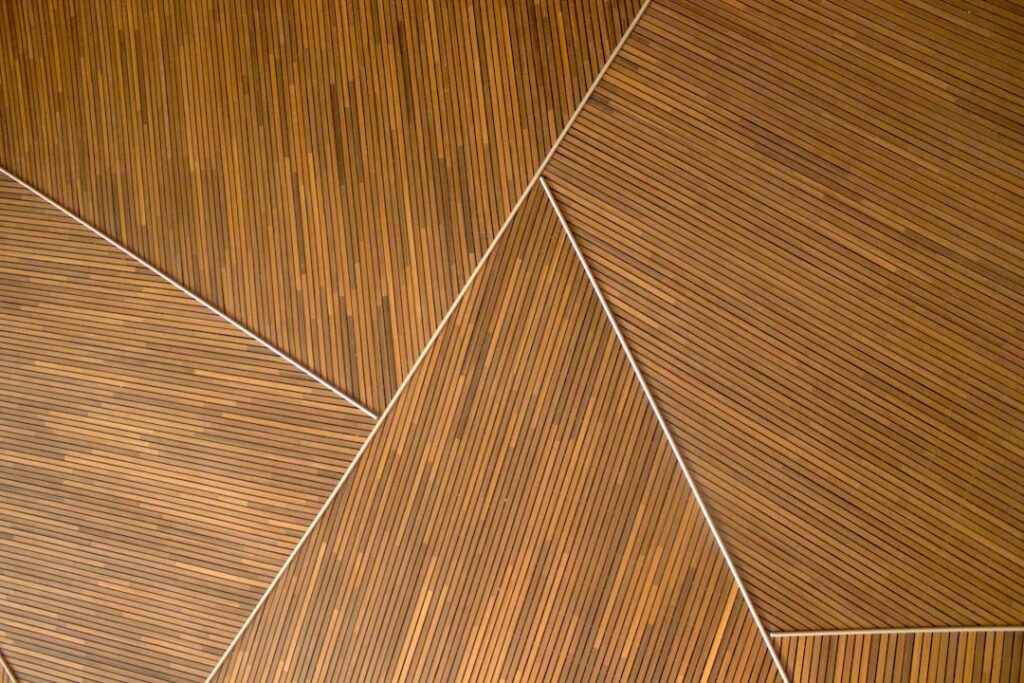
Parquet is wood flooring laid in a geometric pattern rather than long straight planks. Instead of full-length boards, parquet uses short slats arranged in repeating squares, herringbone, or basket-weave designs. The Celtics court uses a basket-weave block pattern: alternating squares with the grain running in opposite directions, producing that unmistakable checkerboard look on television.
The original floor was built from short pieces of red oak in the 1940s, reportedly because long, straight lumber was scarce during and after World War II. Builders pieced together the available shorter cuts into panels, and a practical workaround turned into an icon. The pattern was never a marketing gimmick; it was carpentry making the most of what was on hand.
The Panels, the Bolts, and the Portable Court
One thing that surprises people is that the famous floor was modular. The court was assembled from numerous square panels bolted together, which meant the entire surface could be taken apart, moved, and reinstalled. That portability mattered because the old Boston Garden hosted hockey, circuses, and concerts, and the basketball floor had to come and go.
- The court was built from many individual parquet panels rather than one continuous floor.
- Panels were joined with bolts and connectors so the whole thing could be disassembled.
- The same beloved floor traveled with the franchise from the old Garden to its modern home arena.
That bolt-together construction is also part of the lore. Over decades of assembly and reassembly, the floor developed its own personality.
The Legend of the Dead Spots
Opposing players long complained about “dead spots” on the Celtics parquet, places where a dribbled ball supposedly did not bounce true. Whether these were a real quirk of an aging modular floor or a psychological edge the Celtics happily encouraged, the legend stuck. With a floor pieced together from many panels and reassembled countless times, slight inconsistencies underfoot are entirely plausible.
True or exaggerated, the dead-spot mythology shows how a floor can become part of a team’s identity. Few surfaces in any sport carry that kind of folklore.
Why Red Oak Was the Right Wood
The choice of red oak was not an accident. Oak is hard, takes a beating, and has a pronounced grain that reads beautifully in a parquet pattern, especially when alternating blocks catch light from different directions. For a basketball court, hardness and shock resistance matter enormously, and oak delivers both at a reasonable cost.
The same qualities make oak the default choice for residential parquet today. It sands and refinishes well, accepts stain, and holds up to decades of foot traffic, which is exactly why the look has endured in homes as well as arenas.
Bringing the Parquet Look Home
You do not need a championship to enjoy parquet. The pattern works beautifully in entryways, dining rooms, studies, and living areas where you want warmth and visual interest. Modern homeowners have several routes to the look, at very different price points.
- Solid wood parquet tiles: the authentic option, often pre-assembled into squares for glue-down installation.
- Engineered parquet: a real-wood veneer over a stable core, better for concrete slabs and humidity swings.
- Parquet-look LVP or laminate: the budget-friendly, waterproof route that mimics the geometric pattern in a click-together plank.
For an arena-inspired room, choose red oak in a basket-weave or square block layout and keep the finish on the warmer, honey side rather than a dark stain. That golden tone is a big part of why the televised court glows.
Pros and Cons of Parquet at Home
Parquet is gorgeous, but it asks more of an installer than straight planks. Weigh the trade-offs before committing.
- Pros: distinctive high-end look, classic and timeless, solid versions can be refinished, and the pattern hides minor wear well.
- Cons: labor-intensive to install correctly, demands a very flat and dry subfloor, and intricate patterns make board repairs trickier than swapping a single plank.
Because the pattern depends on precise alignment, parquet rewards an experienced installer. This is not the project to hand to the cheapest bid.
Care Tips for Parquet Floors
Maintaining parquet is similar to caring for any oak floor, with extra attention to the seams. Sweep or vacuum grit regularly, since fine debris works into the many joints. Use a slightly damp mop and a cleaner made for wood, never a soaking wet mop, because standing water can creep between blocks. Add felt pads under furniture and refresh the finish before bare wood shows.
Popular Parquet Patterns Beyond the Basket Weave
The Celtics court uses a basket-weave block layout, but parquet is a whole family of geometric designs, and choosing the right one sets the mood of a room. Each pattern has a distinct personality and difficulty level.
- Basket weave: alternating squares of parallel strips, the classic arena look, busy and traditional.
- Herringbone: rectangles set at angles in a broken zigzag, elegant and timeless, hugely popular in upscale homes.
- Chevron: rectangles cut at a point to form continuous V-shapes, more formal and modern than herringbone.
- Versailles panels: intricate framed squares of interwoven strips, the most ornate and expensive option.
For a basketball-inspired space, the basket-weave block honors the Celtics floor most directly. For a dining room or entry where you want sophistication, herringbone or chevron usually reads better.
Budgeting for a Parquet Floor
Parquet costs more than straight planks largely because of labor. The material itself ranges widely: parquet-look laminate or vinyl can start around $2 to $5 per square foot, engineered parquet runs roughly $5 to $12, and solid red-oak parquet or ornate panels climb well beyond that. Installation adds significantly because the pattern demands precise layout, more cuts, and an experienced hand. Expect labor to be a larger share of the total than with a basic floating floor. Get the subfloor flat and dry first, since the geometric pattern mercilessly reveals any waviness underneath, and never hand intricate parquet to the lowest bidder.
From the Garden to Your Living Room
The Celtics parquet started as wartime resourcefulness and grew into one of the most famous surfaces in sports, complete with its own legends. The same red-oak geometry that won championships can warm up your home. Whether you go authentic solid wood in a basket-weave block, an elegant herringbone, or a waterproof look-alike, parquet brings a piece of basketball history underfoot, no banners required.
Prefer to explore on your own?
See how new flooring looks in your actual room in seconds — free, no signup.
Try the free Floor Studio →