Most patios are too small for a full sofa and too social for single chairs — which is exactly the gap a two-seater fills. A patio love seat gives you sofa comfort in a 44-to-60-inch footprint, fits through a standard gate, and anchors a conversation set without swallowing the deck. It is also the piece where buying mistakes hurt most, because a love seat combines every failure mode of outdoor furniture in one item: a frame that can rust, a weave that can unravel, cushions that can mildew, and fabric that can bleach to gray in a single season. Knowing the four or five specs that actually matter turns a coin-flip purchase into a ten-year one.
Part of our Decks & Outdoor guide — explore the full guide →
- Sizing: Will Two Adults Actually Fit?
- Frame Materials Ranked for Outdoor Life
- Cushions and Fabric: Where Budgets Should Go
- Styles and What They Cost
- Weather Ratings, Wind, and Regional Reality
- Assembly and First-Week Setup
- Arranging a Love Seat So the Patio Actually Gets Used
- Love Seat vs. Two Chairs: The Honest Comparison
- Making It Last a Decade
Sizing: Will Two Adults Actually Fit?
“Love seat” covers everything from a cozy 42-inch bench to a 62-inch near-sofa, so measure twice. For two adults to sit comfortably, look for at least 40 inches of interior seat width between the arms, seat depth of 20 to 24 inches (deep-seating styles run 24 to 28 with plush cushions), and seat height around 16 to 18 inches with cushions compressed. Overall width typically lands at 50 to 58 inches with arms. On the patio side, allow the love seat’s footprint plus 30 to 36 inches of walkway in front and 18 inches to a coffee table. A 10 x 10 foot patio handles a love seat, two chairs, and a table; anything smaller and the love seat plus a pair of side tables is the better layout. Weight matters too — a wicker two-seater at 30 to 45 pounds moves easily for cleaning, while a steel-frame cushioned unit at 80-plus pounds is a two-person carry, which argues for buying where you intend to keep it.
Frame Materials Ranked for Outdoor Life
- Powder-coated aluminum: the best all-around choice — rustproof, light, 15-plus year frames; found on most quality wicker and sling love seats, $300 to $1,200
- HDPE poly lumber: (Polywood and similar) effectively weatherproof, heavy enough to defy wind, zero maintenance; $500 to $1,100
- Steel: strong and cheap ($150 to $400) but rusts at weld points and scratches; acceptable under a covered patio, risky in rain and coastal air
- Teak and eucalyptus: beautiful, durable (teak especially, 20-plus years), but $700 to $2,500 and they demand oiling or graceful graying
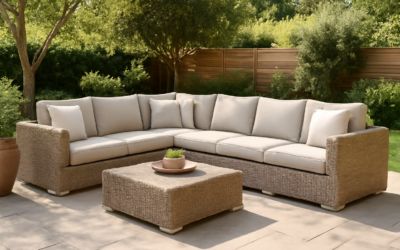
- Resin wicker over aluminum: the popular middle path — verify the weave is HDPE (“all-weather wicker”) rather than cheap PVC strand, which cracks in 2 to 3 years
The single fastest quality check: flip the love seat and look at the frame. Fully welded aluminum joints and a tag stating “powder-coated aluminum” beat any amount of showroom cushion plushness.
Cushions and Fabric: Where Budgets Should Go
Cushions fail before frames, so this is where spending more pays. Solution-dyed acrylic — Sunbrella is the reference brand, Outdura the value alternative — has color locked into the fiber itself and shrugs off 3 to 5 years of direct sun where printed polyester fades in one. Expect solution-dyed fabric to add $100 to $300 to a love seat’s price and be worth every dollar. Inside the cover, look for quick-dry reticulated foam or wrapped poly fill with drainage; a cushion that stays soggy for days after rain will mildew regardless of fabric. Zippered, removable covers are non-negotiable for washing. Seat cushions 4 to 6 inches thick keep their loft; 2-to-3-inch pads on budget sets pancake within a season. If the love seat you love comes with mediocre cushions, price replacement Sunbrella cushions from the start — at $150 to $350 per bench cushion, it sometimes changes which unit is the better deal.
Styles and What They Cost
Market prices cluster predictably. Steel-frame sling or textilene love seats run $130 to $300 and suit covered porches and tight budgets. Resin-wicker deep-seating two-seaters with cushions — the biggest category, from brands like Hampton Bay, Better Homes & Gardens, and Keter — run $250 to $700. Aluminum-framed premium wicker or upholstered outdoor love seats from Ashley Outdoor, La-Z-Boy Outdoor, and specialty patio brands run $600 to $1,500. HDPE and teak sit at $500 to $2,500. Two style notes from experience: gliding and rocking love seats are the sleeper hit for porches ($350 to $900) but check the glider bearings are sealed nylon, not exposed steel; and loveseat-plus-ottoman combos often outperform chaises for small patios because the ottoman doubles as guest seating.
Weather Ratings, Wind, and Regional Reality
Match the build to your climate honestly. In the rainy Northeast and Northwest, drainage is everything: mesh cushion bottoms, gapped seat decks, and frames with weep holes prevent the trapped water that rots fabric and corrodes steel from the inside. In the Sun Belt, UV is the killer — solution-dyed fabric and UV-stabilized resin weave are mandatory, and darker cushions on a west-facing patio will be too hot to sit on at 5 p.m., so go light or use a shade sail. Coastal owners should treat anything ferrous as disposable and buy aluminum or HDPE with 316 stainless hardware. Wind deserves a thought everywhere: a 35-pound wicker love seat becomes a projectile in a 50 mph gust, so tuck lightweight units against a wall or clip them to the deck in storm season, while HDPE’s 70-to-100-pound mass mostly solves the problem by itself.
Assembly and First-Week Setup
Most boxed love seats arrive 60 to 90 percent assembled; plan 30 to 60 minutes with a Phillips screwdriver and the included hex key. Snug all bolts, sit in it, then re-tighten after the first week — frames settle and this single habit eliminates most squeaks and wobbles for good. Apply a spray fabric protector (303 Fabric Guard, about $17) to cushions even on Sunbrella; it restores water beading annually. Set feet on plastic glides or rubber pads on wood decks, because powder coat plus grit acts like sandpaper on deck finishes. And register the warranty — the better brands quietly offer 3-to-5-year frame coverage that most owners never claim because they never registered.
Arranging a Love Seat So the Patio Actually Gets Used
Placement decides whether the love seat becomes the favorite spot or the thing you walk past. Face it toward the view or the fire feature, not the house wall — people sit where there is something to look at. Pair it across a coffee table from two chairs at a conversational distance of 7 to 9 feet total; farther and people raise their voices, closer and knees collide. On narrow balconies and small decks, run the love seat against the railing lengthwise and use a single side table, which leaves a full walkway. Under a pergola or awning, pull the unit forward so afternoon sun does not strike the back cushions for hours — the front edge fading faster than the back is the signature of a badly placed seat. And leave 6 inches between the love seat and any wall; airflow behind the cushions is cheap mildew prevention. An outdoor rug sized so the front legs sit on it (5 x 8 feet minimum) visually anchors the grouping and protects the deck finish from leg scuffs in one move.
Love Seat vs. Two Chairs: The Honest Comparison
Sometimes the right answer is not a love seat at all. Two quality chairs offer flexible spacing, easier carrying, and no negotiation over legroom; a love seat offers a cozier look, a nap surface, and typically 15 to 25 percent less cost than two comparable chairs. The deciding questions: do the primary users actually like sitting side by side, and does anyone nap outdoors? Households with dogs also discover the love seat instantly becomes the dog’s — which argues for solution-dyed fabric and a washable throw from day one.
Making It Last a Decade
A patio love seat’s lifespan is mostly decided by five minutes of care a month. Brush debris out of the weave, hose the frame, and wash covers in cold water with mild detergent twice a season — no bleach on printed fabric, though diluted bleach is actually safe on true Sunbrella for mildew spots. Store or cover cushions during long wet stretches; a $25 to $60 breathable cover (never sealed plastic, which incubates mildew) through winter roughly doubles cushion life. Touch up any powder-coat chips on steel immediately with exterior enamel. Do that much, and the mid-range $400 love seat you buy this spring will still be the best seat in the backyard when the kids leave for college.