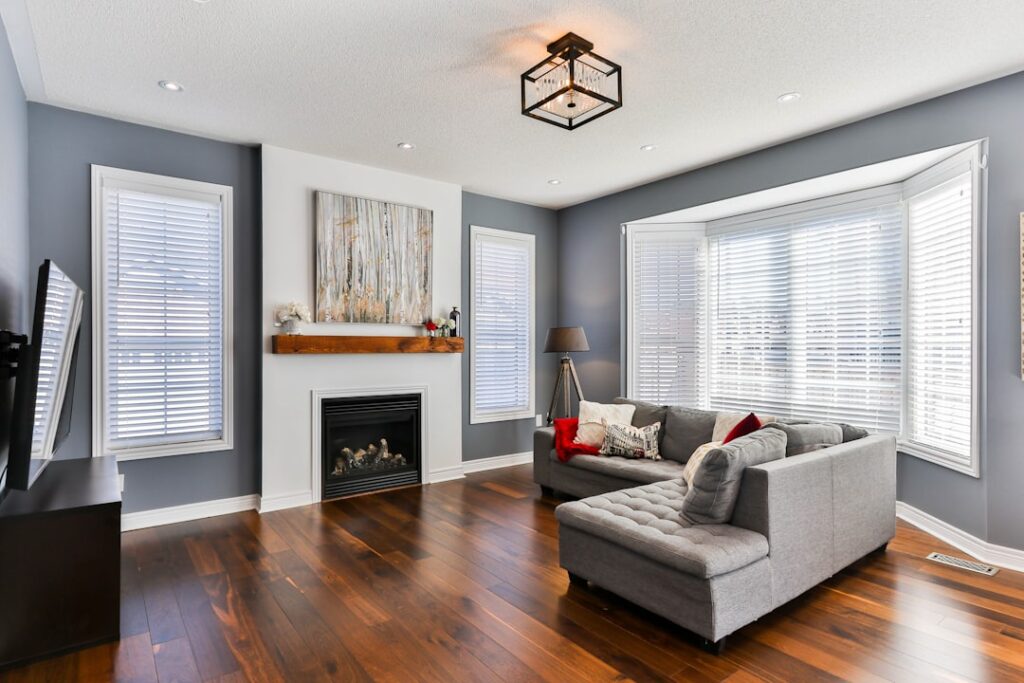
Pergo built its reputation on laminate flooring through the 1990s and 2000s, but the brand quietly expanded into genuine engineered hardwood after Mohawk Industries acquired Pergo in 2013. Pergo hardwood flooring today covers several engineered wood lines including American Era, TimberCraft Wood, and Outlast Wood, all sold primarily through Home Depot and Lowe’s at price points between $5 and $9 per square foot. The product is real hardwood with a top veneer of oak, hickory, or maple bonded to a multi-ply core, but the construction specs vary widely between lines. Here is the breakdown buyers need before walking into a showroom.
What Makes Pergo Hardwood Engineered Wood
Pergo hardwood is engineered wood, not solid hardwood. Each plank consists of a 2mm to 4mm sawn or sliced veneer of real hardwood bonded to a 5-ply or 7-ply core of birch, poplar, or eucalyptus plywood. The factory-applied aluminum oxide urethane finish carries 6 to 12 coats and earns scratch resistance ratings that solid hardwood cannot match without site-applied commercial finishes.
The engineered construction delivers dimensional stability that solid hardwood lacks, making Pergo suitable for installation over concrete slabs, in basements, and over radiant heat systems up to 85 degrees Fahrenheit surface temperature. Solid 3/4-inch oak fails in all three of those scenarios.
The Pergo Hardwood Product Lines
Pergo organizes its hardwood offerings into distinct tiers based on veneer thickness, plank width, and warranty terms.
- Pergo American Era: 3mm oak veneer on 9-inch wide planks, $5 to $7 per square foot, 30-year residential warranty.
- Pergo TimberCraft Wood: 4mm veneer on 7.5-inch wide hickory or maple, $6 to $8 per square foot, 50-year residential warranty.
- Pergo Outlast Wood: 2mm veneer with waterproof topcoat at $5.50 to $7.50 per square foot, marketed for kitchens and powder rooms.
- Pergo Defense Plus Wood: 3mm veneer with anti-microbial coating at $6.50 to $8.50 per square foot.
Veneer thickness matters because thicker veneer (4mm) allows one full sand-and-refinish cycle, while thin veneer (2mm) cannot be refinished at all and must be replaced when the surface wears through.
Construction Specs Worth Knowing
Pergo hardwood plank dimensions run 7.5 inches to 9 inches wide by 47 to 86 inches long, with thickness from 3/8 inch (engineered Outlast) to 9/16 inch (TimberCraft Wood). The locking joint uses Pergo’s UniClic mechanism, allowing floating installation without glue or nails — a major DIY advantage over traditional engineered hardwood that often requires staple-down or glue-down methods.
Janka hardness varies by species. Pergo oak veneer rates 1290 on the Janka scale, hickory rates 1820, and maple rates 1450. Hickory is the toughest choice for high-traffic kitchens and family rooms with kids and pets, while oak handles bedrooms and living rooms without issue.
Realistic Installation Pricing
Pergo hardwood installation runs cheaper than traditional nail-down hardwood because the floating click-lock method eliminates expensive staple guns and reduces labor time. Expect to pay these rates for professional installation in most US metros.
- Floating installation: $2.50 to $4.50 per square foot labor only.
- Subfloor leveling: $1.25 to $2.50 per square foot when needed.
- Underlayment: $0.40 to $0.80 per square foot for 3-in-1 attached or separate pad.
- Old floor demolition: $1.50 to $2.50 per square foot for carpet or tile removal.
- Stair nosing: $35 to $55 per linear foot of stair tread covered.
Total turnkey pricing for 1,200 square feet of Pergo TimberCraft Wood with installation, demolition, and underlayment lands between $14,000 and $18,000.
How Pergo Hardwood Compares to Real Solid
The biggest difference is refinishing capacity. Solid 3/4-inch oak can refinish 5 to 8 times over a 100-year service life, dramatically extending lifespan. Pergo American Era at 3mm veneer can refinish once carefully, while Outlast at 2mm cannot refinish at all. For homeowners planning 15 to 25 years of ownership, this gap matters less than the upfront cost savings.
Dimensional stability heavily favors Pergo. Solid hardwood expands 1/8 inch per board in summer humidity and contracts in winter heating, opening visible gaps. Engineered Pergo holds dimensional stability across the full residential humidity range from 30 to 65 percent.
Where Pergo Hardwood Falls Short
The thin veneer is the biggest weakness. A 2mm wear layer holds up against normal foot traffic but cannot tolerate deep gouges from dragged furniture or sharp dog claws. Repair options are limited to filler sticks or full plank replacement, with no sand-and-refinish path available on Outlast or Defense Plus.
Visual realism varies by line. The American Era and TimberCraft lines look genuinely impressive with hand-scraped textures and rich color variation, while the budget Outlast tier reads more uniform and less authentic. Inspect samples in your actual lighting conditions before committing.
Best Use Cases and Installation Tips
Pergo hardwood works best in living rooms, dining rooms, bedrooms, and home offices where moisture exposure is minimal and traffic is moderate. The Outlast line is the right choice for kitchens and powder rooms, but skip it for full bathrooms with shower exposure. Always allow 48-hour acclimation in the installation space before cutting boards, and maintain 1/4-inch expansion gaps at all walls and vertical surfaces per Pergo installation guidelines.
Warranty and Long-Term Value
Pergo offers 30-year residential warranties on most lines, with TimberCraft jumping to 50 years. The fine print requires proper installation per manufacturer instructions, indoor humidity held between 30 and 65 percent, and original receipts for any claim. Pro-rated coverage kicks in after year 10, meaning replacement value depreciates over time. The realistic service life under normal residential conditions runs 25 to 35 years before refinishing or replacement becomes necessary.
Register the installation at pergo.com within 30 days of completion to lock in the full warranty. Keep installation receipts, contractor invoices, and the product carton labels in a permanent file with your closing documents. Warranty claims years down the road require this documentation, and missing receipts is the single most common reason Mohawk denies otherwise valid claims under the Pergo brand.
Prefer to explore on your own?
See how new flooring looks in your actual room in seconds — free, no signup.
Try the free Floor Studio →