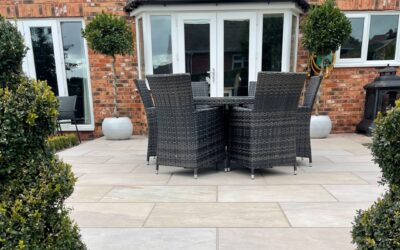
A pergola without a finished floor is just a frame for weeds. Choosing the right pergola flooring material decides whether the structure becomes a daily-use outdoor room or a glorified lawn ornament. Each material — pavers, composite decking, gravel, concrete — solves different problems and creates different ones. After 15 years installing outdoor living spaces from Phoenix patios to New England backyards, here is how I actually pick.
Part of our Decks & Outdoor guide — explore the full guide →
Pavers: The Most Common Choice
Concrete and clay pavers are the workhorses of pergola flooring. They handle freeze-thaw cycles, the joints flex with ground movement, and a single damaged piece pulls and replaces in minutes. Expect $12-$25 per sq ft installed for standard 4×8 holland pavers, $18-$35 for premium tumbled or large-format slabs.
Polymeric sand in the joints prevents weeds and locks the pavers laterally. Plan for a 4-6 inch compacted gravel base topped with 1 inch of bedding sand under the pavers — skipping that prep is the number one reason DIY paver patios sink and shift after a season.
Composite Decking
If your pergola attaches to the house at deck height, composite decking from Trex, TimberTech, or Fiberon makes the floor part of the deck system. Standard 5/4 boards span 16-inch joist spacing easily. Pricing runs $7-$13 per sq ft for the deck boards plus $3-$6 per sq ft for the framing.
Composite handles hot climates better than wood — no warping, no splinters, no annual sealing — but the surface gets hot in direct summer sun. Lighter colors (driftwood gray, sand, weathered cedar) stay 15-20°F cooler than dark espresso tones. That matters when you walk barefoot from the pool.
Gravel: Cheapest and Most Forgiving
A pea gravel or decomposed granite floor is the budget pick — $1-$3 per sq ft installed. It drains instantly, never cracks, and forgives uneven ground. The downside is comfort: chairs sink, tables wobble, and rolling anything (a grill cart, a stroller) becomes a wrestling match.
Lay a quality landscape fabric underneath, edge with steel or stone, and keep gravel 3-4 inches deep. Stabilized decomposed granite (DG) packs harder than loose gravel and supports furniture better — slightly higher cost ($2-$4 per sq ft) but a major comfort upgrade.
Concrete Pad
A poured concrete slab is the most permanent pergola floor. Standard 4-inch reinforced concrete runs $6-$12 per sq ft, decorative stamped or stained concrete pushes to $12-$18 per sq ft. Once cured, you have a flat, solid surface that takes any furniture and never moves.
Cracks are the issue. Even with control joints, concrete will hairline crack in the first 1-3 years. Plan for that, or hide it with a stain pattern that camouflages the inevitable. In freeze-thaw climates, sealing the slab annually with a penetrating siloxane like Foundation Armor SX5000 prevents spalling.
Natural Stone
Flagstone, bluestone, and travertine all work under pergolas. Costs run $20-$40 per sq ft installed depending on stone type and pattern complexity. Travertine stays cool underfoot in hot climates — a popular choice in Arizona and Texas. Bluestone and flagstone read more traditional Northeast or Pacific Northwest.
Stone slabs over a mortar base lock together permanently but require a substantial gravel and mortar foundation. Dry-laid stone over a sand bed is cheaper and DIY-friendly but flexes more with ground movement.
Brick
Real clay brick laid in a herringbone or running bond pattern produces one of the most durable pergola floors anywhere. New brick costs $10-$18 per sq ft installed, while reclaimed brick from salvage yards adds character at $14-$22. Brick handles freeze-thaw better than concrete and develops a mossy patina over time that suits cottage and traditional pergolas.
Wood Decking on Sleepers
If the pergola sits at grade and you want real wood, treated 2×4 sleepers laid on a gravel base support a 5/4-inch ipe or cedar deck floor. Materials run $10-$18 per sq ft for treated framing plus the decking itself. Ipe holds up 25-40 years; cedar 15-25 years; pressure-treated southern yellow pine 8-15 years.
Annual sealing keeps wood looking fresh — Penofin, Cabot Australian Timber Oil, and Messmers UV Plus all hold up well outdoors. Skip the sealing and the deck silvers in 18 months and starts splitting in 3-5 years.
Drainage Is Non-Negotiable
Whatever material you pick, water needs somewhere to go. Slope the floor 1/8 to 1/4 inch per foot away from the house. For pavers and stone, that pitch is built into the gravel base. For concrete, it goes into the screed pour. For decks, the framing is shimmed to create the slope.
Pergolas with louvered or solid roofs concentrate rain runoff. Plan a perimeter drain or a French drain along the downhill edge to prevent the pergola from pooling water against the foundation.
Matching Material to Climate
- Cold climates (Zones 3-5) — Pavers or stone with frost-rated bases. Skip stamped concrete prone to spalling.
- Hot dry climates (Zones 8-10 west) — Travertine, light pavers, or stabilized decomposed granite. Composite decking in light tones.
- Hot humid climates (Zones 8-10 southeast) — Composite decking or pavers. Wood needs intensive maintenance.
- Coastal exposure — Composite or pavers. Salt air corrodes fasteners; wood degrades fast.
Cost Summary
Quick reference for an average 12 by 14 (168 sq ft) pergola floor:
- Pea gravel: $200-$500
- Pavers: $2,000-$5,800
- Concrete pad: $1,000-$2,000
- Composite decking with framing: $1,700-$3,200
- Natural flagstone: $3,400-$6,700
Final Take
For most homeowners, pavers offer the best balance of durability, cost, and DIY-friendliness for pergola flooring. Step up to natural stone or stamped concrete when the budget supports it, drop down to gravel when speed and cost matter most. Pick the material to match your climate and how you actually plan to use the space — a daily breakfast pergola needs a different floor than a once-a-month cocktail spot.
Prefer to explore on your own?
See how new flooring looks in your actual room in seconds — free, no signup.
Try the free Floor Studio →