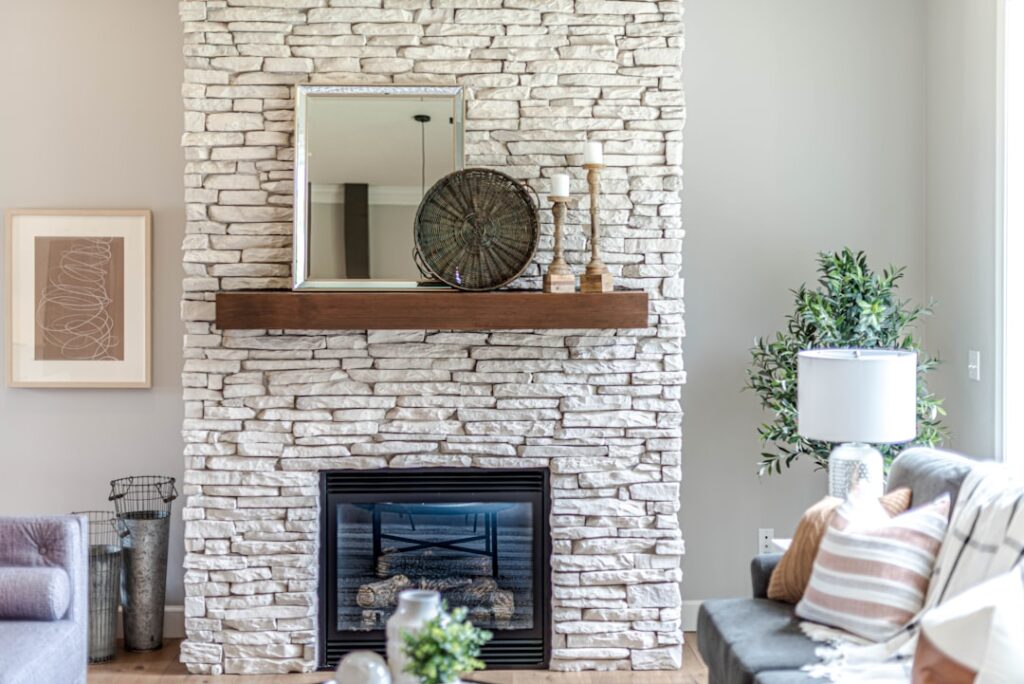
Scrolling through pictures of painted brick fireplaces is often the moment a homeowner realizes just how dramatically a single coat of paint can transform a dated room. A dark, orange-toned brick fireplace that once dominated the space in the wrong way can become a bright, modern focal point almost overnight. Because you cannot try every color on your own wall, this guide translates the most popular looks into words, walks you through the colors and finishes that photograph and live well, and gives you the practical know-how to recreate the transformations you have been admiring.
Why Painting a Brick Fireplace Transforms a Room
Brick has a powerful visual weight. In its natural red or orange state it pulls the eye and can make a room feel smaller, darker, and locked into a particular era. When you paint that brick, you strip away the busy multicolor texture and replace it with a single calm tone, which lets the fireplace read as architecture rather than a distraction. This is why so many before-and-after photos feel like the room doubled in size even though nothing structural changed.
The effect is most striking with light colors, which bounce daylight around and open up the space, but even a moody dark shade can elevate a room by giving it a sophisticated anchor. Paint also unifies a fireplace with a tired mortar color or mismatched brick, smoothing over decades of soot and wear. For a project that often costs under 200 dollars in materials, few upgrades deliver as much visual payoff.
The Most Popular Painted Brick Colors
White is far and away the most photographed choice, and for good reason. A crisp white fireplace feels fresh, timeless, and works with nearly any decor from farmhouse to contemporary. Softer whites with a warm undertone keep the look cozy rather than clinical, which matters in a room centered on a fire. If pure white feels too stark for your space, a creamy off-white or a warm greige, that popular blend of gray and beige, gives you brightness with a grounded, lived-in feel.
At the other end of the spectrum, black and deep charcoal fireplaces have surged in popularity. A matte black brick fireplace reads as bold and modern, creating instant contrast against light walls and letting a wood mantel or brass accents pop. Between the extremes, muted sage greens, soft blues, and earthy taupes show up constantly in design galleries for homeowners who want color without commitment. When you study pictures of painted brick fireplaces, notice how the surrounding wall color and flooring shape which fireplace shade actually works in that room.
Limewash and German Smear: The Textured Looks
Not every transformation involves solid, opaque paint. Limewash, a thinned slaked-lime finish, soaks into the brick and leaves a soft, cloudy, old-world patina that lets some of the original texture and color peek through. It is the go-to for a European, timeworn aesthetic, and its beauty is that you can wipe some off while wet to control how much brick shows. German smear, or mortar wash, takes a different route by dragging wet mortar across the brick face to partially cover it, creating a rustic, whitewashed cottage look with dimensional texture.
Both techniques appear constantly in inspiration photos because they read as more organic and less flat than a full paint job. If the pictures you keep saving have a soft, mottled, slightly imperfect quality, chances are you are drawn to limewash or German smear rather than standard paint. Both are forgiving to apply and easy to make uniquely yours.
Choosing the Right Paint Finish
Finish, or sheen, is a detail that beginners often overlook, yet it changes the entire character of the result. For a brick fireplace, a matte or flat finish is the most popular choice because it hides surface imperfections, mutes glare from the fire, and gives that soft, high-end look you see in magazine photos. Matte does show smudges more readily, but on a fireplace that is a minor concern compared to the elegant, non-reflective surface it delivers.
An eggshell or satin finish steps up the durability and makes the surface easier to wipe clean, which some homeowners prefer for a fireplace that gets handled or sits near cooking areas. The tradeoff is a slight sheen that can highlight the uneven brick texture under raking light. As a rule of thumb, choose matte or eggshell for the classic soft look, and reach for satin only if easy cleaning outweighs your preference for a flat finish. Always use a paint rated for high heat if you are coating brick very close to the firebox opening.
How to Recreate the Looks You Love
Turning an inspiration photo into your own finished fireplace follows a straightforward process. Start by cleaning the brick thoroughly with a stiff brush and a mix of warm water and a little dish soap or trisodium phosphate to remove years of soot, dust, and grease, then let it dry completely. Skipping this step is the single most common reason paint later peels. Once dry, apply a quality masonry primer, which seals the porous brick and prevents any smoke stains from bleeding through your topcoat.
For the color coat, a thick-nap roller gets you across the flat faces quickly, while an angled brush works the mortar lines and crevices the roller cannot reach. Most fireplaces need two coats for even, opaque coverage, and a masonry or 100 percent acrylic latex paint holds up best against the mild heat and temperature swings. Expect the full project to take a weekend, including drying time between coats. Keep the flame away from freshly painted brick for at least a few days so the finish fully cures.
Before-and-After Inspiration to Guide Your Choice
The most convincing before-and-after transformations tend to follow a pattern worth studying. A common one takes a heavy, red-brown 1970s floor-to-ceiling fireplace and paints it a warm white, instantly making a dim den feel like a sunlit modern living room. Another favorite pairs a dark charcoal or black painted fireplace with a raw wood mantel and light oak flooring, a combination that feels current, cozy, and a little dramatic all at once.
When you save images, pay attention to the elements that carry over from the photo to your own home: the amount of natural light, the wall color, and the flooring tone all influence how a painted fireplace will actually look in your space. A shade that glows in a bright, north-facing room can feel flat in a darker one. Collecting several pictures of painted brick fireplaces in colors you love, then holding paint swatches against your own brick at different times of day, is the surest way to land on a result you will be happy with for years.
Frequently Asked Questions
Is painting a brick fireplace a good idea?
For most homeowners with dated or mismatched brick, yes. Paint brightens the room, modernizes the look, and unifies worn mortar and soot stains. The main consideration is that paint is difficult to fully reverse, so if you love the natural brick or have rare historic masonry, weigh the decision carefully before committing.
What kind of paint should I use on a brick fireplace?
Use a masonry or 100 percent acrylic latex paint over a quality masonry primer. For brick very close to the firebox, choose a heat-resistant paint rated for high temperatures. A matte or eggshell finish gives the soft, upscale look seen in most inspiration photos while hiding surface imperfections.
What is the difference between limewash and painting brick?
Standard paint sits on top of the brick as an opaque, uniform coat, while limewash soaks in and leaves a soft, mottled, semi-transparent patina that lets some original texture show through. Limewash gives an aged, European feel and can be partially wiped away while wet to control coverage, whereas paint delivers a solid, consistent color.
Can I paint over soot-stained or previously painted brick?
Yes, but preparation is key. Clean the brick well to remove soot and grease, then apply a stain-blocking masonry primer so smoke stains do not bleed through. Over previously painted brick, scrape any loose or peeling spots, spot-prime, and repaint with a compatible masonry or acrylic latex product for a durable finish.