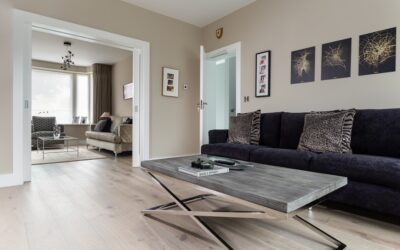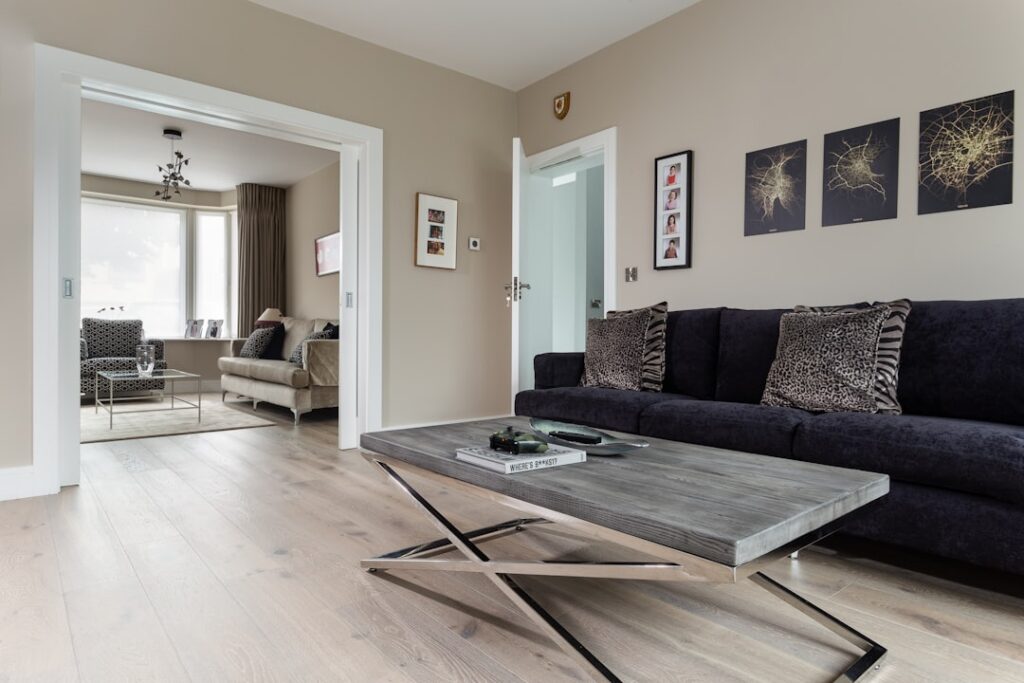
When people say “laminate flooring,” they almost always mean plastic laminate flooring, the click-together planks with a photographic surface layer that mimics wood or stone. It has been a go-to budget option since the 1990s, and modern versions look dramatically better than the shiny, obviously fake products of that era. Advances in printing technology and embossing techniques have closed the visual gap between laminate and real hardwood to the point where many visitors cannot tell the difference at standing height. If you need attractive flooring at $1.00-$4.00 per square foot, laminate deserves a spot on your shortlist.
How Plastic Laminate Flooring Is Made
Laminate flooring is a four-layer sandwich, and understanding each layer explains both its strengths and weaknesses.
- Wear layer (top): A clear melamine resin coating infused with aluminum oxide particles for scratch and abrasion resistance. This is what makes laminate surfaces so hard, often harder than the finish on real hardwood floors.
- Decor layer: A high-resolution photograph of wood, stone, or tile printed on specialty paper. Modern printing technology creates remarkably realistic images with natural color variation and grain detail.
- Core layer: High-density fiberboard (HDF) made from compressed wood fibers and resin. This 6-12mm thick layer provides structural rigidity and houses the click-lock mechanism on the plank edges.
- Backing layer (bottom): A melamine or polymer sheet that provides moisture resistance from below and prevents the plank from warping due to uneven moisture exposure between the top and bottom surfaces.
The “plastic” in plastic laminate refers to the melamine resin layers, not the core material. The core is wood-based, which is why laminate and water do not mix well. This distinction matters because buyers sometimes assume laminate is a fully synthetic product like vinyl. It is not. The wood-fiber core gives laminate its rigid, solid feel underfoot but creates vulnerability to moisture damage that vinyl avoids entirely.
Cost Breakdown
Laminate remains one of the most affordable hard-surface flooring options available in 2026, offering a finished-wood appearance at a fraction of hardwood pricing.
- Budget laminate: $0.75-$1.50 per sq ft. Thin cores (6-7mm), basic prints with limited plank variation, AC3 durability rating. Brands like TrafficMaster and Style Selections.
- Mid-range laminate: $1.50-$3.00 per sq ft. Thicker cores (8-10mm), registered embossed texture that aligns with the print, AC4 rating. Brands like Pergo, Mohawk, and Quick-Step.
- Premium laminate: $3.00-$5.00 per sq ft. 12mm cores, water-resistant treatment on edges and core, AC5 commercial rating. Nearly indistinguishable from hardwood visually and aurally.
- Professional installation: $1.50-$3.00 per sq ft
- Underlayment (if not attached): $0.25-$0.75 per sq ft
- DIY total (300 sq ft room, mid-range): $450-$900 for materials plus underlayment
Compare those numbers to solid hardwood at $5.00-$12.00 per sq ft installed or engineered hardwood at $4.00-$10.00 per sq ft, and the value proposition is clear. A 300-square-foot living room in mid-range laminate costs $600-$1,200 total, while the same room in mid-range hardwood runs $2,100-$3,600.
Durability and AC Ratings
The AC (Abrasion Class) rating system tells you exactly how much traffic a laminate floor can handle before the wear layer fails. This is the single most important spec when choosing laminate, more important than thickness, brand name, or visual quality.
- AC3: Moderate residential traffic. Bedrooms, guest rooms, closets. Rated for approximately 2,500 abrasion cycles.
- AC4: Heavy residential and light commercial. Living rooms, kitchens, hallways, small offices. Rated for approximately 4,000 abrasion cycles.
- AC5: Heavy commercial traffic. Retail stores, restaurants, public buildings. Rated for approximately 6,500 abrasion cycles.
For most homes, AC4 is the sweet spot. It handles pets, kids, and daily family traffic without visible wear for 15-20 years in normal conditions. AC3 products save money in low-traffic rooms but show wear patterns in busy hallways within 5-8 years. Spending the extra $0.50-$1.00 per sq ft to step from AC3 to AC4 is one of the smartest upgrades in the laminate category.
Core thickness also affects perceived quality. An 8mm laminate feels noticeably more solid underfoot than a 6mm product, produces less hollow sound when walked on, and holds the click-lock mechanism more securely. For living spaces where you spend significant time, 8mm should be the minimum core thickness.
Water Resistance: The Main Weakness
Traditional laminate and water are enemies. The HDF core swells when moisture penetrates the seams, causing permanent buckling and warping that cannot be reversed. A single water event, whether a dishwasher leak, a pet water bowl overflow, or a forgotten open window during a rainstorm, can destroy sections of laminate flooring that look perfectly fine everywhere else. This single limitation keeps laminate out of bathrooms, laundry rooms, and basements with any moisture risk.
Water-resistant laminate from brands like Pergo WetProtect and Mohawk RevWood Plus uses sealed edges, treated cores, and tighter locking mechanisms to slow moisture penetration. These products can handle normal kitchen spills if wiped up within 30 minutes, but they are still not waterproof. For truly wet environments, vinyl plank or tile remain the safer choices.
Even in dry rooms, maintain indoor humidity between 35-55% to prevent moisture-related problems. Extremely dry winter air can cause laminate to shrink and create gaps, while summer humidity can cause expansion and buckling. A whole-house humidifier in dry climates and air conditioning in humid climates protect your laminate investment year-round.
Installation Guide
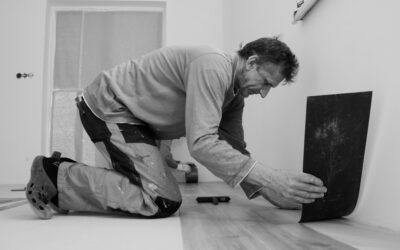
Click-lock laminate is one of the most DIY-friendly flooring products on the market. Most homeowners can install a room in a single day with basic tools and no prior flooring experience.
- Acclimate planks in the room for 48 hours with the boxes open, keeping the room at normal living temperature and humidity.
- Install a foam or cork underlayment over the clean, flat subfloor. Some laminate includes attached underlayment, eliminating this step. Never double up underlayment layers.
- Start along the longest, most visible wall with spacers holding a 1/4-inch expansion gap against the wall.
- Click planks together end-to-end and row-to-row using a tapping block and pull bar. Never strike the plank edge directly with a hammer.
- Stagger end joints by at least 12 inches between adjacent rows for structural stability and a natural look. Random stagger patterns look more realistic than uniform offsets.
- Cut the final row to width with a table saw or jigsaw, maintaining the expansion gap on the wall side.
- Install transition strips at doorways and quarter-round molding around the perimeter to cover the expansion gaps.
The most common DIY mistake is skipping the expansion gap. Laminate must float freely over the subfloor, expanding and contracting with seasonal changes. Tight fits against walls, cabinets, or door frames cause buckling during humid months. Maintain the 1/4-inch gap everywhere, even under toe kicks and around pipes, and cover it with appropriate molding.
Laminate vs Vinyl: Quick Comparison
The decision between plastic laminate and luxury vinyl comes down to two primary factors: water resistance and scratch resistance.
- Choose laminate if your rooms stay dry, you want the hardest possible surface, and budget is a priority. Laminate resists scratches better than most vinyl products because the aluminum oxide wear layer is harder than vinyl’s urethane coating. Cat and dog owners in dry-climate homes often prefer laminate for this reason.
- Choose vinyl if any water exposure is possible, you need below-grade installation, or you want a warmer, quieter floor underfoot. Vinyl’s waterproof construction eliminates the biggest risk factor that laminate faces.
Sound is another differentiator. Laminate produces a sharper, more hollow sound when walked on, particularly with hard-soled shoes, unless paired with a high-quality cork underlayment. Vinyl, especially SPC-core products with attached underlayment, sounds more muted and natural underfoot. In upper-floor bedrooms and multi-story homes, this acoustic difference is noticeable.
Top Laminate Brands in 2026
Several brands consistently deliver quality laminate products worth considering.
- Pergo: The company that invented laminate flooring in 1977. Their Outlast+ and TimberCraft lines offer excellent water resistance and realistic visuals at $2.00-$4.00 per sq ft.
- Quick-Step: Belgian-made laminate with industry-leading click-lock mechanisms and water-resistant options. $2.50-$5.00 per sq ft.
- Mohawk RevWood: Waterproof laminate (a genuine first in the category) with their Uniclic locking system. $2.00-$4.50 per sq ft.
- Shaw Repel: Water-resistant laminate with 48-hour spill protection. $1.50-$3.50 per sq ft.
Is Plastic Laminate Flooring Still Worth It in 2026?
Vinyl plank has stolen enormous market share from laminate over the past decade, and for good reason. Waterproof construction solves laminate’s biggest vulnerability and removes the constant anxiety about moisture damage. But laminate still earns its place in dry rooms where scratch resistance matters most. A mid-range laminate at $2.00 per sq ft outperforms comparably priced vinyl in surface hardness, and premium laminate rivals the look of real hardwood at a third of the price.
If your home has no moisture concerns and you prioritize a surface that resists scratches from pets, furniture, and daily life, laminate remains one of the smartest flooring values available. The key is buying quality. Skip the cheapest AC3 products and invest in mid-range AC4 laminate with at least 8mm thickness and registered embossing. That combination delivers 15-20 years of attractive, durable flooring for under $3.00 per square foot, a value proposition that no other flooring category can match.
Prefer to explore on your own?
See how new flooring looks in your actual room in seconds — free, no signup.
Try the free Floor Studio →