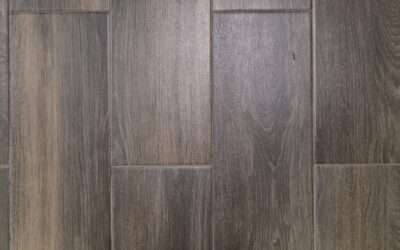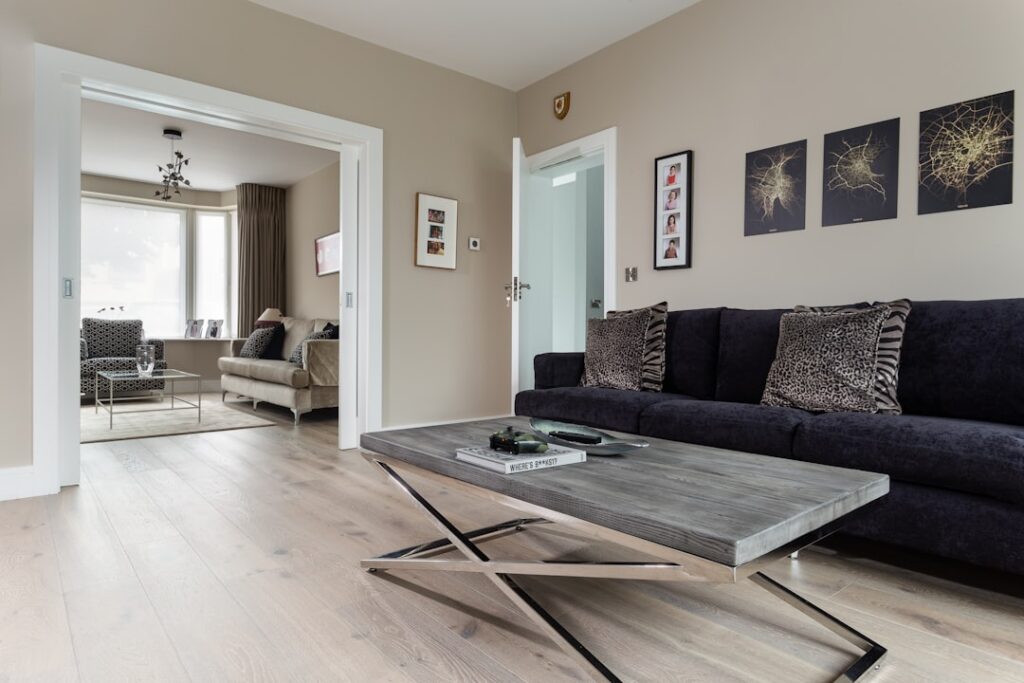
The reason laminate became the go-to DIY floor in millions of homes comes down to one innovation: planks that lock together without a drop of adhesive. Glueless laminate flooring uses a precision-milled tongue-and-groove edge that snaps into place, letting a homeowner install an entire room in a weekend with nothing but a tapping block and a saw. It floats over the subfloor instead of bonding to it, which makes installation faster, cleaner, and far more forgiving than glued systems. Here is what to know before you buy.
- How Click-Lock Works
- The Floating Floor Advantage
- Pros of Glueless Laminate
- The Drawbacks
- What It Costs
- Installation Tips That Prevent Failure
- Is It Right for You
- Understanding the AC Wear Rating
- Underlayment Choices That Matter
- Maintaining a Laminate Floor
- Glueless Laminate vs. Luxury Vinyl
- Final Verdict on Glueless Laminate
How Click-Lock Works
The magic is in the milled edges. Each plank has an angled tongue on two sides and a corresponding groove on the others, machined to tight tolerances.
You set one plank into the next at roughly a 30-degree angle, then push it flat until the edges click together mechanically. No glue, no nails, no fasteners. The whole floor becomes a single connected mat that floats freely over the subfloor.
The Floating Floor Advantage
Because glueless laminate is not attached to the subfloor, it can expand and contract as a unit with temperature and humidity changes. That free movement is exactly why it resists buckling in conditions that would crack a glued-down floor.
A floating floor also installs over almost any flat, clean substrate: plywood, old vinyl, even concrete. There is no waiting for adhesive to cure, so you walk on it the moment the last plank is in.
Pros of Glueless Laminate
The format earns its popularity with real, practical benefits.
- DIY-friendly: No adhesive skills needed; a beginner can do a room in a day.
- Fast installation: No glue drying time means same-day use.
- Removable: Planks can be lifted and the floor reused or repaired.
- Clean process: No messy adhesives or strong fumes.
- Affordable: Materials run $1 to $3 per sq ft.
The Drawbacks
No floor is perfect, and glueless laminate has known limits worth respecting.
- Water vulnerability: Standing water seeps through seams and swells the fiberboard core.
- Hollow sound: A floating floor can sound and feel less solid without good underlayment.
- Not refinishable: Once the wear layer goes, the plank is replaced, not sanded.
- Seam gaps: Poor installation or no expansion gap leads to separation.
What It Costs
Glueless laminate is one of the most affordable flooring options, especially for DIYers. Material and the extras add up modestly.
- Laminate planks: $1 to $3 per sq ft
- Underlayment: $0.30 to $0.60 per sq ft
- Professional install (optional): $2 to $4 per sq ft
A 200-square-foot room often comes in under $700 in materials for a confident DIYer.
Installation Tips That Prevent Failure
Most glueless laminate problems trace back to two skipped steps. Avoid them and the floor performs.
- Acclimate the planks in the room for 48 hours before installing.
- Leave a 1/4 to 3/8 inch expansion gap around every wall and fixed object.
- Lay a quality underlayment to quiet the hollow sound and smooth minor subfloor flaws.
- Stagger end joints by at least 8 inches for strength and a natural look.
Is It Right for You
Glueless laminate flooring is the smart pick for bedrooms, living rooms, hallways, and any dry, moderate-traffic space where you want a wood look on a budget and plan to install it yourself.
For bathrooms, laundry rooms, or anywhere standing water is a regular risk, step up to waterproof luxury vinyl instead. Match the product to the room’s moisture exposure and a glueless laminate floor will serve you well for 15 to 25 years.
Understanding the AC Wear Rating
Not all laminate is built to take the same abuse, and the AC rating tells you exactly how much it can handle. This abrasion-class scale runs from AC1 to AC5 and should guide your purchase as much as the look.
- AC1 to AC2: Light residential use like bedrooms and closets.
- AC3: The sweet spot for most homes, rated for all residential rooms including busy areas.
- AC4 to AC5: Heavy traffic and light commercial use, ideal for entryways and homes with pets.
For a typical family home, an AC3 or AC4 glueless laminate balances durability and cost well. Going below AC3 in a main living area is a false economy that wears through too soon.
Underlayment Choices That Matter
The thin layer beneath a floating floor does more heavy lifting than most buyers realize. The right underlayment quiets the hollow click of laminate, smooths minor subfloor imperfections, and in some cases blocks moisture.
Over concrete, choose an underlayment with a built-in vapor barrier to stop slab moisture from reaching the planks. In upstairs rooms and condos, a foam or cork underlayment with a high sound-rating reduces noise transfer to the floor below. Some premium laminates come with attached padding, but it is usually thinner than a dedicated underlayment, so weigh whether an upgrade is worth it for your situation.
Maintaining a Laminate Floor
Glueless laminate is genuinely low-maintenance, but a few habits keep it looking new far longer. The cardinal rule is to keep water off it.
Sweep or dry-mop regularly, and clean spills immediately rather than letting liquid sit on the seams. Use a damp, well-wrung microfiber mop rather than a soaking wet one, and skip steam mops entirely since the heat and moisture force water into the joints. Felt pads under furniture and entry mats to catch grit round out a routine that easily carries a quality laminate floor past the two-decade mark.
Glueless Laminate vs. Luxury Vinyl
The two most popular floating floors get compared constantly, and the right choice depends on the room. Both click together without glue and install over similar subfloors, but they handle moisture very differently.
- Water resistance: Luxury vinyl is fully waterproof; laminate’s fiberboard core swells if water sits on the seams.
- Feel and sound: Laminate feels harder and more like wood; vinyl is softer and quieter underfoot.
- Cost: Both run similar, roughly $1 to $5 per sq ft for materials.
- Best use: Laminate for dry living areas and bedrooms; vinyl for kitchens, baths, and basements.
Final Verdict on Glueless Laminate
Glueless laminate flooring remains one of the best values in home flooring, especially for confident DIYers who want a convincing wood look without the cost or labor of real hardwood. The click-lock system makes installation genuinely achievable in a weekend.
Choose an AC3 or AC4 product for living areas, pair it with a quality underlayment, and respect the expansion gap and acclimation steps. Keep it out of consistently wet rooms, where waterproof vinyl belongs instead. Follow those guidelines and a glueless laminate floor will give you 15 to 25 years of attractive, low-maintenance service.
Prefer to explore on your own?
See how new flooring looks in your actual room in seconds — free, no signup.
Try the free Floor Studio →