Laminate has come a long way from the hollow, shiny planks that peeled at the edges in 1990s kitchens. Weighing the pros and cons of laminate flooring today means comparing a product with realistic wood visuals, tough wear layers, and in many cases genuine water resistance against its lingering weak spots. Most homeowners who regret laminate did not pick a bad product; they put a good product in the wrong room or skipped the prep. Here is an honest breakdown from the installer’s side of the job, so you can decide whether it belongs in your home.
- Pros and Cons of Laminate Flooring at a Glance
- The Biggest Advantages of Laminate
- The Real Drawbacks You Should Know
- Where Laminate Works Best and Where It Does Not
- How Laminate Compares to Other Popular Floors
- How to Choose Laminate That Maximizes the Pros
- Installation and Care Tips That Prevent Problems
- The Verdict: Is Laminate Right for You?
- Frequently Asked Questions
Pros and Cons of Laminate Flooring at a Glance
Before digging into details, it helps to see the trade-offs side by side. Laminate is a multilayer product: a high-density fiberboard (HDF) core, a printed photographic layer, a clear melamine wear layer on top, and a balancing backer underneath. That construction explains nearly every strength and weakness it has.
| Advantages | Disadvantages |
|---|---|
| Low cost ($1.50-$5 per sq ft material) | HDF core swells if water sits on it |
| High scratch and dent resistance (AC3-AC5) | Cannot be sanded or refinished |
| DIY-friendly click-lock installation | Hollow or clicky sound underfoot |
| Realistic wood and stone looks | Lower resale appeal than real hardwood |
| Fade-resistant in sunny rooms | Damaged planks are harder to repair mid-floor |
Neither column is short, which is exactly why room choice and product tier matter so much.
The Biggest Advantages of Laminate
Price That Stretches a Budget
Laminate is one of the most affordable ways to get a wood look. Entry-level 7mm or 8mm planks run about $1.50 to $2.50 per sq ft, mid-range 10mm to 12mm products land around $2.50 to $4, and premium water-resistant lines top out near $5. Professional installation typically adds $2 to $4 per sq ft. Compare that with site-finished oak at $8 to $15 per sq ft installed, and a 500 sq ft living area can cost roughly half as much in laminate.
Surface Toughness
Here is something many people do not expect: laminate’s melamine top layer is harder than most factory hardwood finishes. Products are graded on the AC (abrasion class) scale from AC1 to AC5. For a typical home, AC3 handles bedrooms and living rooms, while AC4 is the smart pick for kitchens, hallways, and homes with large dogs. Claws, chair legs, and dropped toys that would dent pine or even oak often leave laminate unmarked.
Easy Installation
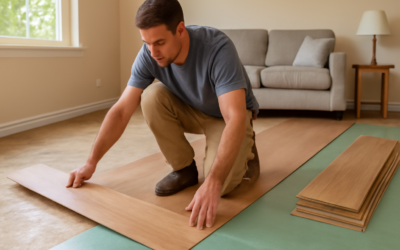
Nearly all modern laminate uses a click-lock floating system. There is no glue, no nails, and no cure time. A handy homeowner with a miter saw, a tapping block, a pull bar, and spacers can lay 200 to 300 sq ft in a weekend. Floating also means laminate can go over most flat existing floors, including sheet vinyl and ceramic tile, which saves demolition costs.
Looks and Fade Resistance
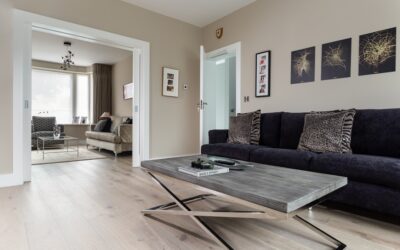
High-definition printing and embossed-in-register (EIR) textures now line up the grain pattern with the surface texture, so knots feel like knots. Longer and wider planks, beveled edges, and varied board patterns cut down on the repeat look. Because the image is sealed under melamine, laminate also holds its color far better than hardwood in sun-drenched rooms.
The Real Drawbacks You Should Know
Moisture Is Still the Weak Point
The HDF core is wood fiber, and wood fiber swells when it absorbs water. Standard laminate tolerates a quick wipe-up but not standing water. If a dishwasher leaks overnight or a pet bowl drips for weeks, the plank edges can peak and never lie flat again. Water-resistant lines with sealed joints and hydrophobic cores advertise 24 to 72 hours of surface protection, which is a major improvement, yet they are still not the same as a fully waterproof rigid-core vinyl.
No Refinishing
Real hardwood can be sanded and recoated several times over its life. Laminate cannot. Once the wear layer is scratched through or the photo layer shows wear in a traffic lane, the only fix is replacement. A quality AC4 floor usually lasts 15 to 25 years, but that is the full lifespan.
Sound and Feel
Floating floors transmit footsteps with a slightly hollow, clicky tone. Thin 7mm planks over a cheap foam pad sound the worst. You can reduce noise considerably with 12mm planks, an attached acoustic backing, or a dense underlayment rated around IIC 70 or higher. Laminate also feels harder and cooler underfoot than carpet or cork.
Repairs and Resale
Swapping a single damaged plank in the middle of a room means unclicking rows back to the nearest wall or cutting the plank out and gluing in a replacement without its locking tongue. Resale-wise, buyers generally see laminate as a neutral finish; it rarely hurts a listing, but it will not command the premium that solid hardwood does in higher-end homes.
Where Laminate Works Best and Where It Does Not
Room choice decides whether you end up on the pros side or the cons side. Use this as a practical guide:
- Great fit: living rooms, bedrooms, dens, home offices, dining rooms, and upstairs hallways.
- Good fit with a water-resistant line: kitchens, entryways, and mudrooms where spills are wiped up promptly.
- Use caution: half baths and laundry rooms. Choose products whose warranty specifically covers these rooms.
- Avoid: full bathrooms with tubs or showers, below-grade basements with any history of water, and anywhere with floor drains.
Basements deserve a special note. Laminate can technically go on a concrete slab with a 6-mil polyethylene vapor barrier, but if your slab tests above about 3 lbs per 1,000 sq ft in a calcium chloride test, or relative humidity in the slab exceeds 75 to 85 percent, a luxury vinyl plank is the safer pick.
How Laminate Compares to Other Popular Floors
Laminate sits in a crowded middle ground, so it helps to see where it wins and loses.
Laminate vs Luxury Vinyl Plank
LVP (especially SPC rigid core) is waterproof all the way through, quieter, and softer underfoot. Laminate generally wins on scratch resistance, looks more like real wood thanks to deeper embossing, and costs a little less at comparable quality. If water is your main concern, go vinyl. If big dogs and sunlight are your main concerns, laminate has the edge.
Laminate vs Engineered Hardwood
Engineered hardwood has a real wood veneer, so it looks and feels authentic and can often be lightly refinished once or twice. It also costs $4 to $9 per sq ft for material and dents more easily. Laminate offers similar visuals for a fraction of the cost with better scratch resistance.
Laminate vs Carpet
Carpet is warmer and quieter, but it holds allergens, stains, and pet odors. Laminate is far easier to keep clean and typically outlasts mid-grade carpet by five to ten years.
How to Choose Laminate That Maximizes the Pros
If you decide laminate fits, a few buying decisions push the balance firmly toward the advantages column:
- Pick AC4 for busy homes. The price bump over AC3 is often just $0.30 to $0.60 per sq ft.
- Go 10mm or 12mm thick. Thicker planks feel more solid, hide minor subfloor dips better, and sound quieter.
- Look for water-resistant cores and sealed joints anywhere near a kitchen or entry door.
- Check the warranty wording. A 25-year or lifetime residential warranty is common, but read the exclusions for moisture and pets.
- Order 10 percent extra for cuts and future repairs, and keep a full box stored flat in a climate-controlled closet.
- Compare samples at home. Look at them in morning and evening light to judge color and repeat patterns.
Installation and Care Tips That Prevent Problems
Most laminate failures trace back to installation shortcuts rather than product defects. Acclimate boxes in the room for 48 hours at 60 to 80°F and 35 to 65 percent humidity. Confirm the subfloor is flat within 3/16 inch over 10 feet, grinding high spots and filling low spots with leveling compound. Leave a 1/4 to 3/8 inch expansion gap around every wall, pipe, and door jamb, and add T-molding transitions for runs longer than the manufacturer’s limit, often 40 to 60 feet.
Daily care is simple. Sweep or vacuum with a hard-floor setting, and damp mop with a well-wrung microfiber pad and a pH-neutral cleaner. Never use steam mops, wax, oil soaps, or buckets of water. Felt pads on furniture legs and a walk-off mat at each exterior door will keep the wear layer looking new far longer.
The Verdict: Is Laminate Right for You?
Laminate is a strong choice if you want a wood look on a tight budget, have pets or kids that are tough on floors, plan to DIY, or have bright rooms where hardwood would fade. It is a weaker choice if your space sees standing water, if you care about long-term resale in a luxury market, or if you want a floor that can be refinished for 50 years.
Weigh the pros and cons of laminate flooring against the specific rooms you are covering rather than the house as a whole. Many homeowners end up with a smart mix: laminate in living spaces and bedrooms, waterproof vinyl or tile in bathrooms and laundry areas. That approach captures laminate’s value and durability where it shines while sidestepping its one true weakness.
Frequently Asked Questions
How long does laminate flooring last?
A quality AC3 or AC4 laminate floor typically lasts 15 to 25 years in a home with normal traffic. Budget AC2 products in busy areas may show wear in 8 to 10 years.
Is laminate flooring bad for resale value?
Not usually. Buyers see modern laminate as a clean, neutral floor. It will not add the premium that solid hardwood does, but it is generally viewed more favorably than worn carpet.
Can you put laminate flooring in a kitchen?
Yes, if you choose a water-resistant laminate with sealed joints and wipe spills promptly. Leave the proper expansion gap at cabinets and appliances, and consider a leak sensor under the sink and dishwasher.
Is laminate flooring safe for dogs?
Laminate is one of the more pet-friendly floors because the wear layer resists claw scratches. Choose AC4 with a textured surface for better traction, and clean up accidents quickly so moisture does not reach the seams.
Prefer to explore on your own?
See how new flooring looks in your actual room in seconds — free, no signup.
Try the free Floor Studio →