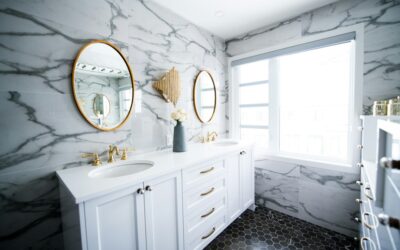
Walk into any bathroom where the vanity has swelled, buckled, or crumbled at the base, and you are almost certainly looking at particleboard or bargain MDF that met one too many spills. A plywood bathroom vanity sidesteps that fate because plywood’s cross-laminated layers resist moisture, hold screws firmly, and stay dimensionally stable in the humid swings a bathroom throws at them. Whether you are buying a cabinet or building one, understanding plywood grades and construction is the difference between a vanity that lasts 20 years and one you replace in five. This guide covers the why, the how, and the real costs.
Part of our Bathroom Remodeling & Flooring guide — explore the full guide →
- Why Plywood Beats MDF and Particleboard in a Bathroom
- Understanding Plywood Grades
- What a Plywood Vanity Costs
- Building a Plywood Bathroom Vanity
- Finishing a Plywood Vanity
- Care and Maintenance
- Is a Plywood Vanity Worth It?
- Plywood vs. Solid Wood Vanities
- What to Check When Buying
- Frequently Asked Questions
Why Plywood Beats MDF and Particleboard in a Bathroom
The bathroom is the harshest cabinet environment in the house, cycling between steam and dryness several times a day. That is exactly where plywood shines. Plywood is built from thin wood veneers glued with alternating grain direction, which gives it strength in both directions and, more importantly, a natural resistance to swelling. When particleboard gets wet, it absorbs water like a sponge and permanently expands; MDF is denser but still swells and delaminates once moisture breaches the finish. Plywood, by contrast, sheds occasional splashes and dries without warping, especially when the edges are sealed.
Plywood also holds fasteners far better. Hinges and drawer slides screwed into plywood stay tight for decades, while screws in particleboard strip out and sag over time. For a vanity that carries a heavy stone top and gets tugged open thousands of times, that holding power matters.
Understanding Plywood Grades
Not all plywood is equal, and the grade you choose sets both the look and the price. Plywood is graded by face veneer quality using letters A through D, often shown as a two-letter pair like A-C, meaning one nice face and one rough back.
- Cabinet-grade birch or maple plywood: Smooth, tight-grained faces ideal for painted or clear-finished vanities. The standard for quality cabinets.
- Hardwood plywood with oak, cherry, or walnut veneer: For a natural wood-grain vanity you plan to stain.
- Marine-grade plywood: Uses waterproof adhesive and void-free cores. Overkill for most vanities but excellent for the cabinet base near the floor.
- Baltic birch: Many thin, void-free plies that show attractive striped edges and machine beautifully for drawer boxes.
For most bathrooms, 3/4-inch cabinet-grade birch plywood for the box and 1/2-inch Baltic birch for drawer boxes is the sweet spot of quality and cost.
What a Plywood Vanity Costs
Plywood construction sits in the middle of the price range, above particleboard and below solid hardwood. Expect these ranges:
- Ready-made plywood-box vanity: $400 to $1,200 for a 30 to 48-inch cabinet, depending on door style and finish.
- DIY materials to build one: $150 to $400 in plywood, hardware, and finish for a standard single-sink vanity.
- Semi-custom plywood cabinet: $1,000 to $2,500 with soft-close hardware and premium veneer.
When shopping ready-made vanities, read the spec sheet closely; many brands advertise “wood construction” while using solid-wood only on the visible face frame and particleboard everywhere else. Look for the words “plywood box” or “all-plywood construction.”
Building a Plywood Bathroom Vanity
A plywood vanity is an approachable weekend project for anyone comfortable with a circular saw and drill. The basic steps:
- Cut the carcass. Rip 3/4-inch plywood into two sides, a bottom, a back, and stretchers for the top. A track saw or a straightedge guide gives clean, square cuts.
- Assemble the box. Join panels with wood glue and pocket screws or 2-inch cabinet screws. Check for square by measuring diagonals before the glue sets.
- Add a toe kick. Recess the base 3 inches to keep the plywood off any standing water on the floor.
- Build drawers and hang doors. Use full-extension soft-close slides and adjustable European hinges for a professional feel.
- Cut plumbing access. Mark and drill holes in the back panel for supply lines and the drain before installation.
Sealing the Vulnerable Spots
Plywood’s one weak point is its exposed edges, where the layers can wick water. Seal all cut edges, especially the bottom and the sink cutout, with edge banding or two coats of polyurethane. Run a bead of silicone where the vanity meets the wall and floor. These small steps are what let a plywood vanity shrug off years of humidity.
Finishing a Plywood Vanity
The finish protects the wood and defines the look. For a painted vanity, prime with a stain-blocking bonding primer and topcoat with a durable water-based enamel that resists moisture and scuffs. For a natural look, sand to 220 grit, apply stain if desired, then protect with three coats of water-based polyurethane, sanding lightly between coats. Water-based finishes are ideal in a bathroom because they resist yellowing and cure hard. Whatever you choose, finish the inside of the cabinet too; a sealed interior resists the humidity that collects behind closed doors.
Care and Maintenance
A properly finished plywood vanity asks little of you. Wipe up standing water promptly, especially around the faucet base and along the toe kick. Use a fan or crack a window after showers to keep ambient humidity down. Inspect the caulk lines yearly and reseal if you see gaps. Every few years, a fresh coat of polyurethane on high-wear areas keeps the moisture barrier intact. Follow those habits and the cabinet’s structural plywood will comfortably outlast the faucet, the countertop, and probably your next remodel.
Is a Plywood Vanity Worth It?
For anyone who wants a bathroom cabinet that survives real-world moisture, plywood delivers the best value between flimsy engineered board and expensive solid hardwood. It resists swelling, grips hardware, and takes paint or stain beautifully, all at a mid-range price. Whether you build it yourself or buy an all-plywood model, choosing a plywood bathroom vanity is one of the smartest structural decisions you can make in a bath remodel, and it pays off every day the room fills with steam.
Plywood vs. Solid Wood Vanities
Homeowners often assume solid wood is automatically superior, but for a bathroom cabinet box, plywood is frequently the smarter engineering choice. Solid wood expands and contracts with humidity swings, which can cause panels to crack or joints to open in a room that cycles between steam and dry air. Plywood’s cross-laminated construction stays dimensionally stable through those swings and resists the seasonal movement that plagues wide solid-wood panels. Solid wood still shines for face frames, doors, and decorative legs where its beauty shows, so the best vanities often combine a plywood box with solid-wood doors and frames. That hybrid gives you stability where it counts and natural wood where you see it.
What to Check When Buying
Manufacturers use vague language, so read the spec sheet carefully before you buy. Look for the specific phrase “all-plywood construction” or “plywood box,” not just “wood construction,” which often hides particleboard behind a solid-wood face. Open the doors and drawers to inspect the cabinet interior; plywood shows visible layered edges, while particleboard looks like compressed sawdust. Check that drawer boxes are dovetailed or well-joined plywood rather than stapled particleboard, and confirm the hardware is soft-close and screwed into solid material. These details separate a vanity that survives two decades from one that sags in five.
Frequently Asked Questions
Is plywood good for a bathroom vanity?
Yes. Plywood resists the moisture and humidity swings of a bathroom far better than particleboard or MDF because its cross-laminated layers stay stable and do not swell easily. It also holds hinge and slide screws firmly for decades. Sealing the edges and using moisture-resistant finish makes it an excellent long-term vanity material.
What grade of plywood is best for a vanity?
Cabinet-grade birch or maple plywood in 3/4-inch thickness is ideal for the cabinet box, with 1/2-inch Baltic birch for drawer boxes. If the base sits near a floor that may get wet, marine-grade plywood adds extra water resistance for the bottom panel.
How do I protect plywood from bathroom moisture?
Seal all cut edges, especially the bottom and the sink cutout, with edge banding or two coats of polyurethane. Finish the interior as well as the exterior, caulk where the vanity meets the wall and floor, and recess the base with a toe kick to keep it off any standing water.