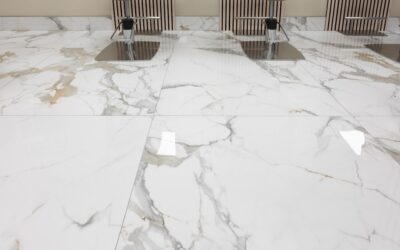
Nothing signals luxury quite like the deep, mirror-like shine of natural stone catching the light. Polished marble tile is the material designers reach for when a space needs to feel timeless and expensive, from grand foyers to spa bathrooms. But that glossy surface is also demanding: marble is softer and more sensitive than the porcelain most people are used to, and it rewards owners who understand its nature while punishing those who treat it like a bulletproof tile. Here is what you need to know before you fall for the finish.
Part of our Countertops guide — explore the full guide →
What Polishing Does to Marble
Marble is a metamorphic stone, essentially recrystallized limestone, prized for its veining and depth. Polishing grinds and buffs the surface with progressively finer abrasives until it reflects light like glass, which intensifies the color and makes the veining pop. That high-gloss finish is stunning, but it is purely mechanical; it does not seal the stone or make it harder. Underneath the shine, the marble is still a relatively soft, porous, calcium-based stone that reacts to acids and scratches more easily than porcelain or granite. The polish is beauty, not armor.
The Advantages of Polished Marble
The reasons people choose marble are genuine and hard to replicate.
- Unmatched elegance: the reflective surface and natural veining read as high-end in a way no printed tile fully matches.
- Brightens rooms: the glossy finish bounces light, making spaces feel larger and more open.
- One of a kind: every slab and tile has unique veining, so your floor is genuinely unlike anyone else’s.
- Adds resale appeal: real marble carries a perception of quality that buyers recognize.
The Drawbacks You Must Accept
Marble asks for tolerance in return for its beauty. It etches when acids touch it; a splash of lemon juice, wine, coffee, or an acidic cleaner dissolves the polish and leaves a dull, rough mark that no amount of wiping fixes. It stains because it is porous, soaking up oils and dark liquids unless sealed and wiped promptly. And it scratches, so grit underfoot and dropped objects leave their marks. The polished finish makes every etch and scratch more visible than a honed surface would. None of this makes marble a bad choice, but it makes it the wrong choice for someone who wants a worry-free floor.
Where Polished Marble Belongs
Match marble to rooms that show it off without abusing it. Polished marble excels in formal entryways, living and dining rooms, bathroom floors and walls, and shower surrounds where its beauty takes center stage and traffic is moderate. It is a beautiful but risky choice for a busy kitchen floor, where dropped cookware and acidic spills are constant, and for kitchen countertops, where lemon and vinegar are everyday hazards. Many homeowners compromise by using polished marble on walls, in low-traffic rooms, or as an accent, while choosing a tougher surface for the hardest-working zones.
Polished Versus Honed
If you love marble but fear the maintenance, consider the honed finish as an alternative. Honed marble is ground smooth but not buffed to a shine, giving a soft matte surface. It hides etching and scratches far better because there is no gloss to disrupt, and it offers more traction underfoot, which matters in a wet bathroom. The trade-off is that honed marble looks more understated and can absorb stains slightly faster since the surface is more open. Polished delivers drama; honed delivers ease. Neither is wrong, but knowing the difference helps you choose with open eyes.
Cost Expectations
Polished marble tile spans a wide range depending on the variety. Common types like Carrara run roughly $5 to $15 per square foot, while premium marbles such as Calacatta or Statuario can reach $20 to $40 per square foot or more. Installation adds about $8 to $15 per square foot, and marble often costs more to install than porcelain because it requires careful handling, precise cutting, and sometimes a flatter substrate. Factor in sealer and long-term maintenance, and marble is genuinely a premium material, not a budget floor.
Sealing and Installation
Sealing is not optional with marble; it is the difference between a floor that stains on day one and one that resists everyday spills. Apply a high-quality penetrating stone sealer before grouting and again after, then reseal periodically based on a simple water test: if drops no longer bead and start to darken the stone, it is time to reseal. During installation, use a white thinset, since gray can shadow through the translucent stone, and set tiles with tight, consistent joints. Marble is heavy and brittle, so cut it with a fine diamond blade and support large tiles fully to avoid cracks.
Daily Care and Maintenance
Living with marble is about prevention. Wipe spills immediately, especially anything acidic, and never let them sit. Clean only with a pH-neutral stone cleaner; avoid vinegar, ammonia, citrus cleaners, and generic bathroom sprays, all of which etch the surface. Dust-mop regularly to keep abrasive grit off the polish, and use mats at entrances and rugs in traffic lanes. Place coasters and trays under bottles and toiletries. Minor etching can sometimes be buffed out with a marble polishing powder, and professional refinishing can restore a tired floor, but the best strategy is simply treating the surface gently every day.
Popular Marble Varieties to Know
Not all marble is the same, and the variety you choose shapes both the look and the budget. Carrara is the most common and affordable, with a soft gray-white background and fine, feathery gray veining, making it the go-to for a classic, understated look. Calacatta is more dramatic and more expensive, with a whiter background and bold, thick veining that reads as luxurious and high-contrast. Statuario sits at the premium end with a bright white field and striking gray-to-gold veins. Emperador and other brown marbles offer warmer, richer tones for a more traditional feel. Each behaves the same way chemically, but the pattern and price vary enormously.
When you shop, remember that marble is sold in natural lots, so tiles from the same variety can differ in vein density and background tone from one batch to another. View the actual tiles or slabs before buying, mix pieces from several boxes during installation to blend the variation, and buy 15 to 20 percent extra so future repairs come from the same lot. Because marble is a natural product, that inherent variation is part of its beauty, but it also means the small sample in the showroom may not perfectly represent the material that arrives on the pallet. Approving the real stock is the single best way to avoid an unwelcome surprise on installation day.
Is Polished Marble Tile Right for You?
Choose polished marble if you value genuine luxury and natural beauty, you are installing it in a room that will not batter it, and you accept the sealing and gentle-care routine as part of the deal. If you want the marble look with none of the anxiety, a honed finish or a high-quality marble-look porcelain gives you most of the beauty with a fraction of the fuss. Marble is not for everyone, but for the right owner in the right room, no manufactured tile matches the depth, light, and timeless elegance of the real polished stone. Go in understanding that the occasional etch or scratch is part of living with a natural material, much like the patina on a leather chair or a wood floor. Owners who embrace that character rather than fighting it are the ones who love their marble for a lifetime.
Prefer to explore on your own?
See how new flooring looks in your actual room in seconds — free, no signup.
Try the free Floor Studio →