
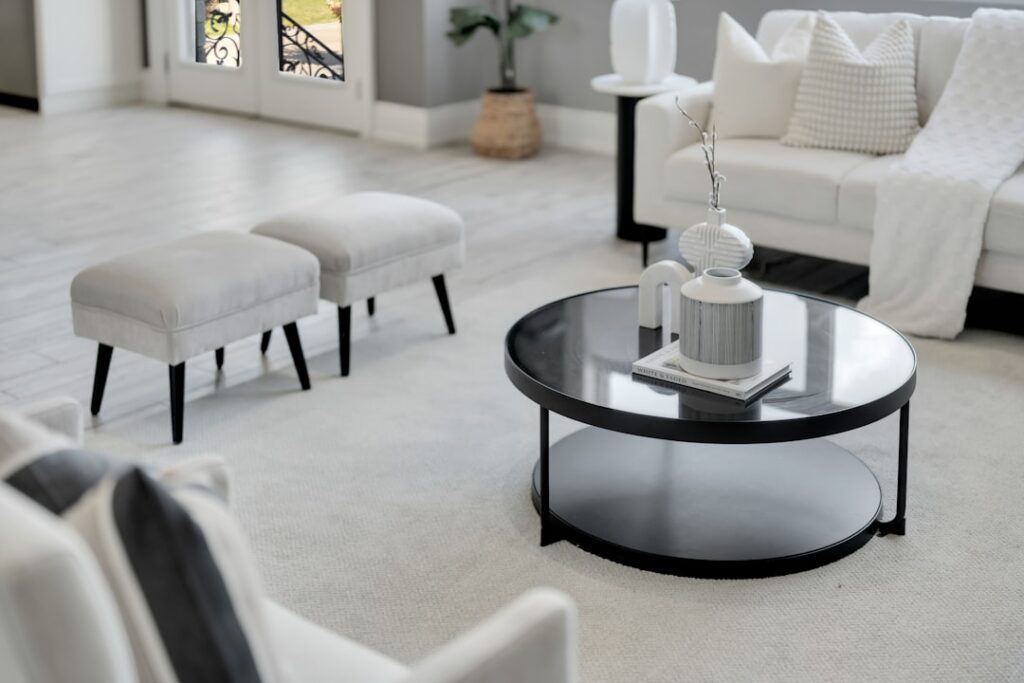
Polished porcelain tiles deliver a sleek, mirror-like finish that transforms any space into something that feels upscale and modern. Their reflective surface bounces light around a room, making spaces appear larger and brighter. Used everywhere from luxury hotel lobbies to contemporary kitchens, polished porcelain has become one of the most popular tile flooring options for homeowners who want high-end style without the price tag of natural stone.
This guide covers everything you need to know about polished porcelain tiles, including how they are made, where to use them, slip safety considerations, maintenance requirements, pricing, and how they compare to matte-finish alternatives.
What Are Polished Porcelain Tiles?
Polished porcelain tiles start as standard porcelain tiles that are then mechanically polished after firing. During manufacturing, the tile body (called the bisque) is pressed from a mixture of refined clays, feldspar, silica, and other minerals at extremely high pressures. It is then fired in a kiln at temperatures between 2,200 and 2,500 degrees Fahrenheit. This creates an incredibly dense, hard, and non-porous material.
After firing, the tile surface is ground and buffed using progressively finer diamond abrasives until it achieves a glass-like reflective finish. This polishing process physically removes a thin layer of the tile’s surface, which slightly opens the pore structure. This is an important detail because it affects both the tile’s stain resistance and slip characteristics.
Rectified vs. Non-Rectified
Most polished porcelain tiles are also rectified, meaning their edges are precision-cut after firing to ensure perfectly uniform dimensions. Rectified tiles can be installed with very narrow grout joints (as slim as 1/16 inch), creating a near-seamless appearance that emphasizes the polished surface. Non-rectified tiles have slightly irregular edges and require wider grout lines (typically 1/8 inch or more), which can interrupt the visual flow of the polished surface.
Advantages of Polished Porcelain Tiles
Stunning Aesthetics
The primary draw of polished porcelain is its appearance. The reflective surface creates a luxurious, high-end look that competes with polished marble and granite at a fraction of the cost. Modern digital printing technology allows manufacturers to reproduce convincing marble veining, limestone textures, concrete effects, and other natural stone looks on the polished surface.
Light Enhancement
Polished tiles reflect both natural and artificial light, which makes rooms feel brighter and more spacious. This is especially valuable in rooms with limited windows, basement spaces, or smaller floor plans where every visual trick helps.
Durability
Porcelain is one of the hardest flooring materials available. Polished porcelain typically rates between 5 and 7 on the Mohs hardness scale, making it highly resistant to scratches and abrasion. The density of the material (a water absorption rate below 0.5 percent) means it handles heavy foot traffic without degradation.
Easy to Clean
The smooth, polished surface does not trap dirt or dust the way textured tiles do. Regular sweeping and occasional damp mopping keep polished porcelain looking pristine. Spills wipe up instantly without staining when the surface has been properly sealed.
Value for Money
Polished porcelain delivers the look of polished natural stone at 30 to 60 percent less cost. A polished Calacatta-look porcelain tile might cost $4 to $8 per square foot, while genuine Calacatta marble starts at $15 to $40 per square foot. The porcelain is also more durable and easier to maintain than the real stone.
Disadvantages and Concerns
Slip Risk
This is the most significant concern with polished porcelain tiles, especially for floor applications. The smooth, reflective surface provides less friction underfoot than textured or matte tiles. When wet, polished porcelain can be very slippery. This makes it a poor choice for bathrooms, pool decks, outdoor areas, or any location that frequently gets wet.
Slip resistance is measured by the coefficient of friction (COF). The Americans with Disabilities Act (ADA) recommends a minimum dynamic COF of 0.42 for level floors. Most polished porcelain tiles fall below this threshold when wet, though they typically meet or exceed it when dry. If you want polished tile in a kitchen, consider using matte or textured tile in front of the sink and stove where water and grease are most likely.
Micro-Porosity After Polishing
The polishing process exposes microscopic pores on the tile surface that were sealed in the original fired state. These pores can absorb staining liquids (wine, coffee, colored sauces) if the tile is not sealed. Most manufacturers apply a factory sealant, but it wears over time. Periodic resealing with an impregnating sealer is recommended for polished porcelain, typically every 1 to 3 years depending on traffic.
Shows Scratches and Smudges
The mirror-like surface that makes polished porcelain so attractive also makes imperfections more visible. Fine scratches from sand, grit, or dragged furniture are more noticeable than they would be on matte tile. Fingerprints, footprints, and water spots also show easily, requiring more frequent cleaning to maintain the pristine look.
Cold Underfoot
Like all tile flooring, polished porcelain feels cold in cooler climates. Pairing it with radiant floor heating solves this issue and is an increasingly common choice for homeowners in northern regions. Porcelain’s excellent thermal conductivity makes it an ideal partner for radiant heat systems.
Best Uses for Polished Porcelain Tiles
Living Rooms and Formal Areas
Polished porcelain excels in living rooms, dining rooms, and formal entryways where the reflective surface creates an elegant atmosphere. These dry areas minimize slip risk while maximizing the visual impact of the polished finish.
Kitchens (With Caveats)
Polished porcelain works in kitchens but requires awareness of the slip risk near sinks and cooking areas. Using area rugs with non-slip backing in work zones adds safety without sacrificing the aesthetic. Some homeowners combine polished tile in visible areas with matte tile in the working zones.
Commercial Spaces
Retail stores, hotel lobbies, corporate offices, and showrooms frequently use polished porcelain for its upscale appearance and durability. High-traffic commercial environments benefit from its scratch resistance and easy maintenance.
Wall Applications
Polished porcelain makes an outstanding wall tile for feature walls, backsplashes, and shower walls. Slip resistance is irrelevant on vertical surfaces, so you get all the beauty with none of the safety concerns. Large-format polished tiles (24×48 or 32×64) create dramatic wall installations with minimal grout lines.
Polished vs. Matte Porcelain Tiles
Choosing between polished and matte porcelain often comes down to where the tile will be installed and the aesthetic you are targeting.
Appearance
Polished tiles are formal, bright, and contemporary. Matte tiles are understated, warm, and versatile. Polished tiles tend to make colors appear more vibrant and veining more dramatic. Matte tiles offer a more subtle, organic look that works well with rustic, farmhouse, and transitional design styles.
Safety
Matte and textured porcelain tiles provide significantly better slip resistance, both wet and dry. For bathrooms, mudrooms, kitchens, and any floor that gets wet regularly, matte is the safer choice. This is the single biggest differentiator for floor applications.
Maintenance
Polished tiles need periodic sealing to protect the micro-porous surface. Matte tiles retain their factory-sealed surface and generally require no additional sealing. However, textured matte tiles can trap more dirt in their surface grain, requiring slightly more effort to clean. It is a trade-off either way.
Durability
Both finishes are equally durable in terms of hardness and structural integrity. However, polished tiles show surface damage more readily. A scratch on polished tile is far more visible than the same scratch on a matte surface.
Pricing for Polished Porcelain Tiles in 2026
Polished porcelain tile pricing varies by size, brand, and the complexity of the design. Here are typical price ranges per square foot for materials only.
- Budget range: $2.00 to $4.00 per square foot for basic solid colors or simple patterns from domestic big-box brands.
- Mid-range: $4.00 to $8.00 per square foot for marble-look and stone-look designs from quality manufacturers.
- Premium range: $8.00 to $15.00 per square foot for large-format imported tiles from Italian or Spanish manufacturers with advanced printing and finishing.
Installation adds $5 to $12 per square foot depending on the tile size, layout pattern, and your region. Larger tiles and complex patterns (herringbone, chevron) cost more to install due to the increased difficulty and waste. Total installed cost typically runs $7 to $25 per square foot.
Installation Considerations
Installing polished porcelain requires a few special considerations compared to matte or textured tiles.
Lippage
Lippage is the height difference between adjacent tiles. Because the polished surface catches light at specific angles, even slight lippage between tiles becomes visible. Use a leveling system (clips and wedges) during installation to ensure a perfectly flat surface. This is especially important with large-format tiles.
Grout Selection
Use a non-sanded grout for narrow joints (under 1/8 inch) and an epoxy grout for the best stain resistance. Match or closely complement the grout color to the tile for a seamless appearance. Contrasting grout with polished tile tends to look busy and draws attention away from the tile surface.
Cutting
Polished porcelain is extremely hard and requires a quality wet saw with a diamond blade rated for porcelain. Cheap blades will chip the polished surface. For large-format tiles, a rail saw or bridge saw produces the cleanest cuts with minimal risk of chipping.
Maintenance Tips
Keep your polished porcelain tiles looking like new with these maintenance practices.
- Sweep or vacuum regularly to remove grit that can cause micro-scratches.
- Damp mop with clean water or a pH-neutral tile cleaner. Avoid vinegar, bleach, or acidic cleaners.
- Wipe spills immediately, especially coffee, wine, or colored liquids, to prevent staining in the micro-pores.
- Apply an impregnating sealer every 1 to 3 years. This penetrates the surface and fills the micro-pores without changing the appearance.
- Use felt pads under all furniture legs to prevent scratching.
- Place doormats at entries to reduce the amount of grit tracked onto the floor.
Final Thoughts
Polished porcelain tiles offer a compelling combination of luxury aesthetics, exceptional durability, and relative affordability. They are at their best in dry, formal, and well-lit spaces where their reflective beauty can shine without safety concerns. For wet areas or homes with young children or elderly residents, matte or lightly textured porcelain is the wiser choice.
If you are exploring tile options for your home, our complete tile flooring guide covers all the major types, formats, and styles to help you make the right decision. For rooms where moisture is a primary concern, also consider our guide to waterproof flooring alternatives.
Prefer to explore on your own?
See how new flooring looks in your actual room in seconds — free, no signup.
Try the free Floor Studio →

