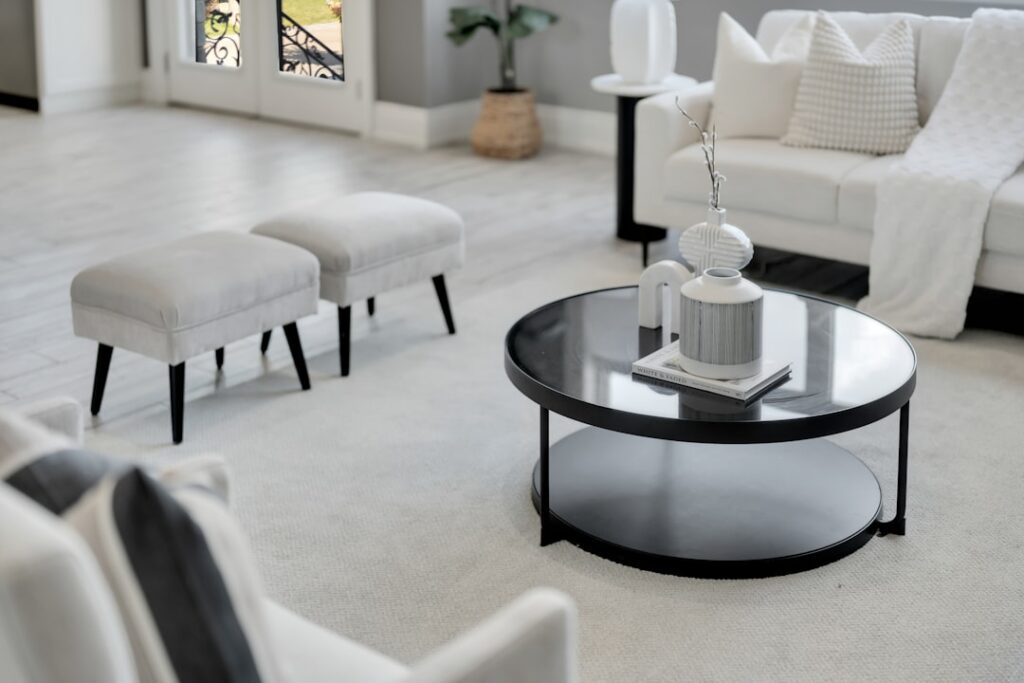
Polished tiles create a mirror-like, reflective surface that opens up rooms, amplifies natural light, and delivers a luxury aesthetic that matte or textured tiles simply cannot match. Whether you choose polished porcelain, honed-and-polished marble, or polished granite, the result is a floor that looks and feels high-end from the moment you step into the room.
But polished tiles come with trade-offs. They are more slippery when wet, show dirt and smudges more easily, and require specific maintenance to keep the shine. This guide covers every major type of polished floor tile, where to use them (and where not to), slip resistance solutions, long-term care, and realistic pricing for 2026.
Types of Polished Floor Tiles
The term “polished tiles” covers three distinct material categories, each with different performance characteristics, maintenance requirements, and price points. Understanding the differences is essential for choosing the right polished tile for your space.
| Feature | Polished Porcelain | Polished Marble | Polished Granite |
|---|---|---|---|
| Material | Kiln-fired ceramic | Metamorphic stone | Igneous stone |
| Hardness (Mohs) | 7-8 | 3-5 | 6-7 |
| Water absorption | Less than 0.5% | 0.1%-0.5% | Less than 0.4% |
| Scratch resistance | Excellent | Poor | Good |
| Stain resistance | Excellent | Poor (needs sealing) | Good (needs sealing) |
| Price per sq ft | $3-$10 | $8-$30+ | $6-$20 |
Polished Porcelain Tiles
Polished porcelain is the most popular and practical choice for polished floor tiles. Made from refined clay fired at extremely high temperatures (2,200 to 2,500 degrees Fahrenheit), porcelain is dense, hard, and nearly impervious to water. The polished finish is achieved by mechanically grinding and buffing the tile surface after firing, creating a glass-like shine.
Advantages
- Extremely durable: Porcelain is harder than most natural stone and resists scratches, chips, and wear in high-traffic areas
- Low maintenance: The polished surface does not require sealing (unlike marble and granite) and resists staining
- Consistent appearance: Factory-produced porcelain offers uniform color, pattern, and reflectivity across every tile
- Wide design range: Modern polished porcelain mimics marble, granite, concrete, and even wood with remarkable realism
- Affordable luxury: Polished porcelain delivers a high-end look at a fraction of the cost of natural stone
Disadvantages
- Very slippery when wet — the polished surface has almost no friction
- Shows water spots, footprints, and smudges more than matte tile
- The polishing process opens surface pores slightly, making the tile marginally more susceptible to staining than unpolished porcelain (though still far better than marble)
- Cold underfoot without radiant heating
Popular Polished Porcelain Styles
Marble-look polished porcelain: The most sought-after style. Tiles replicate Calacatta, Carrara, and Statuario marble with white backgrounds and gray veining — all the elegance of marble without the maintenance. This is the single most popular tile flooring choice for luxury-look entryways and living rooms in 2026.
Concrete-look polished porcelain: Industrial-modern aesthetics in polished finish. Gray tones with subtle variation create a sleek, contemporary floor.
Solid-color polished porcelain: Pure white, ivory, black, or gray tiles in a high-gloss finish. Used for minimalist and contemporary interiors.
Polished Marble Tiles
Polished marble is the original luxury flooring — used in grand buildings for thousands of years. Natural marble’s veining, color variation, and translucent depth create a beauty that no manufactured tile can perfectly replicate. However, marble is a high-maintenance floor that requires regular sealing and careful cleaning.
Popular Marble Varieties for Floors
Carrara marble: Gray-white background with soft gray veining. The most affordable and widely available marble, originating from Italy. $8 to $15 per square foot for tiles.
Calacatta marble: White background with bold, dramatic gray and gold veining. More expensive and sought-after than Carrara. $15 to $30+ per square foot.
Crema Marfil: Warm beige-cream tones with subtle veining. Popular for traditional and transitional interiors. $6 to $12 per square foot.
Nero Marquina: Deep black with white veining. Creates a dramatic, high-contrast floor. $10 to $20 per square foot.
Marble Maintenance Reality
Marble is soft (3 to 5 on the Mohs hardness scale), porous, and chemically reactive. Acidic substances — lemon juice, vinegar, wine, tomato sauce — etch the polished surface on contact, leaving dull marks. Marble floors must be sealed every 6 to 12 months and cleaned exclusively with pH-neutral cleaners. For those who love the look but want less maintenance, marble-look polished porcelain is the practical alternative. For more natural stone options, see our natural stone flooring guide.
Polished Granite Tiles
Polished granite offers a middle ground between the practicality of porcelain and the natural beauty of marble. Granite is harder and more stain-resistant than marble, though it still requires sealing. Its crystalline structure produces a deep, glittering polish that porcelain cannot replicate.
Popular Granite Floor Tiles
Absolute Black: A deep, solid black granite with a mirror-like polish. Dramatic and modern. $8 to $15 per square foot.
Kashmir White: White and gray with garnet and tourmaline flecks. $6 to $12 per square foot.
Tan Brown: Rich brown and black tones. Popular for traditional interiors. $5 to $10 per square foot.
Galaxy Black: Black background with copper and gold metallic flecks. Creates a star-field effect under lighting. $8 to $18 per square foot.
Granite vs Marble for Floors
Granite is harder, more scratch-resistant, and more stain-resistant than marble. It handles high-traffic areas better and is less vulnerable to etching from acidic spills. Granite still needs sealing every 1 to 2 years (vs every 6 to 12 months for marble). For families and high-traffic homes, polished granite is the better natural stone choice.
Understanding the High-Gloss Effect
The appeal of polished tiles comes down to reflectivity. A polished surface reflects light rather than absorbing or scattering it, which creates several design effects:
Room amplification: Polished tiles reflect walls, furniture, and windows, creating an illusion of more space. Small rooms, narrow hallways, and dark spaces benefit enormously from polished tile floors.
Light enhancement: A polished floor bounces natural light from windows deeper into the room, reducing the need for artificial lighting during the day. Rooms with large windows and polished tile floors feel bright and airy.
Luxury perception: The association between polished stone floors and high-end spaces — hotel lobbies, upscale retail, luxury homes — makes polished tile an instant signal of quality and investment.
The downside of reflectivity: Polished tile floors show everything — dust, footprints, water spots, pet hair, and smudges. Light-colored polished tiles show less surface dirt than dark ones. Black polished tiles, while stunning, show every single speck of dust and require near-daily mopping to maintain their appearance.
Slip Resistance Considerations
Slip resistance is the single most important safety factor for polished tiles. The same smooth, glossy surface that creates the beautiful reflective effect also creates a low-friction surface that can be dangerously slippery when wet.
Understanding Slip Ratings
Tile slip resistance is measured by the DCOF (Dynamic Coefficient of Friction) test. A DCOF of 0.42 or higher is considered acceptable for level interior floors by ANSI standards. Most polished porcelain tiles have a DCOF between 0.30 and 0.42 — right at or below the threshold. Matte and textured tiles typically rate 0.50 to 0.80.
Reducing Slip Risk
- Use non-slip rugs and mats at entryways, in front of sinks, and anywhere water is likely to drip onto the floor
- Apply anti-slip treatments: Products like SlipDoctors and InvisaTread chemically etch microscopic grooves into polished tile surfaces, increasing traction without significantly reducing the shine. These treatments last 1 to 3 years and cost $0.50 to $1.00 per square foot applied
- Wipe up water immediately: The most practical advice — polished tiles are only dangerous when wet. Keep a microfiber cloth handy in kitchens and bathrooms
- Consider nano-coating sealers: Some sealers add a very thin anti-slip layer while maintaining the polished appearance. They need reapplication every 6 to 12 months
Best Rooms for Polished Tiles
Entryways and foyers: Polished tiles make the strongest first impression. A marble-look polished porcelain entry sets the tone for the entire home. The traffic is high but the floor stays dry (assuming a good entry mat).
Living rooms and formal dining rooms: These spaces benefit most from the light-reflecting, room-enlarging effect of polished tiles. Minimal water exposure means slip risk is low.
Hallways and corridors: Polished tiles make narrow hallways feel wider and brighter. The reflective surface bounces light through the space.
Open-concept living areas: Large-format polished porcelain (24 x 24 or 32 x 32 inches) with minimal grout lines creates a seamless, expansive look that is perfect for modern open floor plans.
Rooms to Avoid
Bathrooms: The combination of constant water, bare feet, and hard polished surfaces is a serious slip hazard. Use matte or textured tile in bathrooms instead. If you must have a polished look in a bathroom, limit it to walls and use a textured floor tile.
Kitchens (with reservations): Kitchens see frequent water spills, grease, and wet shoes. Polished tiles work in kitchens only if you commit to immediate spill cleanup and use anti-slip mats in front of the sink, stove, and refrigerator. Many homeowners choose polished tile for the kitchen and accept the maintenance trade-off for the aesthetic benefit.
Pool surrounds and wet areas: Never use polished tiles outdoors or around pools. Only textured, slip-rated tiles are appropriate for permanently wet areas.
Stairs: Polished tiles on stairs are extremely dangerous, especially going down. If you use polished tile on stair treads, install non-slip nosing strips and consider anti-slip treatment.
Maintenance and Cleaning
Daily and Weekly Care
Dust mop daily (or every 2 to 3 days) with a dry microfiber mop. Dust and grit are more visible on polished surfaces and act as abrasives that can micro-scratch the polish over time.
Damp mop weekly with warm water and a pH-neutral tile cleaner. Avoid vinegar, bleach, and ammonia on polished marble and granite — the acidity or alkalinity damages the polish. On porcelain, mild dish soap diluted in warm water works fine.
Dry after mopping. This is the step most people skip. Drying the floor with a clean microfiber cloth after mopping eliminates water spots and streaks that dull the polished appearance. It takes 5 extra minutes and makes a dramatic difference.
Maintaining the Polish Over Time
Polished porcelain: The polish is permanent — it is ground into the tile body and does not wear off under normal residential use. No re-polishing needed.
Polished marble: The polish will dull over time in high-traffic areas and from acidic contact. Professional re-polishing (called honing and polishing) costs $3 to $7 per square foot and restores the original shine. Most marble floors need re-polishing every 3 to 5 years in residential use.
Polished granite: More durable than marble but will eventually lose its shine in the highest-traffic zones. Re-polishing every 5 to 10 years is typical. Sealing every 1 to 2 years protects the surface.
Stain Prevention
Porcelain: Rarely stains. Wipe up spills within a reasonable time and you will never have a stain issue.
Marble: Seal every 6 to 12 months with a penetrating stone sealer. Wipe up acidic spills (citrus, wine, coffee, tomato) immediately — etching begins within minutes. Use coasters under all glasses and bottles.
Granite: Seal every 1 to 2 years. Less reactive than marble but still vulnerable to prolonged contact with oils and strong pigments.
Pricing Guide
Material Costs (Per Square Foot)
| Polished Tile Type | Budget | Mid-Range | Premium |
|---|---|---|---|
| Polished porcelain | $3-$5 | $5-$8 | $8-$12 |
| Polished marble | $6-$10 | $10-$18 | $18-$30+ |
| Polished granite | $5-$8 | $8-$14 | $14-$22 |
Installation Costs (Per Square Foot)
Professional installation for polished tiles costs $5 to $15 per square foot for labor and materials (thinset, grout, backer board). Large-format tiles (24 x 24 and above) cost more to install because they require a flatter subfloor, more precise leveling, and larger trowels. Natural stone installation costs more than porcelain due to the weight and fragility of stone tiles.
Total Installed Costs
- Polished porcelain: $8 to $22 per square foot installed
- Polished marble: $14 to $40+ per square foot installed
- Polished granite: $12 to $32 per square foot installed
Installation Notes
Subfloor flatness is critical. Polished tiles amplify every imperfection because the reflective surface makes lippage (height differences between adjacent tiles) extremely visible. The subfloor must meet a tolerance of 1/8 inch variation over 10 feet. Self-leveling compound is often necessary.
Use a tile leveling system. Clip-and-wedge leveling systems ensure adjacent tiles are perfectly flush. Even 1/32 inch of lippage catches light on a polished surface and looks like a flaw.
Rectified tiles are essential. Rectified tiles have precisely machined edges that allow tight grout joints (1/16 inch). Non-rectified tiles require wider grout lines that interrupt the polished surface. The tighter the grout joint, the more seamless and reflective the floor appears.
Grout color matters. For maximum visual continuity, match the grout color to the tile as closely as possible. A white marble-look polished porcelain with dark gray grout lines will look very different from the same tile with white grout. Most designers recommend grout that matches the tile’s lightest color.
Frequently Asked Questions
Are polished tiles slippery?
Yes, polished tiles are slippery when wet. Dry polished tiles have adequate traction for normal walking, but water, oil, or any liquid on the surface significantly reduces friction. Use non-slip mats in wet areas, wipe up spills immediately, and consider anti-slip treatments if the floor is in a kitchen or near an entryway.
Are polished porcelain tiles good for floors?
Yes. Polished porcelain is one of the most durable and low-maintenance flooring options available. It is scratch-resistant, stain-resistant, does not need sealing, and maintains its polish indefinitely under normal residential use. The main considerations are slip resistance in wet areas and the tendency to show dust and smudges.
Do polished tiles scratch easily?
Polished porcelain is very scratch-resistant — it rates 7 to 8 on the Mohs hardness scale. Polished marble scratches easily (3 to 5 Mohs). Polished granite is moderately scratch-resistant (6 to 7 Mohs). For the most scratch-resistant polished floor, choose porcelain.
How do you clean polished tiles without streaks?
Use a pH-neutral cleaner diluted in warm water, mop with a clean microfiber mop, and dry the floor with a separate clean microfiber cloth immediately after mopping. Streaks on polished tile are usually caused by dirty mop water, too much cleaner, or air drying. Changing the mop water frequently eliminates most streaking issues.
Can you use polished tiles in a shower?
No. Polished tiles are unsafe on shower floors due to extreme slip risk when wet and soapy. Polished tiles can be used on shower walls for a beautiful effect, but the shower floor must be a textured, slip-rated tile — typically small mosaic tiles with high grout coverage for maximum traction.
What size polished tile is best for floors?
Larger tiles create a more seamless, luxurious look with fewer grout lines. For living rooms and open areas, 24 x 24 inch or 32 x 32 inch tiles are the most popular. For hallways and smaller rooms, 18 x 18 or 24 x 24 inch tiles work well. Smaller rooms can use smaller tiles but the effect is less dramatic.
Prefer to explore on your own?
See how new flooring looks in your actual room in seconds — free, no signup.
Try the free Floor Studio →