Around 500 recycled milk jugs go into a single Adirondack chair — that is the founding math behind a brand that turned post-consumer plastic into the most imitated outdoor furniture in America. Polywood patio furniture is built from solid HDPE lumber, made in Indiana and North Carolina, and backed by a 20-year residential warranty, which explains both the cult following and the sticker shock: a chair that looks like painted wood but costs $200-$350 invites fair questions. After the copycat flood on Amazon, the real ones are what separates genuine POLYWOOD, whether the material lives up to the never-maintain promise, and which collections earn the price. This review takes them in order.
The Material: What HDPE Lumber Actually Is
POLYWOOD (the company trademarked the name in 1990, long before “poly wood” became a generic category) extrudes recycled high-density polyethylene into solid boards — the same genuine-lumber concept as composite decking, minus the wood flour that makes composites fade and stain. Color runs all the way through the board, so a deep scratch reveals the same white, teak, or slate gray underneath, not a different-colored core. The boards are worked like wood in the factory: cut, routed, and assembled with marine-grade 316 stainless hardware.
Performance follows from the chemistry. HDPE absorbs essentially no water, so it cannot rot, splinter, crack in freeze-thaw, or host mold below its surface; salt air and pool chlorine do nothing to it, which is why it dominates coastal porches from the Outer Banks to Cape Cod. UV inhibitors are compounded into the material rather than coated on, and fade resistance on the current formulations is genuinely strong — years of full sun produce only slight softening of saturated colors. The honest drawbacks are physical: the material is heavy (a dining chair runs 30-40 pounds, an Adirondack close to 50), it flexes more than hardwood in long unsupported spans, and dark colors get noticeably hot in direct summer sun. Wind, at least, will never take a POLYWOOD chair across the yard.
The Collections That Matter
The catalog is wide, but five families cover most buying decisions:
- Classic Adirondack and the folding Adirondack: The brand’s signature, $220-$350 depending on trim, in 10-plus colors. The folding version stores flat and is the perennial bestseller.
- Vineyard: The refined coastal line — curved backs, slatted detail — spanning Adirondacks, rockers, benches, and porch swings. Rockers run $300-$450.
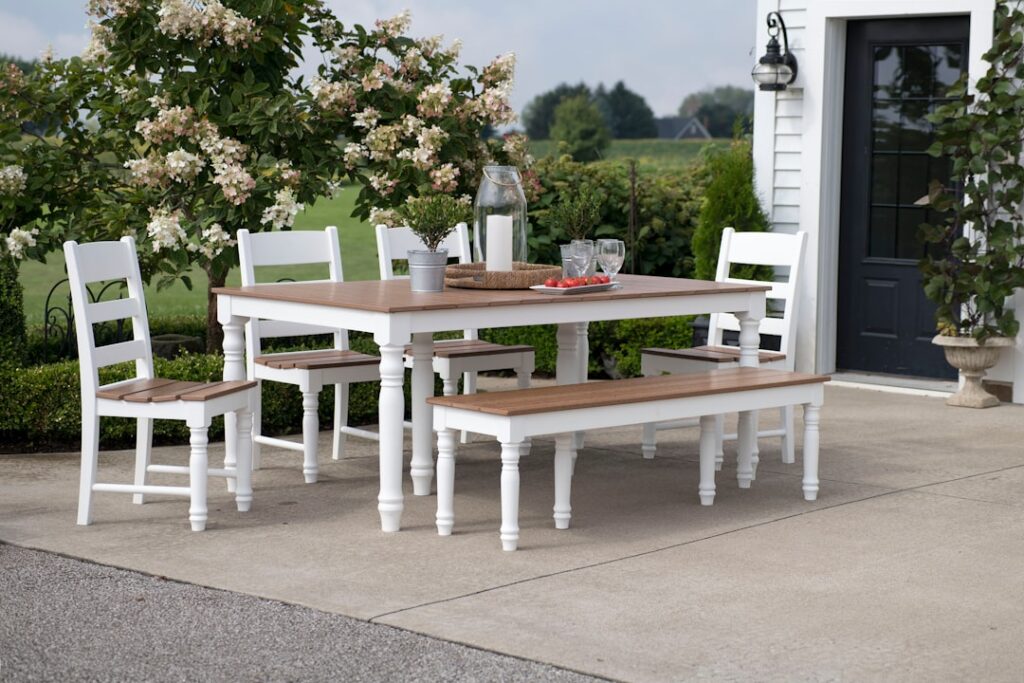
- Nautical: Cleaner, more contemporary lines across dining and deep seating; the workhorse for full patio sets. A six-person dining set lands around $2,000-$3,500.
- Lakeside and Long Island: Traditional porch styling — the lines you buy with a matching side table for a covered front porch.
- Deep seating (Modern, Oxford and kin): Sofa-and-club-chair groups with cushions, competing against wicker sets at $2,500-$5,000 per grouping.
Cushions across the deep-seating lines come in solution-dyed performance fabrics of the Sunbrella class — buy those, not bargain covers, or the fabric will quit a decade before the frame does. POLYWOOD sells direct, through Amazon and Wayfair, and via Costco and big-box seasonal buys; the direct site’s frequent 15-20 percent sales are the best routine pricing.
The 20-Year Warranty, Decoded
The residential warranty covers the HDPE lumber against rotting, cracking, peeling, and material failure for 20 years, with commercial use covered for a shorter term (typically one to a few years depending on program). It does not cover fading below a defined severity, cushion fabrics (those carry their own shorter fabric warranty), or damage from abuse. Registration is worth the five minutes, and claims by all accounts are handled in the replace-the-part spirit rather than the deny-and-delay one. Keep perspective on what the paper means: the company has been making the same material since 1990, so 20-year-old original chairs on Midwestern porches are the real testimonial.
Living With It: Maintenance in the Real World
“Maintenance-free” translates in practice to “wash it occasionally.” Soap, water, and a soft brush handle routine grime; a Magic Eraser or a 30:1 bleach-water solution clears scuffs and mildew film from the surface texture; a pressure washer under 1,500 psi is fine. You will never sand, stain, paint, or seal it — that is the entire value proposition versus teak (annual oiling to keep color) and painted wood (repaint every 3-5 years). Leave it out all winter; snow and ice are irrelevant to HDPE. The one seasonal task owners actually report: re-snugging hardware every year or two, since HDPE expands and contracts more than wood across temperature swings.
Colors, Heat, and Placement Strategy
The palette runs from classic white, black, and teak through saturated statement colors — lime, aruba blue, sunset red — and color choice is more functional than it looks. Light colors stay sittable in direct July sun; the dark slate and black frames genuinely sting bare legs after a few hours of full exposure, so reserve them for covered porches or shaded corners. Fade behavior favors the earth tones and whites: the vivid brights soften noticeably over 8-10 years of southern sun, less so in the Northeast. Because color runs through the board, even faded furniture never shows the white scratch-lines that plague painted wood — light scuffing with a Scotch-Brite pad blends most surface wear invisibly. If you are mixing purchases over several years, note the color name from your original order; the standard palette has stayed stable, which is a quiet advantage of a brand that does not churn its lineup seasonally.
Assembly and First-Weekend Notes
Everything ships flat-packed, and assembly is honest but not trivial — an Adirondack runs 30-45 minutes with a drill and the included stainless hardware, a dining table closer to an hour. Three field-earned tips: run the bolts snug then a quarter-turn, not gorilla-tight, because HDPE compresses and over-torqued heads dimple the lumber; assemble on a blanket to spare the finish and your patio; and place the furniture where it will live before final tightening, since a 200-pound assembled dining table does not enjoy stairs. Check that every foot has its glide seated — POLYWOOD sits heavy enough to mark soft wood decking over time, and $10 of extra glides under the heaviest pieces is cheap deck insurance. Save the hardware pack card; the company sells every bolt and bushing individually, one of the small ways a 20-year product is designed differently from a 5-year one.
How It Stacks Against the Alternatives
Against teak: teak wins on prestige and furniture feel, POLYWOOD wins on zero upkeep and price at half or less of grade-A teak. Against Amazon “poly” clones: the imitators run 30-50 percent cheaper, and the good ones use similar HDPE — but board thickness, stainless (vs. coated) hardware, color-through consistency, and a warranty a decade longer are where the POLYWOOD premium physically lives. Against wrought iron and aluminum: metal offers slimmer profiles and lighter dining chairs (aluminum) or period elegance (iron), but takes on rust care and sun-scorch issues HDPE never has — our wrought iron patio furniture guide covers that side of the tradeoff. Against resin wicker: wicker sets undercut POLYWOOD deep seating on price but rarely survive UV exposure past year five to seven without unraveling strands.
Verdict: Who Should Buy It
POLYWOOD is the right buy for coastal and four-season climates, for anyone leaving furniture uncovered year-round, and for buyers doing the 15-year math instead of the checkout math — one $300 Adirondack outlasting three $120 wooden ones is the whole case. It is the wrong buy for design purists who want real wood grain underhand, for rooftop terraces where 45-pound chairs must move daily, and for anyone furnishing a rental season on a budget, where the clones honestly suffice. Buy genuine for the pieces that live in the weather and take the abuse, catch a direct-site sale, register the warranty, and expect to be bored by how little the furniture asks of you for the next two decades.