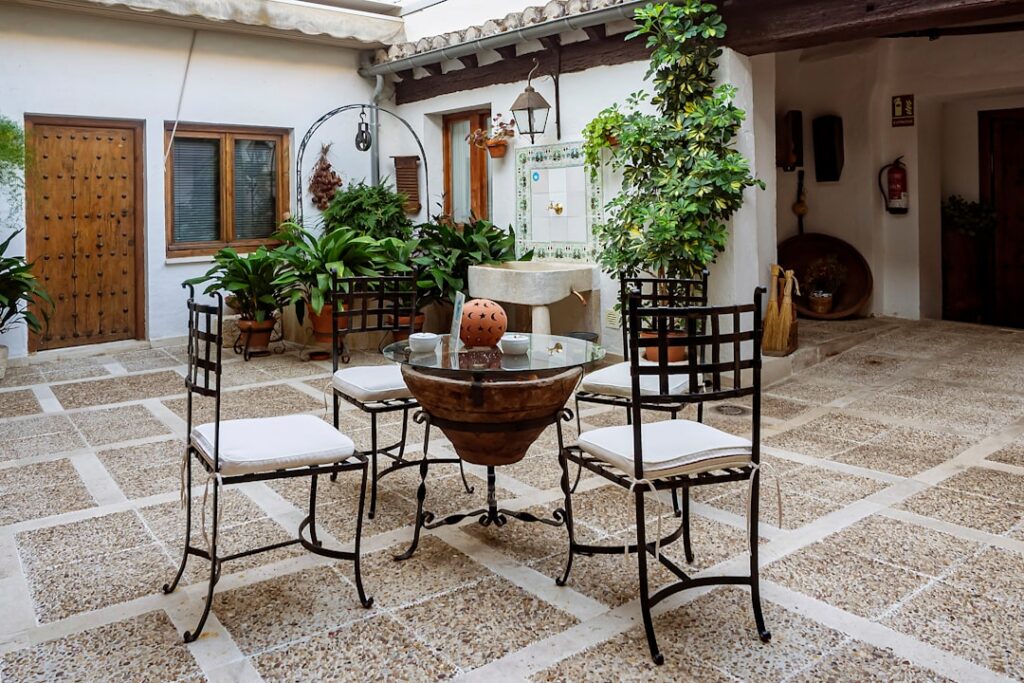
Most of the “wrought iron” sold today contains no wrought iron at all — true wrought iron largely stopped being produced commercially in the mid-20th century, and modern pieces are welded steel wearing the old name. That is not a scandal, but it does change how you shop, what you pay, and how you fight rust. Wrought iron patio furniture remains the heavyweight of the category in every sense: 60-pound chairs that ignore wind, scrollwork that reads as garden architecture, and frames that survive a century when maintained — or dissolve into orange flakes in five years when ignored. This guide covers the material truths, the rust-care routine that actually works, cushions, and the art of rescuing a vintage set.
Wrought, Cast, or Steel: Knowing What You Own
Three different metals hide under the wrought-iron label, and they age differently:
- True wrought iron is hand-worked, low-carbon iron with a fibrous grain — think pre-1950 estate pieces and blacksmith work. It is more rust-resistant than steel, bends before it breaks, and is repairable by any competent welder or smith. If you own real antique wrought iron, it is worth restoring almost regardless of condition.
- Cast iron is molten iron poured into molds — the ornate Victorian garden bench with fern and grape patterns. Heavy even by iron standards and brittle: a cast bench arm that cracks needs brazing by a specialist, not a bead from a MIG welder. Molded seams and intricate repeating patterns are the tell.
- Modern “wrought iron” is welded steel tube or solid bar, powder-coated at the factory. This is what Woodard, Hanamint, and every big-box set actually is. Quality varies enormously with wall thickness and coating — a $1,500 Woodard set and a $400 clearance set may look similar in photos and age nothing alike.
The magnet test will not help (all three are magnetic), but weight, seams, and grain will: hammered texture and drawn-out tapers suggest true wrought work; mold seams say cast; uniform tube and visible weld joints say steel.
The Case For and Against Iron
Iron’s virtues are structural and aesthetic. Nothing else matches its permanence of form — no sagging slings, no unraveling wicker — and its weight makes it the only furniture that stays put through a plains thunderstorm. Scrollwork styles from French bistro to Spanish revival simply do not exist in aluminum with the same delicacy, and a good set becomes multigenerational property. The costs are equally concrete: moving a 90-pound settee to mow is a two-person chore, bare metal seats demand cushions for comfort, dark iron gets branding-hot in July sun, and above all, iron oxidizes. Every ownership decision flows from managing that last fact. Buyers who want the look without the regimen should weigh cast aluminum (the same silhouettes, no rust, a third of the weight) or recycled-plastic lumber — our POLYWOOD patio furniture review covers the zero-maintenance end of that spectrum.
Rust Care: The Routine That Keeps Iron Alive
Rust prevention is cheap and rust repair is laborious, so the smart money front-loads the effort:
- Twice a year, inspect and wash. Mild soap, water, soft brush, full dry. Look hard at welds, foot glides, arm undersides, and anywhere water pools — rust starts where coatings stress and moisture lingers.
- Touch up chips within days. Sand the nick to bright metal with 120-grit, wipe clean, and dab on a rust-inhibiting enamel like Rust-Oleum Stops Rust. A $6 bottle applied promptly prevents 90 percent of the damage owners eventually sand out.
- Wax annually. A coat of automotive paste wax over the whole frame adds a sacrificial moisture barrier and keeps powder coat looking wet-new. Five minutes per chair.
- Mind the feet. Replace missing plastic glides ($10 a set) immediately — bare iron legs wick water off concrete and rust from the bottom up. Standing legs on pavers beats lawn contact.
- Winter smart. Iron can overwinter outdoors, but breathable covers or a garage stay beat trapping condensation under vinyl tarps, which rusts furniture faster than open weather does.
Cushions: Comfort Without Consequences
Iron seats need cushions, and cushions on iron have one special enemy: trapped moisture against the frame. Buy solution-dyed acrylic covers (Sunbrella and equivalents) over quick-dry reticulated foam — the combination sheds rain and dries in hours instead of days. Tie them on rather than leaving them loose; wind that cannot move the chair will happily relocate the cushion. Standard deep-seating cushion sizes fit most modern steel sets, but vintage and cast pieces often need custom cuts, typically $60-$150 per seat from an online cushion shop working from your template. Trace the seat pan on kraft paper, note the tie-point locations, and order a shade or two darker than your first instinct — outdoor fabric reads lighter in full sun than on a screen, and darker tones hide the pollen season. Store cushions dry over winter regardless of what the frame does, and hose off pollen and bird traffic before it bakes in — fabric, not iron, is what actually wears out first on a well-kept set.
Restoring a Vintage Set
Estate-sale iron is one of the great bargains in outdoor furnishing — $100 sets from names like Woodard, Salterini, and Molla restore into pieces worth ten times that. The full resurrection sequence:
- Strip. Wire-brush and sand flaking paint and rust; a drill with a cup brush handles flats, and media blasting ($150-$400 per set at a local shop) is worth it for heavy scale or intricate scrollwork you cannot reach.
- Convert or bare the metal. Light remaining oxide can be treated with a rust converter; otherwise get to sound, bright metal. Repair cracks now — welding steel is routine, brazing cast iron is specialist work.
- Prime. A rust-inhibiting, self-etching primer on every surface, undersides included. This coat, not the color coat, determines how long the job lasts.
- Topcoat. Two light coats of exterior enamel beat one heavy one; spray gets into scroll recesses that brushes bridge. For heirloom pieces, professional powder coating ($300-$600 per set including blasting) is the 15-year answer.
Identify before you strip: a genuine Salterini or early Woodard piece in original paint can carry collector value that a rattle-can respray erases. Check for maker’s tags under seats and on cross-braces first.
Buying New: What Quality Iron Looks Like
Shopping new “wrought iron” (welded steel) sets, a few checkpoints separate 20-year furniture from 5-year furniture. Pick the piece up: quality dining chairs run 25-40 pounds each, and suspicious lightness means thin-wall tube that dents and rusts through early. Inspect the welds — full, smooth beads at every joint, not skip-welds with gaps where water enters the tube interior and rusts it from the inside out, the failure mode no touch-up paint can reach. Ask about the finish process: powder coat over a pretreated or e-coated frame is the spec that lasts; “baked enamel” is a softer claim. Look for weep holes at the low points of hollow frames (they let internal condensation drain — their absence is a red flag), stainless or coated hardware, and adjustable nylon foot glides. On pricing, a well-built five-piece dining set runs $1,200-$3,000 from names like Woodard and Hanamint, while sub-$600 sets are built to a season-count, not a decade-count. Mesh and strap seats skip the cushion question entirely and suit poolside duty; scroll-and-lattice seats want the cushion budget included in the math.
The Bottom Line
Wrought iron patio furniture rewards exactly the owner it always has: someone who values permanence and period style enough to spend one honest afternoon a year on washing, touch-ups, and wax. Buy heavy — thick-wall steel from a reputable maker, or true vintage iron worth restoring — put quality quick-dry cushions on it, and keep paint between the metal and the sky. Do that, and the set outlives the patio it sits on; skip it, and you are buying future rust on layaway.